

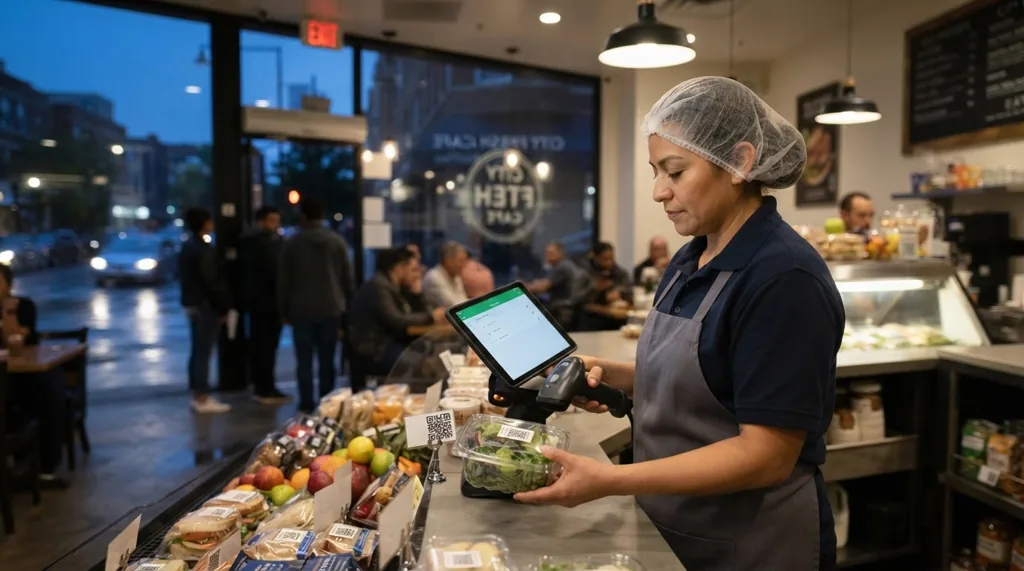
United States regulators at the FDA proposed on Oct. 8, 2026 not to enforce the Food Traceability Rule for retailers and restaurants with average annual food sales between $250,000 and $1 million, with comments due Nov. 23, 2026.
The U.S. Food and Drug Administration (FDA) on Oct. 8, 2026 issued draft guidance saying it does not intend to enforce its Food Traceability Rule against grocery stores, other retail food outlets and restaurants with average annual food sales above $250,000 but no more than $1 million1.
The policy is in draft, and the FDA is taking public comments on it until Nov. 23, 20262. The agency also announced a public meeting for Nov. 6, 2026 on further ways to ease compliance with the rule1.
In short, many smaller food retailers and restaurants that fell just outside the rule’s existing exemption would no longer face FDA enforcement of its recordkeeping requirements. If the guidance is finalized, these businesses would get the same practical relief as the smallest outlets, even though the rule itself does not change.
What does the FDA draft guidance do?
The draft guidance is titled "Requirements for Additional Traceability Records for Certain Foods: Enforcement Policy for Certain Retail Food Establishments and Restaurants"2. It applies to the Food Traceability Rule, a final rule the FDA published in the Federal Register on Nov. 21, 20222. That rule is part of how the agency carries out the FDA Food Safety Modernization Act, known as FSMA2.
The guidance uses enforcement discretion, a decision by the agency not to act against a breach of a rule that stays on the books. The FDA says that, based on its current understanding of the risks, it does not intend to enforce any of the rule’s requirements for the businesses covered2. The policy covers every requirement in the rule, not only some of them2.
The notice announcing the draft appeared in the Federal Register as document 2026-20721, at 91 FR 646292. It is filed under docket number FDA-2025-D-69522.
Which food retailers and restaurants qualify?
The relief targets retail food establishments, the agency’s term for stores and other outlets that sell food to consumers, as well as restaurants2. A business qualifies based on the average annual value of food it sold or provided over the previous three years2.
Three-year average annual food sales limits, USD
To fall under the draft policy, that average must be:
- greater than $250,000, and
- no more than $1,000,000, measured on a rolling basis2.
Both limits are adjusted for inflation, using 2020 as the baseline year2. A business near the $1,000,000 limit would therefore need to track its three-year average each year to know whether it still qualifies.
How does this differ from the existing small-business exemption?
The Food Traceability Rule already fully exempts small retail food establishments and restaurants whose three-year average annual food sales are no more than $250,0002. That exemption sits in the rule itself, at 21 CFR 1.1305(i), and uses the same inflation adjustment from a 2020 base2.
Two tiers of small-business relief
| Question | Existing exemption | Draft enforcement policy |
|---|---|---|
| Average annual food sales | No more than $250,000 | Above $250,000, up to $1,000,000 |
| Legal basis | 21 CFR 1.1305(i) | Non-binding draft guidance |
| Covered by the rule? | No, fully exempt | Yes, but not enforced |
Since the final rule was issued, retail and restaurant businesses have raised the problems small firms face in complying when they are not small enough for that exemption2. The new policy is aimed at that group1.
The legal difference matters for compliance teams. Firms under $250,000 are exempt by regulation. Firms between $250,000 and $1,000,000 would remain covered by the rule, but the FDA says it would not enforce it against them2.
Why did the FDA act, and how binding is it?
The FDA says it is acting to fulfill a directive from Congress to find and offer more flexibility for complying with the Food Traceability Rule1. The agency also cites feedback from businesses and a finding that the change would have minimal public health impact1.
According to the agency, the relief affects only a small percentage of total food sales while helping many smaller retailers and restaurants1. It says this keeps the public health benefits the rule was meant to deliver1.
The guidance is not binding. Once finalized, it will state the FDA’s current thinking but will not create rights for any person or bind the agency or the public2. The FDA says it will also consider comments on the costs or cost savings the guidance may create, as relevant to Executive Order 141922.
What other flexibilities is the FDA weighing?
The FDA says it plans more flexibilities beyond this policy for small retailers and restaurants1. To that end, it will hold a public meeting on Nov. 6, 20261.
FDA traceability dates to act on
That meeting is part of a series of sessions required by Congress under the Continuing Appropriations, Agriculture, Legislative Branch, Military Construction and Veterans Affairs, and Extensions Act, 2026 (P.L. 119-37)1. It follows a discussion paper released on May 27 and a public meeting held on June 151.
The agency wants to hear views on tracing food by lot, meaning specific production batches, and on the problems firms face in putting the rule in place1. It is especially seeking feedback on the options set out in the discussion paper1.
Attendance is free, but registration is required1. General registration is open until Nov. 5, 2026, and anyone who wants to speak must register by Oct. 26, 20261.
Summary of the FDA traceability enforcement policy
The table below sets out the core facts of the draft guidance.
| Key Dimension | Details |
|---|---|
| Regulating Authority & Jurisdiction | U.S. Food and Drug Administration, part of the Department of Health and Human Services2 |
| Instrument | Draft guidance for industry, docket FDA-2025-D-6952, 91 FR 646292 |
| Scope & Who Must Comply | Retail food establishments and restaurants with three-year average annual food sales above $250,000 and up to $1,000,0002 |
| Core Mandate / Key Change | FDA does not intend to enforce any Food Traceability Rule requirements for these firms2 |
| Thresholds | Limits measured on a rolling basis and adjusted for inflation from a 2020 base2 |
| Existing Exemption | Firms at or below $250,000 are already fully exempt under 21 CFR 1.1305(i)2 |
| Key Dates & Implementation Milestones | Speaker registration Oct. 26, 2026; public meeting Nov. 6, 2026; comments due Nov. 23, 20261, 2 |
| Penalties / Enforcement Action | Non-binding policy; the rule itself is unchanged2 |
The next milestone is Oct. 26, 2026, the last day to register to speak at the FDA’s Nov. 6 meeting. Comments on the draft guidance are due by Nov. 23, 2026, after which the agency will begin work on the final version2.
Sources
- ↩ Food Traceability: FDA Issues Draft Enforcement Discretion Policy for Certain Small Retailers and Restaurants and Announces Public Meeting | FDA https://www.fda.gov/food/hfp-constituent-updates/food-traceability-fda-issues-draft-enforcement-discretion-policy-certain-small-retailers-and
- ↩ Regulations.gov https://www.regulations.gov/document/FDA-2025-D-6952-0001