

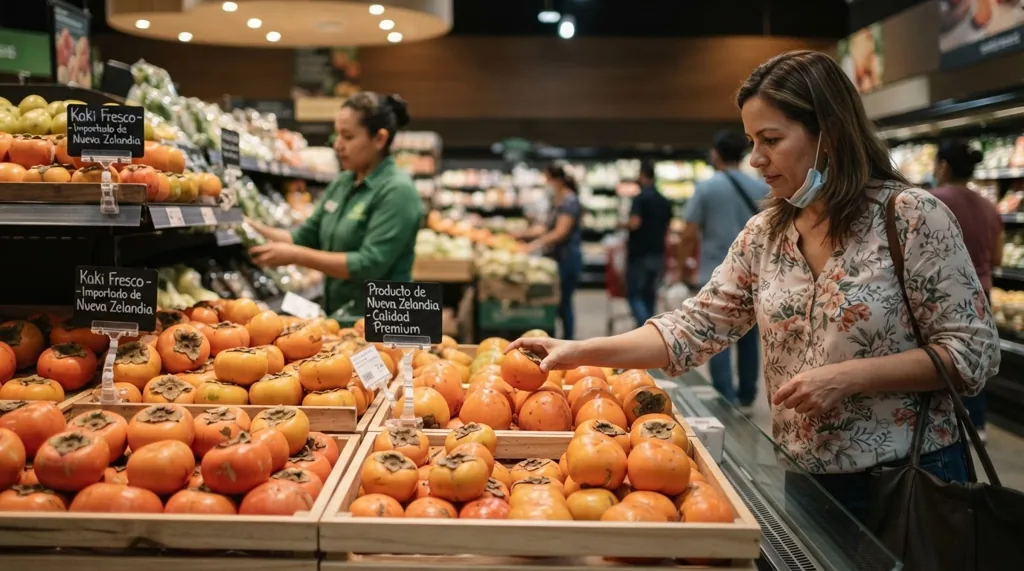
Costa Rica has enacted phytosanitary requirements for the importation of fresh kaki fruit (Diospyros kaki) from New Zealand to protect plant health and prevent pest introduction.
Costa Rica’s plant health service has set the entry rules for fresh persimmons from New Zealand. The rules took effect when they were signed on 17 November 2026, so shipments must meet them now.
The State Phytosanitary Service (SFE), Costa Rica’s plant health authority, issued Resolution No. 038-2026-CV-ARP-SFE to set import requirements for kaki fruit (Diospyros kaki) grown in New Zealand and sold for fresh eating1. Importers must hold an import permit, and each shipment needs an export health certificate declaring it free of one moth pest1. The resolution orders the requirements added to Costa Rica’s import requirements database and notified to the World Trade Organization (WTO)1.
| At a glance | Details |
|---|---|
| What was published | Final resolution on plant health import rules |
| Published on | 17 November 2026 (date of signature) |
| Who must comply | Importers of fresh persimmons from New Zealand |
| Effective date | 17 November 2026, on signature |
| Next milestone | Listing in the SFE import requirements database and notice to the WTO |
What the persimmon rules cover
The resolution applies to one product from one origin: fresh kaki fruit from New Zealand1. Kaki is another name for persimmon. The rules cover fruit imported for fresh consumption, not for planting.
The process began with an application. The SFE received request No. 11114 on 17 June 2026 asking it to set import requirements for this fruit1. A pest risk study, Technical Report No. 216-2026-CV-ARP-SFE, followed on 25 August 20261.
Which pest worries Costa Rica?
The SFE drew up a list of pests present in New Zealand that could travel with the fruit1. It found that such pests do exist. One of them is Cryptoblabes gnidiella, a moth that Costa Rica already treats as a regulated pest1.
That status rests on an earlier pest study, document NR-ARP-005-2023, dated 29 June 20231. The SFE judged that the moth’s breeding pattern and life cycle make its establishment likely. It also noted that the life stage most likely to arrive is the most fragile one, and would struggle to reach a host plant1.
What importers must do
The resolution sets four practical duties for each shipment1. They are listed below.
| Area | What the resolution requires |
|---|---|
| Import permit | Obtain a permit, the phytosanitary requirements form, before importing |
| Health certificate | Carry a certificate stating the fruit is free of Cryptoblabes gnidiella |
| Packing | Arrive properly packed and labelled |
| Cleanliness | Be free of plant debris, soil, snails and slugs |
The pest-free statement must appear in the additional declarations section of the certificate1. That section is where the exporting country’s plant health officials record extra checks requested by the buyer country.
Checks at the border
Shipments will face inspection and sampling on arrival in Costa Rica1. The resolution does not set fines or name specific outcomes for failed checks. It rests on Costa Rica’s Plant Protection Law No. 7664, which makes plant health measures mandatory and a matter of public interest1.
A separate decree, No. 26647-MEIC-MAG, bars any person or company from bringing regulated plants into the country without SFE entry requirements1.
From draft to final rules
The SFE first circulated the text as draft resolution No. 0020-2026-CV-ARP-SFE2. The draft and the final resolution set the same requirements. Both require the pest-free certificate, the packing standards, the permit and inspection on arrival2.
The final version adds the signature of Erick Cedeño Navarro, head of the SFE’s pest risk analysis unit1. His digital signature is dated 17 November 2026, and the resolution states it takes effect on signature1.
| Key date | What happens |
|---|---|
| 29 June 2023 | Pest risk study on Cryptoblabes gnidiella issued |
| 17 June 2026 | Request No. 11114 received |
| 25 August 2026 | Technical Report No. 216-2026-CV-ARP-SFE issued |
| 17 November 2026 | Final resolution signed and in force |
Why the rules matter for trade
The resolution cites the WTO agreement on plant and animal health measures. That agreement requires such rules to rest on science and to restrict trade no more than needed1. Costa Rica’s own law adds that the SFE must choose a less restrictive measure if one would protect plants equally well1.
For New Zealand growers and Costa Rican buyers, the result is a defined path to market. The duties focus on one named pest plus general packing and cleanliness standards1.
Key terms in plain words
| Term | Meaning |
|---|---|
| Phytosanitary | Related to plant health and keeping pests and diseases out |
| SFE | State Phytosanitary Service, Costa Rica’s plant health authority |
| Phytosanitary certificate | An official health document issued by the exporting country for plant goods |
| Pest risk analysis | A study of how likely a pest is to arrive, spread and cause harm |
| Cryptoblabes gnidiella | A moth pest that Costa Rica regulates |
| WTO | World Trade Organization, the body that oversees global trade rules |
The requirements are now in force, and the next step is their entry into the SFE import requirements database and notification to the WTO.
Sources
- ↩ 26_06080_00_s.pdf https://members.wto.org/crnattachments/2026/SPS/CRI/26_06080_00_s.pdf
- ↩ 26_04739_00_s.pdf https://members.wto.org/crnattachments/2026/SPS/CRI/26_04739_00_s.pdf