

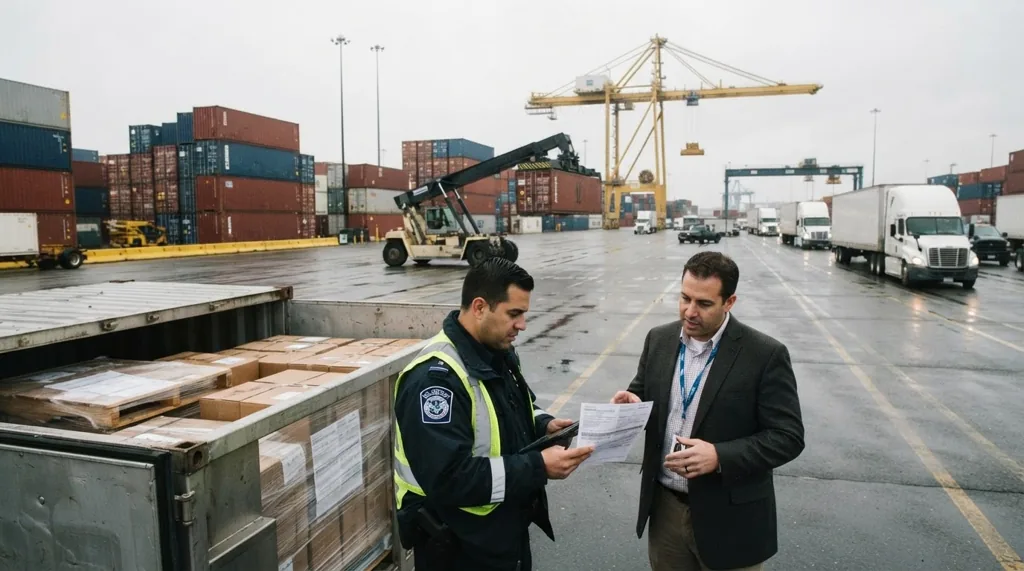
CBP will require foreign importers to be CTPAT validated or file through a validated broker, starting Jan. 5, 2027.
US Customs and Border Protection (CBP) will stop foreign importers from clearing goods on their own unless CBP has vetted them under its trusted trader program. From Jan. 5, 2027, unvetted foreign importers must file through a vetted, licensed customs broker.
CBP published the interim final rule in the Federal Register on Nov. 6, 20261. It covers foreign importers of record and the licensed customs brokers who file entries for them. The rule takes effect on Jan. 5, 2027, and public comments are open until the same day2.
| At a glance | Details |
|---|---|
| What was published | Interim final rule, CBP Dec. 26-19 |
| Published on | 6 November 2026 |
| Who must comply | Foreign importers of record and licensed customs brokers |
| Feedback deadline / Effective date | 5 January 2027 (both) |
| Final rules / Next milestone | All brokers in full compliance by 6 May 2027 |
What is CBP changing, and why does it matter?
An importer of record is the party legally responsible for an import, including paying duties. A foreign importer of record is one whose operations and assets are mainly outside the United States. The rule sets new requirements for foreign importers when they make entry, and new duties for brokers who serve them1.
CBP says it struggles to collect unpaid duties and taxes from foreign importers. It also says it cannot easily check that they follow US customs and trade laws. Both problems exist mainly because these importers and their assets sit outside the United States1.
The rule carries out Executive Order 14411, "Strengthening Customs Enforcement," which the President signed on June 3, 20261. The order told the Department of Homeland Security to tighten the rules for foreign importers1.
The new CTPAT gate for foreign importers
CTPAT, the Customs Trade Partnership Against Terrorism, is CBP’s trusted trader program. Companies in it are checked and approved, or "validated," by CBP. Under the rule, a foreign importer may enter goods on its own behalf only if it is CTPAT validated1.
A foreign importer that is not validated has one route left. It must name a CTPAT validated and licensed customs broker to make entry for it1. This applies whether the entry is informal or formal1.
| Who files | What the rule allows |
|---|---|
| CTPAT validated foreign importer | May make entry on its own behalf |
| Foreign importer not validated | Must use a CTPAT validated, licensed broker |
| Any foreign importer, informal entry | Still allowed, under CBP monitoring |
What changes for customs brokers
Licensed customs brokers take on a new checking role. CBP said brokers are now responsible for verifying that clients meet the qualifications of a US importer of record before filing entries for them2. The rule also sets out consequences for foreign importers and brokers who fail to comply1.
Deadlines for customs brokers
Brokers get extra time to adjust. They may ask for a delayed compliance date for the broker rule changes before Jan. 5, 20271. All brokers must comply in full no later than May 6, 20271.
Informal entries stay open, for now
The executive order directed CBP to bar foreign importers from informal entry1. The rule stops short of a blanket ban. Validated foreign importers, and those filing through a validated broker, may still use informal entry1.
Informal entry under the rule
| Requirement | Standard / Details |
|---|---|
| Validated foreign importer | May still use informal entry |
| Filing via validated broker | May still use informal entry |
| CBP oversight | Monitors informal entries after the rule takes effect |
| If risks appear | CBP will fully prohibit informal entry by foreign importers |
CBP will monitor informal entries by foreign importers and their brokers after the rule takes effect. If those entries pose risks to revenue, national security, or public health and safety, CBP will fully prohibit foreign importers from using informal entry1.
Transition timeline and key deadlines
The rule amends five parts of CBP’s regulations, Parts 110, 111, 141, 142 and 171 of Title 191. Part 171 covers fines and penalties. Comments go to docket USCBP-2026-1387 on the federal rulemaking portal2.
| Key date | What happens |
|---|---|
| 3 June 2026 | Executive Order 14411 signed |
| 6 November 2026 | Rule published in the Federal Register |
| 5 January 2027 | Rule takes effect and comments close |
| 6 May 2027 | All brokers must fully comply |
CBP will weigh the comments when deciding whether to amend, confirm or withdraw the rule2. Because it is an interim final rule, it applies while that review runs2.
Key terms in plain words
| Term | Meaning |
|---|---|
| Importer of record | The party legally responsible for an import and its duties |
| Foreign importer of record | An importer of record located mainly outside the United States |
| CTPAT | CBP’s trusted trader program, which vets companies and their supply chains |
| CTPAT validated | Checked and approved by CBP under that program |
| Licensed customs broker | A licensed firm that files customs entries for clients |
| Interim final rule | A rule that takes effect while the agency still takes comments |
The rule takes effect and the comment period closes on Jan. 5, 20271.
Sources
- ↩ Federal Register :: Heightened Requirements for Foreign Importers of Record https://www.federalregister.gov/documents/2026/11/06/2026-22735/heightened-requirements-for-foreign-importers-of-record
- ↩ CBP announces heightened requirements for Foreign Importers of Record | U.S. Customs and Border Protection https://www.cbp.gov/newsroom/national-media-release/cbp-announces-heightened-requirements-foreign-importers-record