
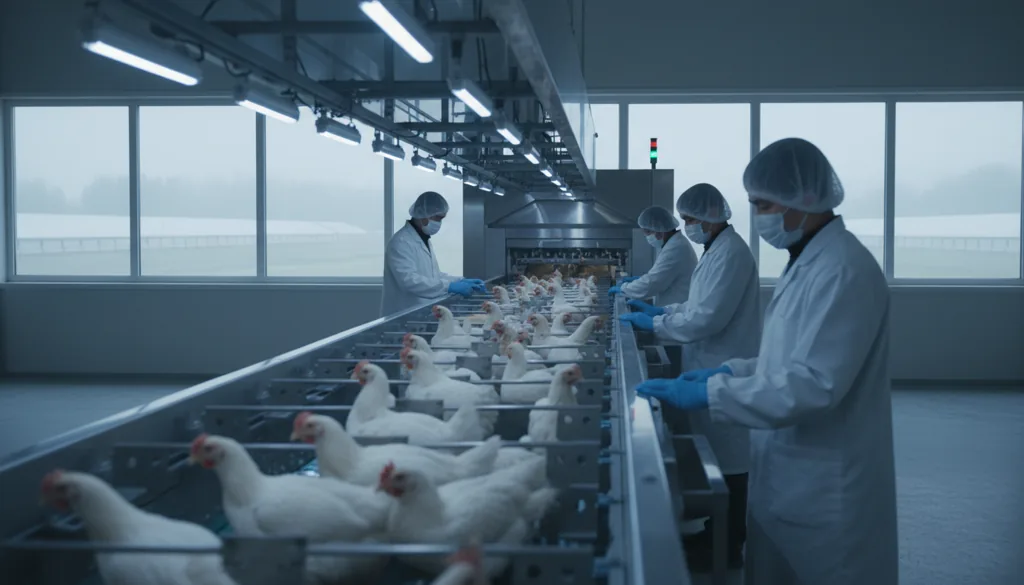
United States proposes amending import requirements to reduce the highly pathogenic avian influenza waiting period from 90 days to 28 days for live birds and other avian commodities, with a comment deadline ending 60 days after publication.
The US Department of Agriculture has proposed cutting the waiting period for imports of live birds and other avian goods after highly pathogenic avian influenza outbreaks from 90 days to 28 days.
The proposal covers live poultry, pet and research birds, poultry meat, eggs and other bird products entering the United States. It was published by the Agriculture Department’s Animal and Plant Health Inspection Service (APHIS) on Sept. 24, 2026, with comments due by Nov. 23.1
The measure is intended to let trade restart sooner after an outbreak while preserving controls against the spread of the disease. The companies moving the birds and products would still carry the permit, certification and disease-testing work required for entry.
The 28-day rule
The proposal changes the period during which birds or their source premises must be free from exposure to highly pathogenic avian influenza, commonly known as HPAI. The period would fall to 28 days before export, while the separate 90-day safeguards for other communicable poultry diseases would remain.1
Look-back periods before export, days
That distinction matters for shipments containing live poultry, hatching eggs and other avian commodities. A flock could qualify under the shorter HPAI period, but it would still have to meet the longer disease controls for illnesses such as Newcastle disease and chlamydiosis.
The new rule would apply through changes to 9 CFR parts 93 and 94, the sections covering live birds, poultry and bird meat or eggs. APHIS said the proposal would make the current 28-day approach used for Canada available to foreign regions generally.1
The commercial effect is a shorter interruption after disease is found. A region that has completed the required disease controls could regain access earlier, reducing the time that live birds, eggs or poultry products remain blocked from the US market.
That benefit is most direct for goods with a short commercial cycle. Imported eggs, breeding birds and other products tied to production schedules can lose value when an outbreak freezes shipments for three months.
Why APHIS is changing the timing
The proposal follows a change in international disease guidance. The World Organisation for Animal Health, formerly known as the Office International des Epizooties, revised its Terrestrial Animal Health Code in May 2021 after its scientific commission reassessed HPAI incubation periods.2
From the 2004 code to the proposed US rule
| Question | 2004 code (old US basis) | 2021 code (WOAH) | Proposed US rule |
|---|---|---|---|
| HPAI incubation period | Earlier estimate | 14 days | 14 days |
| Basis for HPAI-free status | Three months after slaughter and disinfection | Two incubation periods, 28 days | 28 days before export |
| Other poultry diseases | Separate safeguards | Unchanged | 90-day rule retained |
The scientific review put the incubation period at 14 days, rather than the earlier 21-day estimate. It also concluded that two flock-level incubation periods, or 28 days, could be enough to regain HPAI-free status after the necessary controls.
The old US rule reflected an earlier international standard. APHIS cited the 2004 edition of the animal-health code, which allowed a country to be considered free of the disease three months after the last infected poultry had been slaughtered and affected premises disinfected.1
The change therefore brings the US rule closer to the newer international approach. It is not a relaxation of every disease requirement, but a narrower adjustment to the HPAI waiting period.
For importers, the practical result is a shorter disease-related hold without a shorter general compliance record. The 90-day period for other communicable poultry diseases remains embedded in the proposed certificates and declarations.
Certificates and permits remain central
The proposal keeps a permit requirement for qualifying live birds and poultry. Healthy poultry must not have been exposed to HPAI during the 28 days before export, and must also meet the 90-day rule for other communicable diseases. An import permit remains part of the exception allowing those birds to enter.2
Paperwork a qualifying shipment still carries
Certificates would have to record the relevant disease history of the flock and the premises. For live poultry, the proposed wording requires confirmation that no HPAI exposure occurred during the 28 days before movement, while other poultry diseases remain subject to the 90-day period.
The paperwork also covers the condition of the animals and the way they are handled. The birds must be inspected and found free of signs of communicable poultry disease, and the source flock must meet vaccination and origin conditions in the relevant rules.
The proposal keeps a separate requirement for hatching eggs. Those eggs must come from flocks found free of disease, must not come from poultry vaccinated against H5 or H7 avian influenza, and must be placed in new or properly sanitised packaging at the exporting premises.1
That means the shorter HPAI window will not remove the main documentary chain supporting an import. Export certificates, permits, flock records and premises controls will continue to connect the shipment to its disease status.
Meat, eggs and Europe
The measure also changes controls for poultry meat, bird meat, poultry parts and eggs other than hatching eggs. The proposed text requires certificates to confirm that no HPAI occurred on the premises of origin or adjoining premises during the 28 days before the certificate was signed.1
The same provision keeps Newcastle disease on a 90-day timetable. That split will appear in the paperwork as two separate look-back periods, rather than as one uniform disease window.
European trade receives specific treatment because APHIS maintains a defined European Poultry Trade Region. Its rules are set out in 9 CFR 94.28, while the broader controls for avian carcasses, meat, products and non-hatching eggs generally sit in 9 CFR 94.6.1
The proposal would also adjust the European provisions for restricted zones. A zone affected by Newcastle disease could remain restricted until its designation is removed by the relevant veterinary authority or until 90 days after affected poultry are destroyed and the final premises are cleaned and disinfected, whichever is later.1
The European changes show why the proposal is more than a single substitution of 28 for 90. APHIS is revising linked provisions covering live birds, poultry products, regional restrictions, certificates and entry decisions.
Trade gains, but only after approval
APHIS has connected the proposed change to continuity in poultry trade. The agency said the US poultry sector was valued at $81.7bn in 2025 and that faster access to imported eggs from the European Poultry Trading Region could produce annual benefits of $1.1m to $4.4m.1
The two numbers APHIS cites
Those figures describe potential gains from avoiding prolonged interruptions, not a guaranteed payment or import volume. The lower waiting period can reduce the time products remain unavailable, but each shipment still depends on the applicable permit, certificate and disease findings.
The proposal also builds on a bilateral arrangement with Canada adopted in 2022. APHIS used the 28-day period for Canadian live birds and avian products on a provisional basis, pending wider rulemaking.1
Extending that approach to other regions could make disease-related trade decisions more consistent across suppliers. It may also give the United States a common regulatory basis for discussions with additional trading partners.
The immediate status, however, remains proposed rather than final. The comment period closes on Nov. 23, 2026, and the notification identifies the proceeding as Docket No. APHIS-2023-0069.1
Until a final rule takes effect, the existing 90-day HPAI waiting period remains the operative US requirement. The proposal therefore offers a possible reduction in delay, but not an immediate change to the conditions governing current shipments.
The final rule would also update minor administrative details, including addresses and websites used to request live-bird import permits. Those edits are small beside the disease timetable, but they affect the documents that companies and customs brokers use when moving birds through the US import process.1
If adopted, the measure would make 28 days the key HPAI look-back period while leaving the 90-day safeguards for other poultry diseases in place. For avian trade, the result would be earlier access after a controlled outbreak, not unrestricted entry.
Sources
- ↩ Amendments to Import Requirements for Highly Pathogenic Avian Influenza https://www.federalregister.gov/public-inspection/2026-19532/amendments-to-import-requirements-for-highly-pathogenic-avian-influenza
- ↩ Proposed Rule to Reduce HPAI Waiting Period for Avian Imports from 90 to 28 Days https://public-inspection.federalregister.gov/2026-19532.pdf