
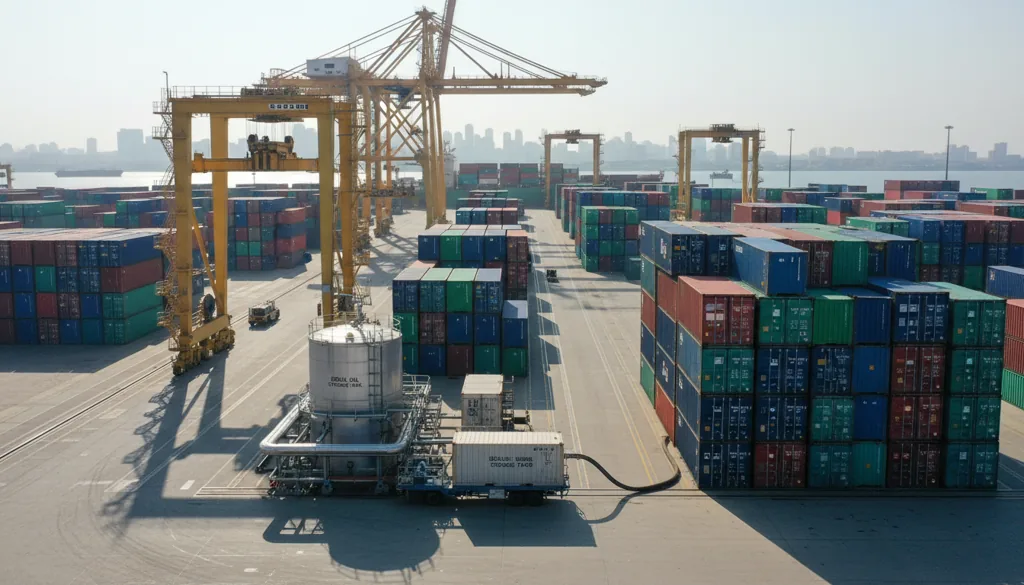
India reduced the basic customs duty on crude and refined palm, soybean, and sunflower oils, effective from September 24, 2026.
India has cut the basic customs duty on crude and refined palm, soybean and sunflower oils, with the new rates taking effect on Sept. 24, 2026.1
The measure is intended to lower edible oil prices in India’s domestic market and ease inflation linked to higher international food oil costs. It covers the oils used in cooking, food processing, sweets, snacks and restaurants. Importers pay the reduced customs duty, while refiners and distributors are expected to pass lower costs through the supply chain.
The change affects both crude oils brought in for processing and oils that arrive already refined. It therefore matters to importers, customs brokers, domestic refiners and companies that buy cooking oil as an input. The government’s announcement said the lower duty was designed to provide relief to consumers.2
India’s three edible oils
For crude soybean oil and crude palm oil, the basic customs duty, or BCD, has been cut to 5% from 10%. The duty on crude sunflower oil has been removed altogether, falling to 0% from 10%. Those rates apply from Sept. 24, according to the finance ministry notification.1
Basic customs duty, before and after 24 Sept 2026
| Oil | Old BCD | New BCD |
|---|---|---|
| Crude soybean oil | 10% | 5% |
| Crude palm oil | 10% | 5% |
| Crude sunflower oil | 10% | 0% |
| Refined soybean and palm oil | 32.5% | 27.5% |
| Refined sunflower oil | 32.5% | 22.5% |
The refined products also receive cuts, although the source gives the new rate for refined soybean and palm oil as 27.5%, down from 32.5%. Refined sunflower oil is subject to a duty of 22.5%, also down from 32.5%. This leaves a lower tax bill for both kinds of importer, but the biggest change is on crude sunflower oil, where the BCD disappears.
The immediate commercial effect is a reduction in the customs component of the delivered cost of imported oil. A lower duty does not automatically produce the same reduction in shop prices, because international oil prices, freight, currency movements, local supply and stock levels also affect the final amount. Even so, the duty is a direct part of import cost, so the measure creates room for cheaper imported supplies.
The 19.25-point refining gap
The government has kept a 19.25% duty gap between crude and refined edible oils. The policy is intended to support domestic refining by making crude oil relatively more attractive to bring into India for processing.2
New duty rates and the crude–refined gap, %
That gap gives importers a financial reason to choose crude oil where facilities can refine it domestically. It also makes refined imports less competitive than they would be if both forms carried the same rate. For Indian refiners, the difference preserves a margin between buying crude feedstock and importing a finished product.
The calculation applies across the three oil groups, even though their absolute rates differ. Crude sunflower oil now enters at zero BCD, while its refined equivalent remains at 22.5%. Crude soybean and palm oil carry 5%, against 27.5% for the corresponding refined oils. The structure therefore combines consumer relief with protection for domestic value added.3
This design also limits the policy’s shift towards fully refined imports. The ministry said it wants to discourage excessive imports of refined oil and make better use of domestic refining capacity. That makes the measure more than a simple across-the-board tariff cut: it changes the relative economics of crude and finished oil shipments.3
Palm oil leads import flow
The tariff decision comes as India’s edible oil imports were rising. During November-August of the 2025-26 oil year, imports reached 136.19 lakh tonnes, up from 130.24 lakh tonnes in the same period of the previous oil year, according to data compiled by the Solvent Extractors’ Association of India.1
Palm oil accounted for the largest volume among the three named products, with imports of crude palm oil and refined, bleached and deodorised palmolein reaching 65.34 lakh tonnes. That was up from 61.47 lakh tonnes in the comparable period. Soybean oil imports rose to 45.61 lakh tonnes from 44.64 lakh tonnes, while sunflower oil increased to 25.15 lakh tonnes from 24 lakh tonnes.1
These figures give the duty cuts a large import base on which to work. A reduction of 5 percentage points on crude palm and soybean oil applies to substantial flows, while the zero rate on crude sunflower oil removes the previous 10% charge. The volumes also mean that customs treatment can influence sourcing decisions across major edible oil supply chains.
For customs brokers, the main classification distinction remains whether a shipment is crude or refined. That distinction affects the applicable rate and the commercial case for domestic processing. Importers handling mixed portfolios of crude and finished oil will therefore face different duty outcomes even within the same product family.
The lower rate also reaches companies buying imported oil after customs clearance. Food manufacturers, restaurant suppliers and distributors may see reduced input costs if the duty saving moves through wholesale channels. The source data alone cannot establish how much of the saving reaches each buyer, but the tariff change creates the first link in that chain.
September prices and pass-through
The timing was linked to pressure on food prices. India’s consumer food price index rose to 5.95% in August from 5.52% in July, while inflation in refined oil reached 14.24% in August after recording 10.25% in April and 7.62% in March.1
That background makes the measure particularly relevant to refined oil buyers, even though part of the policy is aimed at crude imports. Crude oil is processed before sale, so lower duties can reduce the cost base for domestically refined products. The final impact will depend on how quickly import costs, refining charges and distribution prices change.
The government has asked food oil associations and industry stakeholders to pass on the full benefit of the cut. It requested immediate changes to prices charged to distributors and to maximum retail prices, in line with the reduction in costs.3
This is an instruction about price transmission rather than a new customs filing requirement. The customs duty still has to be assessed against the correct product form and rate when goods enter India. After clearance, the commercial effect depends on decisions by refiners, distributors and retailers.
The government also said it would monitor international edible oil markets and domestic prices. It reserved the option of taking further action to protect consumers while maintaining a balanced policy environment for farmers and the domestic oil industry.3
That monitoring matters because the tariff reduction can be partly offset by a rise in the world price of oil. The ministry’s own rationale was that international price increases had already raised costs and retail prices in India. The duty cut addresses one part of that pressure, but not the commodity market itself.3
Global supply risks
The import decision also lands against a volatile international market. The source material identifies possible effects from El Niño, continued uncertainty around sunflower oil supplies linked to the Russia-Ukraine conflict and Indonesia’s B50 biodiesel programme. Each factor could alter the balance of global vegetable oil supply and demand.1
Those risks matter differently across the three products. Disruption affecting sunflower supplies would directly affect a product whose crude Indian duty has fallen to zero. Changes in Indonesia’s biodiesel policy could influence palm oil availability, while stronger demand for soybean oil could increase its importance as an alternative.
For importers, the result is a lower border charge but a potentially unsettled underlying market. A customs saving can be calculated when the entry is filed; the future cost of the oil, freight and foreign exchange cannot be fixed by the notification. That combination may make the new rates commercially valuable without making delivered prices predictable.
The measure also leaves India’s domestic refining strategy intact. Crude imports receive the stronger tariff treatment, while refined oils continue to face materially higher duties. The government is therefore using customs rates both to moderate consumer prices and to steer more processing through Indian facilities.
The policy’s effect will become clearer as the next import shipments arrive under the new rates. The most immediate beneficiaries are crude sunflower oil shipments, followed by crude palm and soybean oil, while refined imports receive smaller reductions. For the food supply chain, the central test is whether those lower border costs become lower prices for cooking oil in India.
Sources
- ↩ Centre cuts customs duty on sunflower, soybean and palm oils from September 24 https://www.thehindubusinessline.com/economy/agri-business/centre-cuts-customs-duty-on-crude-refined-sunflower-soybean-and-palm-oils/article71501312.ece
- ↩ Government reduces import duties on major edible oils to benefit consumers https://www.pib.gov.in/PressReleseDetailm.aspx?PRID=2314315
- ↩ Import duty on edible oils reduced to benefit consumers https://ddnews.gov.in/import-duty-on-edible-oils-reduced-government-provides-relief-to-consumers/