

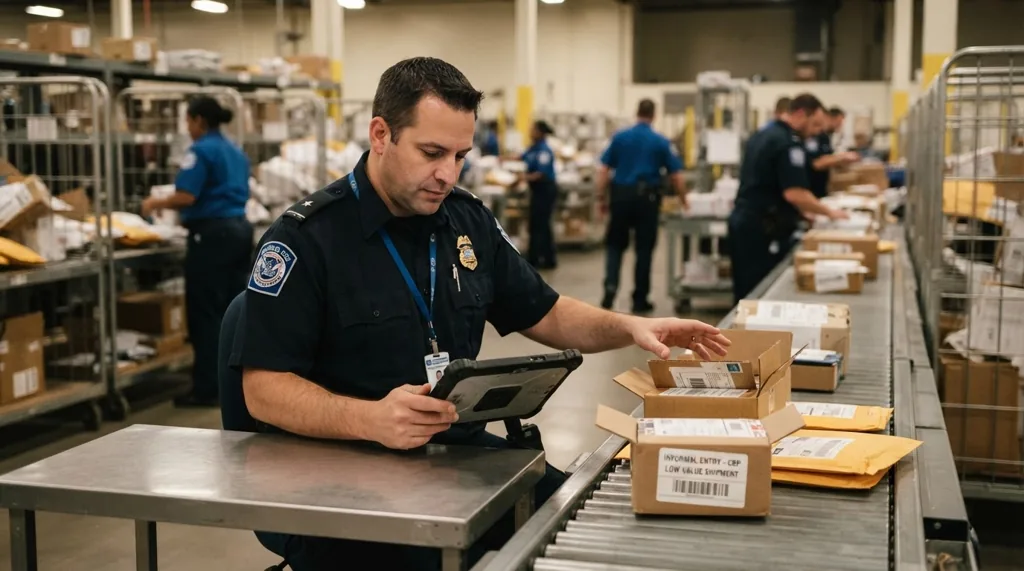
United States customs authority CBP on Oct. 8, 2026 proposed mandatory electronic informal entry, a new mail entry type and bonds for shipments worth $2,500 or less, with comments due Dec. 7, 2026.
U.S. Customs and Border Protection (CBP) on Oct. 8, 2026 proposed rules that would change how importers, customs brokers, postal operators and carriers file entries for shipments worth $2,500 or less, with public comments due Dec. 7, 2026.
The proposal, published in the Federal Register as a notice of proposed rulemaking titled "Low-Value Shipments," covers informal entries, the simpler customs filing used for goods valued at $2,500 or less1. It would require these entries to be filed electronically, create a new electronic entry type for mail, add a data element for carriers of mail shipments, and impose bonding requirements on certain informal entries1.
In short, low-value imports that once moved with little paperwork would need electronic data before or on arrival, a bond, and in many cases a licensed customs broker. E-commerce sellers, postal operators and freight forwarders handling small parcels face the biggest operational change.
Why is CBP tightening low-value shipment rules?
The rule follows the end of the de minimis exemption, which let shipments worth up to $800 per person per day enter duty-free1. The proposal says that exemption has been suspended since at least Aug. 29, 20251. On June 24, 2026, CBP published two interim final rules suspending it indefinitely in its regulations, and the One Big Beautiful Bill Act terminates it from July 1, 20271.
From de minimis to new informal entry rules
CBP expects shipments that used the exemption to shift into other informal entry routes, keeping volumes "problematically high"2. The agency says the volume makes it harder to spot violations of trade, safety, intellectual property and consumer protection laws. It also cites the need to stop illicit drugs such as fentanyl, along with precursor chemicals and manufacturing equipment2.
The proposal draws on lessons from Entry Type 86, an earlier voluntary electronic filing test for low-value shipments. CBP says that test proved insufficient, and that it showed the need for mandatory electronic filing, mandatory data elements, broker filing for consignees, and data received before or upon arrival2.
What changes for entry type 11 filers?
Entry type 11 is the existing informal entry used for most low-value goods. Today an entry generally must be made within 15 calendar days after goods land2. The proposed rule would instead require entry type 11 to be filed upon or before the date of importation2. For goods arriving by vessel, that is arrival within port limits with intent to unload; for other goods, it is arrival in U.S. customs territory2.
Paper filing would end. Entry type 11 filers can currently choose paper or electronic filing, but the rule would make electronic filing mandatory2. CBP expects little burden: from Sept. 1, 2025 to May 31, 2026, only 73,534 of 52,450,418 type 11 entries were filed on paper, or 0.14%2.
Filers would also need to name the Final Deliver-To Party, with its address, when that party differs from the ultimate consignee on the entry summary, CBP Form 75012. CBP says it needs to know where goods are finally headed in order to target risky shipments2.
Which goods gain access to informal entry?
One change widens access. CBP would remove the $250 cap on informal entry for goods classified under Chapter 99, Subchapters III and IV, of the Harmonized Tariff Schedule, the U.S. tariff code2. Those subchapters list goods subject to temporary trade remedies, quotas and extra duties such as Section 232 duties2.
Under the proposal, such goods valued between $251 and $2,500 would no longer have to go through formal entry, the more detailed customs process2. CBP says this mirrors a similar change made to other informal entry rules in 20122.
Who may file, and when is a broker required?
The rule would clarify who has the right to make entry. A consignee that is not the owner or purchaser, such as a foreign postal operator, the U.S. Postal Service, a freight forwarder or a carrier, would have to appoint a licensed customs broker2. That broker would act as importer of record, the party legally responsible for the entry, for shipments worth $2,500 or less2.
Informal entry filing, now and as proposed
| Question | Current rules | Proposed rule |
|---|---|---|
| Type 11 filing deadline | Within 15 calendar days | Upon or before importation |
| Type 11 filing method | Paper or electronic | Electronic only |
| Chapter 99 goods limit | $250 | $2,500 |
| Mail entry process | Monthly emailed worksheet | Electronic entry type 13 |
The broker requirement would apply to both entry type 11 and the new mail entry type 132. Rules for shipments exempt from duty under separate statutory provisions would stay unchanged2. CBP would also widen the conditions under which it can demand formal entry for goods worth $2,500 or less, including mail2.
How would the new mail entry type 13 work?
CBP proposes a new entry type 13, Informal Mail Entry, for goods worth $2,500 or less sent by mail that would qualify for entry type 11 if shipped another way2. It would replace the current mail process under 19 CFR 145.12(b) with a fully electronic one2. Under that interim process, a party with the right to make entry pays duties electronically and emails a worksheet monthly, which CBP must still verify by hand2.
CBP is already trialling the format. A notice published June 24, 2026 launched a voluntary Entry Type 13 test, which began Sept. 22, 2026 and runs until CBP ends it by Federal Register announcement3. In the test, the importer of record must hold a basic importation and entry bond, either single-transaction or continuous3. Test filers transmit data such as these3:
- tariff classification at 10 digits, including Chapter 98 and 99 codes
- country of origin, value, duty rate and total duty owed
- carrier name and the foreign postal operator’s tracking number
- arrival port
The proposed rule would also require carriers to report additional data on mail shipments in their manifests, the cargo lists filed with CBP1. In the test, carriers report the foreign postal tracking number for each mail item, letting CBP match each arrival to an entry3. Today CBP receives only the weight of arriving mail from these carriers3.
What bonding rules would apply?
The proposal would impose bonding requirements for certain informal entries1. A customs bond is a financial guarantee that duties, taxes and fees will be paid and that rules will be followed. The proposed rule covers a basic importation and entry bond for informal entries and a minimum amount for liquidated damages, the set sums owed when bond conditions are broken1.
The rule amends five parts of CBP’s regulations: 19 CFR parts 113, 128, 141, 143 and 145, covering bonds, express consignments, entry of merchandise, special entry procedures and mail importations1. Breaches under the current test can bring civil and criminal penalties, administrative sanctions and liquidated damages3.
Summary of the CBP low-value shipments proposed rule
The table sets out the main points of the proposal.
| Key Dimension | Details |
|---|---|
| Regulating Authority & Jurisdiction | U.S. Customs and Border Protection, Department of Homeland Security; docket USCBP-2026-0298, RIN 1685-AA381 |
| Scope & Who Must Comply | Importers, licensed customs brokers, postal operators, freight forwarders and carriers handling shipments worth $2,500 or less2 |
| Core Mandate / Key Change | Mandatory electronic informal entry; new entry type 13 for mail; extra carrier manifest data; bonds for certain informal entries1 |
| Filing Deadline | Entry type 11 due upon or before the date of importation, replacing the 15-day window2 |
| New Data Element | Final Deliver-To Party and address, when different from the ultimate consignee2 |
| Thresholds | $2,500 informal entry limit; $250 cap removed for Chapter 99, Subchapters III and IV goods2 |
| Key Dates | Published Oct. 8, 2026; comments due Dec. 7, 2026; de minimis terminated by statute July 1, 20271 |
| Penalties / Enforcement | Bond conditions with a minimum amount for liquidated damages; CBP may demand formal entry1 |
The next date is Dec. 7, 2026, when comments on the proposal close under docket USCBP-2026-02981. Meanwhile, the voluntary Entry Type 13 test that began Sept. 22, 2026 continues until CBP announces its end3.
Sources
- ↩ Federal Register :: Low-Value Shipments https://www.federalregister.gov/documents/2026/10/08/2026-20650/low-value-shipments
- ↩ AGENCY: https://www.federalregister.gov/documents/full_text/html/2026/10/08/2026-20650.html
- ↩ Federal Register :: Test of the New Electronic Informal Entry Process for Mail https://www.federalregister.gov/documents/2026/06/24/2026-12668/test-of-the-new-electronic-informal-entry-process-for-mail