

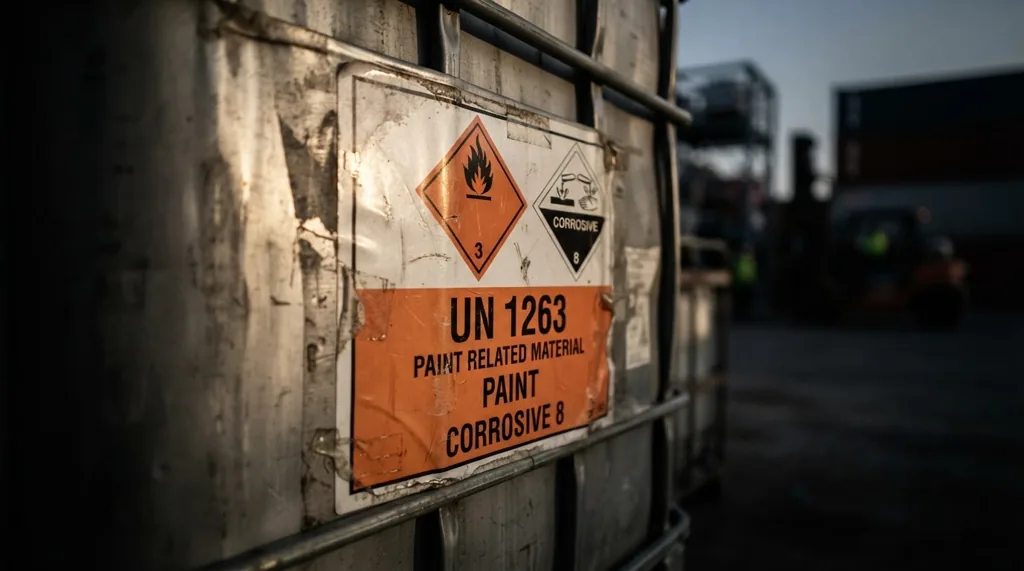
PHMSA proposed updating US hazardous materials shipping rules to match the latest international standards, with comments due Dec. 28, 2026.
The Pipeline and Hazardous Materials Safety Administration (PHMSA) has proposed updating US hazardous materials shipping rules to match the latest international standards. The public has until Dec. 28, 2026, to comment.
PHMSA, the US Department of Transportation agency that oversees dangerous goods shipping, published the proposal in the Federal Register on Oct. 27, 20261. It would change shipping names, hazard classes, packaging rules, air quantity limits and ship storage rules1. PHMSA says it will consider late comments where possible while it develops a final rule2.
| At a glance | Details |
|---|---|
| What was published | Proposed rule, docket PHMSA-2025-0048 (HM-215S) |
| Published on | 27 October 2026 |
| Who can comment | Individuals, companies and other organizations |
| Feedback deadline | 28 December 2026 |
| Final rules / Next milestone | PHMSA will develop a final rule after comments |
What is this proposal, and why does it matter?
US hazardous materials shipping is governed by the Hazardous Materials Regulations (HMR), found in Title 49 of the Code of Federal Regulations, parts 171 to 1801. Federal law directs the Secretary of Transportation to keep these rules generally consistent with international standards1. The exceptions are rules that are unnecessary or unsafe, or cases where a stricter standard serves the public interest1.
PHMSA says the changes would keep current safety levels in place1. It argues that matching international rules will cut delays and interruptions for dangerous goods shipments1. The agency also says the changes will reduce costs for US entities and individuals3.
Which international rules PHMSA wants to follow
A United Nations expert committee updates the UN Model Regulations every two years3. These model rules form the basis for air rules from the International Civil Aviation Organization (ICAO) and sea rules in the International Maritime Dangerous Goods (IMDG) Code3.
The proposal tracks four recent international updates3:
| International rulebook | Version PHMSA would follow |
|---|---|
| UN Model Regulations | 24th revised edition |
| ICAO air rules (Technical Instructions) | 2027-28 edition |
| IMDG Code for sea shipping | Amendment 43-26 |
| Transport Canada dangerous goods rules | 2024 updates |
These international updates will be published or in force by Jan. 1, 20273. Amendment 43-26 of the IMDG Code becomes mandatory on that date3. PHMSA also proposes adopting an addendum to the ICAO air rules that took effect on March 27, 20263.
What changes for shippers and carriers
The proposal adds new entries to the Hazardous Materials Table, the master list of regulated substances1. New entries cover butyl acrylates, vanadium pentoxide and chlorophenols1. It also adds entries for lithium and sodium ion batteries shipped in cargo transport units, the large containers and vehicles that carry freight1.
The rule would revise more than a dozen special provisions, the case-by-case conditions attached to specific substances1. It would also amend rules for air carriage, vessel carriage and packaging specifications1. PHMSA would also add several new or updated international technical standards to the rules by reference3.
Where the US will not follow international rules
PHMSA is declining to adopt several parts of the new UN Model Regulations3. It says some would add no clear safety benefit or would disrupt US industry practice3.
| Item not adopted | PHMSA’s reason |
|---|---|
| New cylinder definitions | No data showing a measurable safety gain3 |
| UN list of Category A infectious substances | Would duplicate US public health systems3 |
| Special packing rule for some hazardous paints | These mixtures are already exempt in the US3 |
| Renaming "net explosive weight" | Would clash with long-standing US terms3 |
| Recycled plastics in bulk containers | More oversight is still needed3 |
The US criteria for dangerous infectious substances were developed with the Centers for Disease Control and Prevention (CDC) and the US Department of Agriculture3. PHMSA says this approach adapts better to new diseases than a fixed list3. For plastic portable tanks, PHMSA would allow limited import and export within a single port area3.
How this fits with earlier harmonization work
PHMSA notes that parts of this proposal overlap with an earlier one, known as HM-215R, published on Feb. 10, 20263. The agency says any differences will be reconciled when the HM-215R final rule is published3. Businesses therefore face two overlapping proposals on similar subjects.
How to take part in the comment process
Comments can be filed online, by mail or by hand delivery to the Transportation Department’s docket office in Washington1. Each comment must cite docket number PHMSA-2025-0048 (HM-215S) or regulatory number RIN 2137-AF752. All comments will be posted publicly without changes, including any personal details2.
Firms can ask for commercial information to be kept private1. They must mark such pages "Confidential" and send a redacted copy alongside the original1. PHMSA is also seeking views on costs, safety effects and ways to lower costs while keeping safety3.
Key terms in plain words
| Term | Meaning |
|---|---|
| PHMSA | Pipeline and Hazardous Materials Safety Administration, the US agency that regulates dangerous goods transport |
| HMR | Hazardous Materials Regulations, the US rulebook for shipping dangerous goods |
| UN Model Regulations | United Nations template rules for dangerous goods, updated every two years |
| IMDG Code | International Maritime Dangerous Goods Code, the global rulebook for sea shipments |
| ICAO Technical Instructions | Global air transport rules for dangerous goods |
| Incorporation by reference | Making an outside standard legally binding by naming it in the rules |
The comment period on the proposal closes on Dec. 28, 20261.
Sources
- ↩ Federal Register :: Hazardous Materials: Harmonization With International Standards https://www.federalregister.gov/documents/2026/10/27/2026-21922/hazardous-materials-harmonization-with-international-standards
- ↩ Regulations.gov https://www.regulations.gov/document/PHMSA-2025-0048-0001
- ↩ Federal Register, Volume 91 Issue 206 (Tuesday, October 27, 2026) https://www.govinfo.gov/content/pkg/FR-2026-10-27/html/2026-21922.htm