

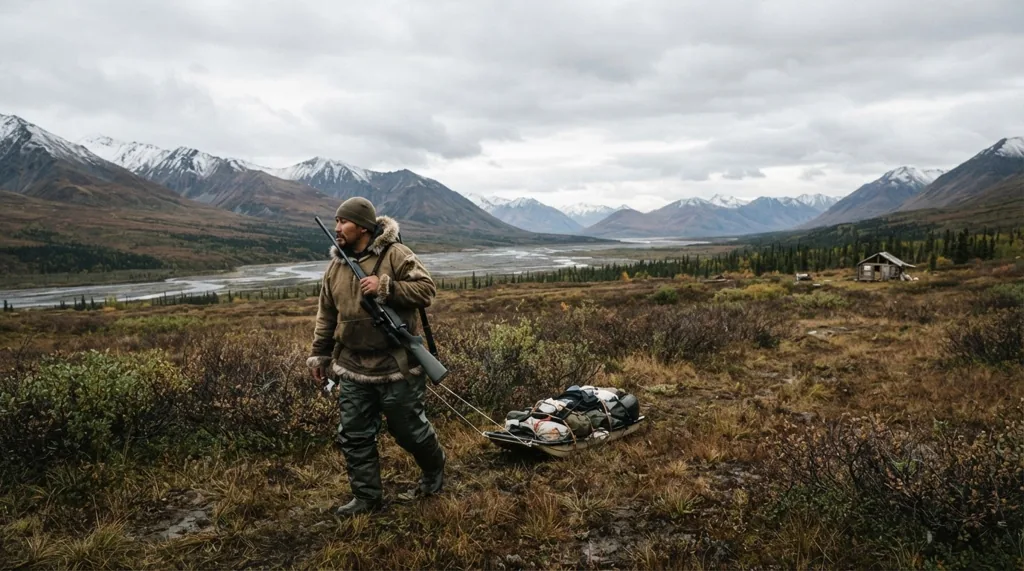
The Interior Department finalized a rule restoring older Alaska rules for park hunting, trapping and access, effective 30 days after Oct. 19 publication.
The US Department of the Interior has finalized a rule that restores older, Alaska-specific rules for hunting, trapping and public access in the state’s national parks and preserves. The rule publishes in the Federal Register on Oct. 19, 2026, and takes effect 30 days later.
The final rule rescinds changes the National Park Service (NPS) made in 2015, 2017 and 20241. It affects hunters, trappers, subsistence users, and the State of Alaska’s wildlife managers in national preserves. The NPS found no significant environmental impact, and the rule will appear as Federal Register document 2026-212991.
| At a glance | Details |
|---|---|
| What was published | Final rule from the Interior Department and NPS |
| Published on | Announced 16 October 2026; Federal Register publication 19 October 2026 |
| Who must comply | Hunters, trappers and subsistence users in Alaska park lands, plus NPS managers |
| Effective date | 30 days after Federal Register publication |
| Next milestone | Publication as Federal Register document 2026-21299 on 19 October 2026 |
What the rule restores, and why it matters
The rule restores much of the framework built under the Alaska National Interest Lands Conservation Act of 1980 (ANILCA)1. That framework guided Alaska’s national parks and preserves for more than three decades1. ANILCA allows sport hunting and trapping in national preserves under state and federal law1.
The final rule at a glance
| Dimension | Provision |
|---|---|
| Issuer | Interior Department and National Park Service |
| Scope | Wildlife harvest, subsistence and access in Alaska parks and preserves |
| Rescinds | Rule changes from 2015, 2017 and 2024 |
| Effective | 30 days after Oct. 19, 2026 publication |
The Interior Department says the action follows Executive Order 14153 and Secretary’s Order 34221. Both carry the title "Unleashing Alaska’s Extraordinary Resource Potential"1. Interior Secretary Doug Burgum said the rule gives Alaskans "a stronger voice" in decisions about their lands and wildlife1.
What changes on the ground
The rule makes three main changes, according to the Interior Department’s announcement1. Each reverses a limit or process added since 2015.
| Area | What the final rule does |
|---|---|
| Closures and restrictions | Restores public hearings for certain closures affecting fish and wildlife harvest1 |
| Public notice | Restores local notices by newspaper, radio, post office and public maps1 |
| Subsistence activities | Removes post-2015 limits on collecting nonedible animal parts for handicrafts1 |
| Subsistence bear harvest | Removes post-2015 limits on methods used to harvest bears1 |
| State hunting methods | Applies state-approved harvest methods in national preserves, where federal law allows1 |
How the earlier rules narrowed state methods
The proposed version, published on March 10, 2026, set out the history behind the change2. It said the 2015, 2017 and 2024 rules blocked some state-approved harvest methods and rewrote the steps for closing park areas2.
The 2015 rule banned fourteen specific activities, including bear baiting2. It also removed the long-standing public participation process for restricting use and access2. The 2017 rule added a permit requirement for subsistence collection of animal parts2.
What stays the same
The rule does not amend ANILCA or change the federal subsistence priority under Title VIII of that law1. Under that priority, qualified rural Alaska residents come first for fish and wildlife on federal lands when resources are scarce1. The Federal Subsistence Management Program continues to run that priority1.
What changed, and what did not
The rule also does not reduce the NPS’s power to protect park resources and visitors1. The State of Alaska still manages fish and wildlife, except where federal law says otherwise1.
How the rule moved from draft to final
The NPS opened comments on the proposal until April 9, 20262. It then extended the window by 15 days, to April 24, 20263. The Federal Register site lists 53,801 comments received on the proposal at Regulations.gov2.
From draft to final rule
The NPS completed an environmental assessment under the National Environmental Policy Act1. It found the rule will not cause significant impacts to the human environment1.
Key terms in plain words
| Term | Meaning |
|---|---|
| ANILCA | The Alaska National Interest Lands Conservation Act of 1980, the law that sets special rules for Alaska’s federal lands |
| National preserve | A park area where sport hunting and trapping are allowed under state and federal law |
| Subsistence use | Hunting, fishing and gathering by rural residents for food and traditional needs |
| Federal subsistence priority | The rule that puts qualified rural Alaska residents first when fish and wildlife are scarce |
| Federal Register | The US government’s daily journal where final rules are officially published |
| Environmental assessment | A study of whether a federal action will harm the environment |
The final rule takes effect 30 days after its Oct. 19, 2026, publication in the Federal Register1.
Sources
- ↩ Interior Finalizes Rule Restoring Alaska-Specific Management Framework for National Parks and Preserves | U.S. Department of the Interior https://www.doi.gov/pressreleases/interior-finalizes-rule-restoring-alaska-specific-management-framework-national-parks
- ↩ Federal Register :: Alaska; Hunting and Trapping in National Preserves https://www.federalregister.gov/documents/2026/03/10/2026-04606/alaska-hunting-and-trapping-in-national-preserves
- ↩ Federal Register :: Alaska; Hunting and Trapping in National Preserves; Extension of Comment Period https://www.federalregister.gov/documents/2026/04/10/2026-07006/alaska-hunting-and-trapping-in-national-preserves-extension-of-comment-period