

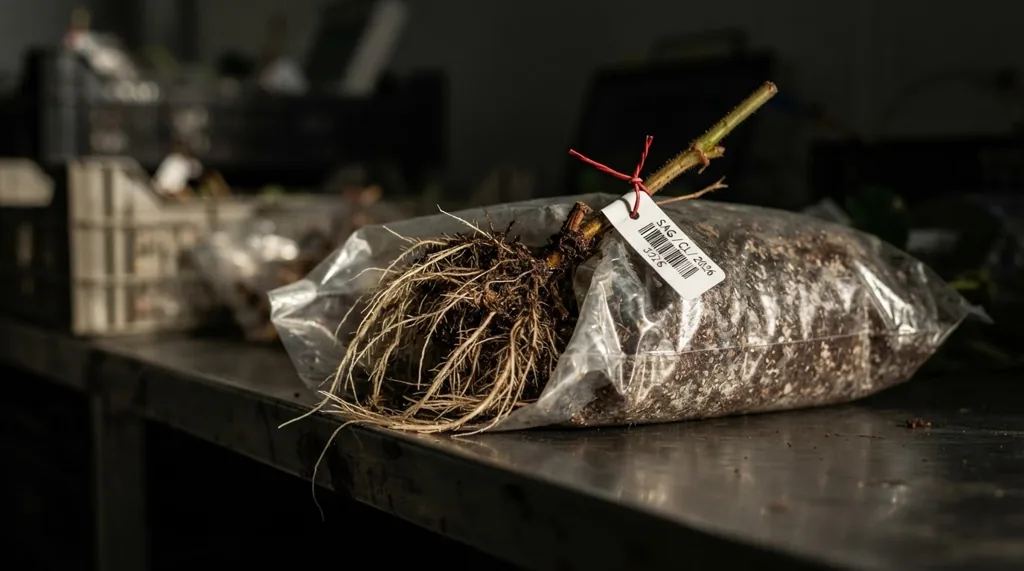
Chile has established and amended phytosanitary import measures for various plant propagation materials from multiple countries, including stone fruit plants from the USA, strawberries from the EU, berries from New Zealand, and olive cuttings from EU member states.
Chile’s farm health agency has rewritten its import rules for nursery plants of stone fruit, strawberries and berries. Shipments from the United States, the European Union and New Zealand must now carry updated pest-free declarations.
The Agricultural and Livestock Service (SAG), Chile’s plant and animal health authority, issued three resolutions covering plant material used to grow new crops. The largest, for stone fruit plants from the United States, appeared in Chile’s official gazette on 24 August 20261. The two amendments for strawberries and berries take effect on the day they are published in the official gazette2.
| At a glance | Details |
|---|---|
| What was published | One new import resolution and two amendments to existing ones |
| Published on | 24 August 2026 (stone fruit resolution in the official gazette) |
| Who must comply | Importers of nursery plants, cuttings and budwood from the US, EU and New Zealand |
| Effective date | Strawberry and berry amendments apply from their gazette publication date |
| Next milestone | Each shipment is inspected at entry, and stone fruit plants then go into post-entry quarantine |
What did Chile change, and why does it matter?
Phytosanitary rules are plant health checks that keep foreign pests and diseases out of a country. SAG says it updates its import requirements regularly, based on new data about where pests occur and how they spread2. Its surveillance programmes have also found some listed pests already present in Chile3.
The changes matter for nurseries and fruit growers that import planting stock. Each shipment needs an official plant health certificate from the exporting country. That certificate must now include new pest-free statements for each species3.
New rules for US stone fruit plants
The stone fruit resolution sets requirements for plants and budwood of 11 Prunus species from the United States1. These include apricot, sweet cherry, myrobalan plum, European plum, almond, Japanese plum and Japanese cherry1. It replaces Resolution No. 136 of 2021 and moves Japanese cherry out of Resolution No. 5.073 of 2012, so all US stone fruit rules sit in one text1.
| Area | What the resolution requires |
|---|---|
| Certificate | Issued by USDA/APHIS, the US plant health agency, with extra declarations |
| Origin | A nursery or germplasm repository under official state control |
| Entry point | Only the SAG office at Arturo Merino Benítez International Airport |
| Quarantine | All material goes through post-entry quarantine |
| Packaging | New, closed, tamper-resistant and labelled containers |
Shipments must be free of a long list of insects, mites, viruses and bacteria1. Rooted plants also need laboratory results showing they are free of certain soil worms and Phytophthora cambivora, a plant disease1. Importers must hold an approved quarantine site before the shipment arrives1.
Importers must also declare any genetically modified material1. If the plants are for propagation, importers must follow Chile’s mandatory control rules for plum pox virus1. Stone fruit species not on the list need a separate pest risk review by SAG before entry1.
What changes for EU strawberry plants
The strawberry resolution, signed in Santiago on 21 July 2026, amends Resolution No. 1.923 of 20252. It removes a spider mite, Tetranychus turkestani, from the pest list because the mite is now found in Chile2.
The production site must be inspected and lab-tested free of three fungi, including Neopestalotiopsis rosae2. Mother plants must test free of five pathogens, including Xanthomonas fragariae and tobacco necrosis virus2. Each shipment must also test free of a revised list of 12 nematode groups, tiny worms that damage roots2.
What changes for New Zealand berry plants
The berry resolution, signed on 22 July 2026, amends Resolution No. 634 of 20133. It covers plants, cuttings and budwood of blackberry, raspberry and blueberry from New Zealand3. SAG’s surveillance found three pests already present in Chile, including Tetranychus turkestani3.
| Crop | Examples of new declarations |
|---|---|
| Blackberry | Free of five listed insects and of cherry leaf roll virus |
| Raspberry | Free of four listed insects and two fungal diseases |
| Blueberry | Free of four listed insects and four fungal diseases |
All berry material must now enter through the SAG office at Arturo Merino Benítez International Airport in Santiago3. Importers can skip or shorten post-entry quarantine if the plants come from a SAG-recognised foreign production centre3.
Enforcement and inspection at the border
SAG inspects every stone fruit shipment at the point of entry1. If inspectors find a quarantine pest, SAG will decide which risk control measures to apply1. During post-entry quarantine, SAG runs official checks for hidden or hard-to-detect pests1.
Key terms in plain words
| Term | Meaning |
|---|---|
| SAG | Agricultural and Livestock Service, Chile’s farm health authority |
| Phytosanitary certificate | An official plant health document from the exporting country |
| Post-entry quarantine | A period after import when plants are kept isolated and checked |
| Budwood | Cut shoots used to graft new fruit trees |
| Quarantine pest | A pest Chile wants to keep out because it is absent or controlled |
| Nematode | A tiny worm in soil that can damage plant roots |
The strawberry and berry amendments take effect on the day each appears in Chile’s official gazette3.
Sources
- ↩ 26_04402_00_s.pdf https://members.wto.org/crnattachments/2026/SPS/CHL/26_04402_00_s.pdf
- ↩ 26_04078_00_s.pdf https://members.wto.org/crnattachments/2026/SPS/CHL/26_04078_00_s.pdf
- ↩ 26_04079_00_s.pdf https://members.wto.org/crnattachments/2026/SPS/CHL/26_04079_00_s.pdf