

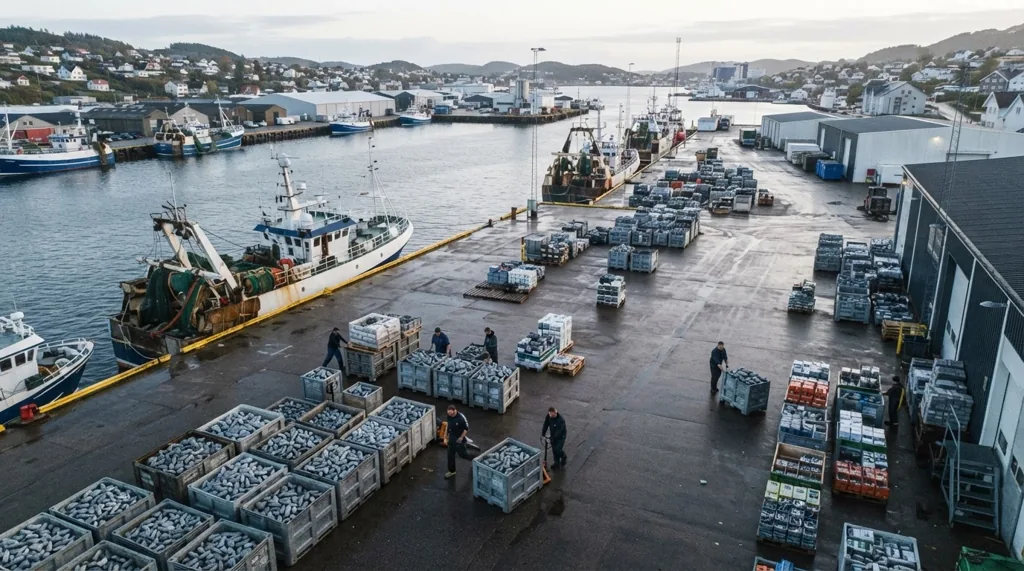
The European Commission has banned fishing weights and lures with 1% or more lead, with the first bans applying from 3 March 2027.
The European Commission has banned the sale of fishing weights and lures that contain 1% or more lead. The first bans, on fishing wires and drop-in sinkers, apply from 3 March 2027, with wider bans following in 2029 and 2031.
The Commission adopted Commission Regulation (EU) 2026/2501 on 12 November 2026, and it appeared in the Official Journal of the European Union on 13 November 20261. It adds the lead limits to REACH, the EU’s main chemicals law, and enters into force 20 days after publication1. Makers, importers, retailers and commercial fishers must all adapt, with no product recalls planned2.
| At a glance | Details |
|---|---|
| What was published | Final regulation adding lead limits for fishing tackle to REACH |
| Published on | 13 November 2026 (adopted 12 November 2026) |
| Who must comply | Sellers of fishing tackle for any fishing, and commercial fishers |
| Effective date | 3 December 2026 (first ban 3 March 2027) |
| Next milestone | Retailer warnings and first bans from 3 March 2027 |
What is the lead restriction, and why does it matter?
REACH, the EU law on the registration, evaluation, authorisation and restriction of chemicals, lets the Commission limit dangerous substances1. The new rules ban the sale of certain fishing tackle with 1% or more lead by weight1. They also ban using that tackle in commercial fishing1.
Lead is very toxic to aquatic life and can harm fertility and the unborn child1. The regulation says no safe level of lead has been found for human health1. Birds often swallow lost sinkers and lures, which can poison and kill them1.
The Commission expects the rules to protect around 7 million birds2. It estimates they will prevent about 50,000 tonnes of lead from entering nature over 20 years2. That is a 70% cut compared with today2.
What tackle is banned, and when?
The bans arrive in three steps, sorted by product type and weight1. Sinkers weighing more than 1 kg are not covered, because birds cannot swallow them1.
| Key date | What happens |
|---|---|
| 3 March 2027 | Ban on fishing wires and drop-in sinkers of any weight |
| 3 March 2027 | Retailers must display lead warnings |
| 3 December 2029 | Ban on sinkers and lures of 50 g or less |
| 3 December 2031 | Ban on sinkers and lures over 50 g and up to 1 kg |
Fishing wire is thin metal thread cut into short pieces and used as weight1. Drop-in sinkers are weights meant to be released during fishing1. The Commission gave these products only about six months because alternatives are widely available1.
What changes for retailers?
From 3 March 2027, retailers must warn buyers about any sinker or lure with 1% or more lead1. The warning must be clear and visible at the point of sale, close to the products1. Online and other distance sellers must show it in the sales offer1.
The warning states that the product contains lead, which is very toxic to the environment and may damage fertility or the unborn child1. It also lists the three ban dates1. Retailers must show it in the official languages of the country where the sale takes place, unless that country decides otherwise1.
Who is exempt?
The regulation sets out a few clear exemptions1. These include:
- lures made of copper alloys, such as brass, with less than 3% lead
- split shot, tiny clamp-on weights of 0.06 g or less, sold in spill-proof and child-resistant packaging
- weights enclosed, embedded or threaded in a fishing net or line
The Commission will review the first two exemptions after 3 December 2036, based on a report from the European Chemicals Agency1. Brass lures are the most common lead-free alternative but often contain 1% to 3% lead1.
The ban on use covers only commercial fishing, so EU rules do not stop recreational anglers using lead tackle1. Commercial fishers may also keep using sinkers and lures bought before each ban date1. The Commission says this avoids costly recalls and limits the impact on fishers and fishing businesses2.
What can national governments do?
EU countries may keep stricter national rules on the use of lead tackle1. Those rules must already be in force on 3 December 20261. They may only restrict use, not sales1.
Countries must send the text of these rules to the Commission without delay1. The Commission will then publish them1. The Commission also says EU countries can restrict recreational use nationally to suit their own enforcement plans2.
What does it cost fishers?
The Commission expects the rules to cost less than €30 per year for each fisher2. The phased timeline is meant to spread the cost over several years2.
The European Chemicals Agency found many lead alternatives, including steel, tin, zinc, tungsten, concrete and pebbles1. It noted that brass and zinc can also harm the environment1. The agency first studied lead in fishing and ammunition at the Commission’s request in 20191.
Key terms in plain words
| Term | Meaning |
|---|---|
| REACH | The EU’s main law controlling dangerous chemicals in products |
| Annex XVII | The REACH list of chemical bans and limits |
| Sinker | A weight that keeps a line, lure or net under water |
| Drop-in sinker | A weight meant to be released during fishing |
| Split shot | Very small clamp-on weights used on fishing lines |
| European Chemicals Agency (ECHA) | The EU body that assesses chemical risks |
The first bans and the retailer warning rule apply from 3 March 20271.
Sources
- ↩ L_202602501EN.000101.fmx.xml https://eur-lex.europa.eu/legal-content/EN/TXT/HTML/?uri=OJ:L_202602501
- ↩ Commission restricts lead in fishing weights and lures to protect people and the environment – Internal Market, Industry, Entrepreneurship and SMEs https://single-market-economy.ec.europa.eu/news/commission-restricts-lead-fishing-weights-and-lures-protect-people-and-environment-2026-11-12_en