

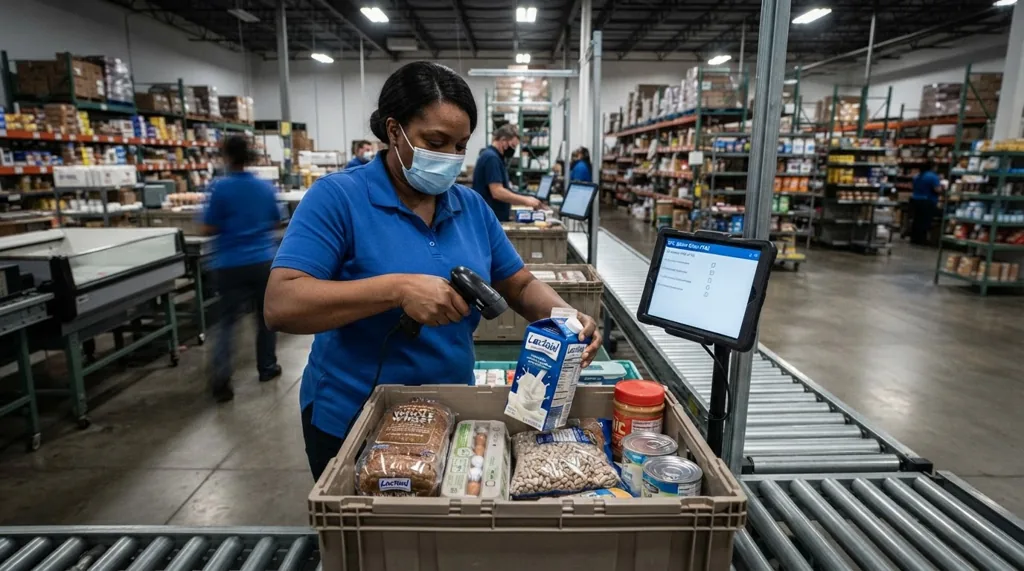
USDA’s final rule lets states offer online shopping to WIC families without waivers, taking effect Dec. 7, 2026.
The U.S. Department of Agriculture (USDA) has issued a final rule that lets states offer online grocery shopping to families in WIC, its nutrition program for mothers and young children. The rule takes effect on Dec. 7, 2026, and the department is taking further comments until Jan. 5, 2027.
The rule comes from the Food and Nutrition Administration (FNA), the USDA agency that runs federal food assistance programs. It permanently removes the rules that blocked online shopping, so states no longer need special waivers to offer it1. It also updates how WIC benefits are delivered and reported, now that every state uses electronic benefit cards1.
| At a glance | Details |
|---|---|
| What was published | Final rule with request for comment, 7 CFR Part 246 |
| Published on | Federal Register public inspection copy, document 2026-22679 |
| Who must comply | 88 WIC state agencies, their stores and their payment system partners |
| Feedback deadline / Effective date | Comments by 5 January 2027 / In force 7 December 2026 |
| Final rules / Next milestone | A later rule to make electronic cards the only payment method |
What is WIC, and why does this matter?
WIC is the Special Supplemental Nutrition Program for Women, Infants, and Children. It serves low-income pregnant and new mothers, infants and children up to age five1. In fiscal year 2025, it served an average of 6.9 million participants per month1.
WIC is run by 88 state agencies. These include the 50 states, 32 Indian Tribal Organizations, the District of Columbia and 5 U.S. territories1. In fiscal year 2023, about 37,368 stores were authorized to accept WIC benefits1.
Until now, families mostly had to shop in person at an approved grocery store. They pay with an electronic benefit transfer (EBT) card, a debit-style card loaded with their monthly food benefits1. The rule aims to give WIC shoppers the same options as other shoppers1.
What the final rule changes
The rule removes barriers to online ordering and internet payments in WIC. That includes lifting a ban on authorizing internet-based stores1. Each state agency can decide how to offer online shopping while protecting the program from misuse1.
The rule also lets states use new kinds of payment, such as mobile payments. It gives states more flexibility in how they issue benefits1. Finally, it updates reporting requirements for a modern, data-driven program1.
| Area | What the rule does |
|---|---|
| Online stores | Ends the ban on authorizing internet-based stores1 |
| Online payments | Allows payment through a store’s website or app1 |
| New payment types | Lets states use options such as mobile payments1 |
| Benefit issuance | Gives states more flexibility in issuing benefits1 |
| Reporting | Updates reporting rules for a data-driven program1 |
What happens to the existing waivers?
USDA first allowed online shopping through temporary waivers under the American Rescue Plan Act1. Those waivers were issued through September 2024 and remain in effect for ongoing projects1.
Once the rule takes effect, it replaces the online shopping waivers1. Waivers covering mobile payments and remote issuance of benefits will also be replaced1. Through a separate grant program, 22 state agencies have received funding to build online shopping1.
Who must act, and what is optional?
Online shopping is not a requirement for states1. The department says it is not requiring any new technology now, partly because of cost concerns1. States can choose a timeline that fits their budgets and systems1.
Some states use offline EBT systems, where benefits sit on a chip card rather than an online account. The department says these systems cannot run online shopping or issue benefits remotely1. It is working with those states to move to online systems1.
Store approval stays with each state. Commenters asked for one national approval process like the one for the Supplemental Nutrition Assistance Program (SNAP), but the department declined1. It said the Child Nutrition Act gives store approval and oversight to WIC state agencies1.
How the rule took shape
The department first proposed these changes on Feb. 23, 20232. Comments on that proposal were due by May 24, 20232. The proposal also aimed to let states test mobile payments and issue benefits remotely2.
USDA received 1,664 comments on the proposal1. More than 1,070 commenters broadly supported the changes, while about 10 opposed them1. Many asked for more federal funding and technical help, which the department says it will provide through guidance1.
Comments and next steps
The department is asking for comments on the rule’s effects. It wants to hear especially from state agencies and their payment and data system partners1. Comments must arrive through the federal online comment portal by Jan. 5, 20271.
The department also plans a future rule. That rule would update WIC regulations to show that electronic cards are now the only payment method in stores1.
Key terms in plain words
| Term | Meaning |
|---|---|
| WIC | A federal nutrition program for low-income mothers, infants and young children |
| EBT | Electronic benefit transfer, a debit-style card that holds food benefits |
| Waiver | Temporary permission to skip a federal rule |
| Internet-based transaction | A WIC payment made through a store’s website or app |
| State agency | The state, tribal or territorial office that runs WIC locally |
| Final rule with request for comment | A binding rule that still invites public feedback |
The rule takes effect on Dec. 7, 2026, and comments are due by Jan. 5, 20271.
Sources
- ↩ 2026-22679.pdf https://public-inspection.federalregister.gov/2026-22679.pdf
- ↩ Federal Register :: Special Supplemental Nutrition Program for Women, Infants, and Children (WIC): Online Ordering and Transactions and Food Delivery Revisions To Meet the Needs of a Modern, Data-Driven Program https://www.federalregister.gov/documents/2023/02/23/2023-02484/special-supplemental-nutrition-program-for-women-infants-and-children-wic-online-ordering-and