

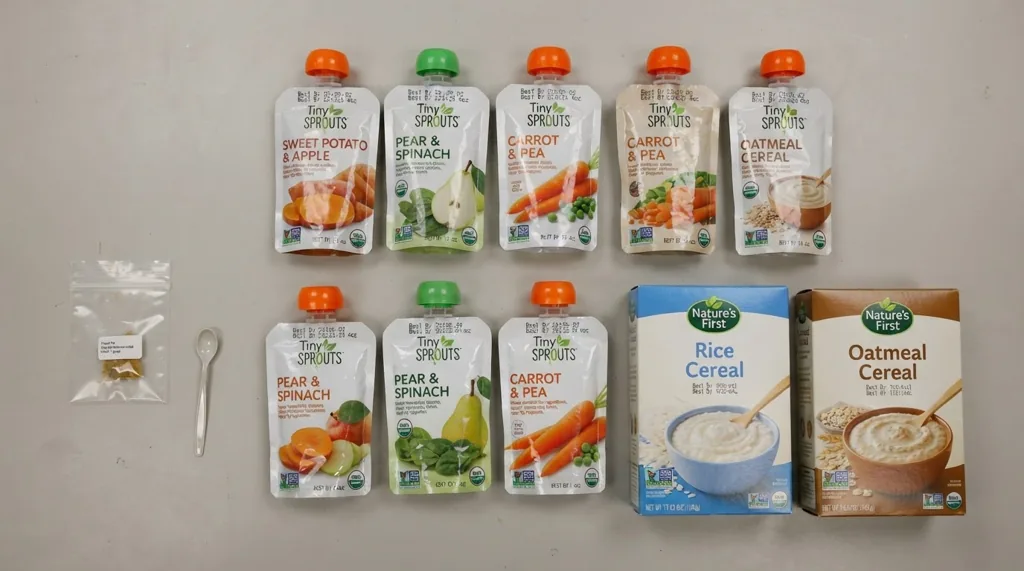
The FDA proposed cadmium limits of 10 to 45 parts per billion for baby foods. Comments are due 60 days after publication.
The US Food and Drug Administration (FDA) has proposed cadmium limits for processed foods made for babies and young children. Makers of purees, infant cereals and similar products have 60 days after publication to comment.
The FDA filed a notice for public inspection on 22 October 2026 announcing a draft guidance on cadmium, a toxic metal found in soil and water1. The guidance covers processed foods for children under 2 years old and sets limits that range from 10 to 45 parts per billion by food type2. The agency will review comments before it begins work on a final version2.
| At a glance | Details |
|---|---|
| What was published | Draft guidance for industry on cadmium action levels |
| Published on | Filed 22 October 2026, Federal Register publication 23 October 2026 |
| Who can comment | Baby food makers, processors and the public |
| Feedback deadline | 60 days after Federal Register publication |
| Final rules / Next milestone | FDA drafts final guidance after reviewing comments |
What the FDA published, and why it matters
The notice announces a draft guidance titled "Action Levels for Cadmium in Processed Food Intended for Babies and Young Children"2. It falls under Docket No. FDA-2025-D-4023 and cites part 109 of the federal food rules2. The FDA says the goal is to set achievable levels that further reduce cadmium in the food supply2.
The Office of the Federal Register lists the notice as FR Document 2026-21670, with a scheduled publication date of 23 October 20261. The measure is part of Closer to Zero, the FDA’s plan to cut babies’ exposure to arsenic, lead, cadmium and mercury3.
The proposed cadmium limits by food type
The draft sets five action levels. An action level is the contamination level at which the FDA may treat a food as unsafe under federal food law2.
| Food category | Proposed cadmium action level |
|---|---|
| Fruits, vegetables (except single-ingredient carrots) and mixtures, including grain- and meat-based mixtures | 10 ppb |
| Single-ingredient carrots | 25 ppb |
| Dry infant cereals | 45 ppb |
| Yogurts, puddings and custards | 20 ppb |
| Single-ingredient meats | 25 ppb |
The figures are in parts per billion (ppb), a measure of very small amounts in food2. The strictest limit, 10 ppb, applies to the widest group of foods. Dry infant cereals get the highest limit, 45 ppb2.
How enforcement would work
The guidance is not binding on companies or on the FDA2. Firms may use another approach if it meets the law and regulations2. However, the FDA says it will consider these levels, along with other factors, when deciding whether to take enforcement action2.
The FDA notes it does not need an action level to act against an unsafe food3. Food makers must already use preventive controls to reduce chemical hazards such as cadmium3. If a food is unsafe, the agency may work with the maker or stop the product from entering or staying on the US market3.
How cadmium compares with the lead limits
The cadmium draft follows final guidance on lead in baby foods, which the FDA issued on 6 January 20254. That guidance set lead limits of 10 ppb for most foods and 20 ppb for root vegetables and dry infant cereals4.
| Food category | Lead (final, 2025) | Cadmium (draft, 2026) |
|---|---|---|
| Fruits, vegetables and mixtures | 10 ppb | 10 ppb |
| Dry infant cereals | 20 ppb | 45 ppb |
| Yogurts, custards and puddings | 10 ppb | 20 ppb |
| Single-ingredient meats | 10 ppb | 25 ppb |
The lead rules treated all single-ingredient root vegetables as one group4. The cadmium draft singles out single-ingredient carrots instead2.
What the FDA wants to hear
The FDA asks for comments on the proposed levels in general2. It also asks whether data could support different levels for any food category2. The agency will consider comments on the costs or savings the guidance could create2.
Comments can be filed online at regulations.gov or sent on paper to the FDA’s dockets office2. All comments must include the docket number2. The FDA’s Closer to Zero plan targeted final cadmium guidance one year after the draft3.
Transition timeline and key deadlines
Key terms in plain words
| Term | Meaning |
|---|---|
| Cadmium | A toxic metal that plants and animals can take up from soil, air and water |
| Action level | The contamination level at which the FDA may treat a food as unsafe |
| Parts per billion (ppb) | A unit for very small amounts, used here for metal in food |
| Draft guidance | The FDA’s proposed thinking, open for comment and not legally binding |
| Adulterated | The legal term for food that is unsafe or contaminated |
| Closer to Zero | The FDA plan to lower toxic metals in food for babies and young children |
Comments on the draft are due 60 days after its Federal Register publication on 23 October 20262.
Sources
- ↩ Federal Register :: Federal Register Documents on Public Inspection for 2026-10-22 https://www.federalregister.gov/public-inspection/2026/10/22
- ↩ 2026-21670.pdf https://public-inspection.federalregister.gov/2026-21670.pdf
- ↩ Closer to Zero: Reducing Childhood Exposure to Contaminants from Foods | FDA https://www.fda.gov/food/environmental-contaminants-food/closer-zero-reducing-childhood-exposure-contaminants-foods
- ↩ FDA Issues Final Guidance for Industry on Action Levels for Lead in Processed Food Intended for Babies and Young Children | FDA https://www.fda.gov/food/hfp-constituent-updates/fda-issues-final-guidance-industry-action-levels-lead-processed-food-intended-babies-and-young