

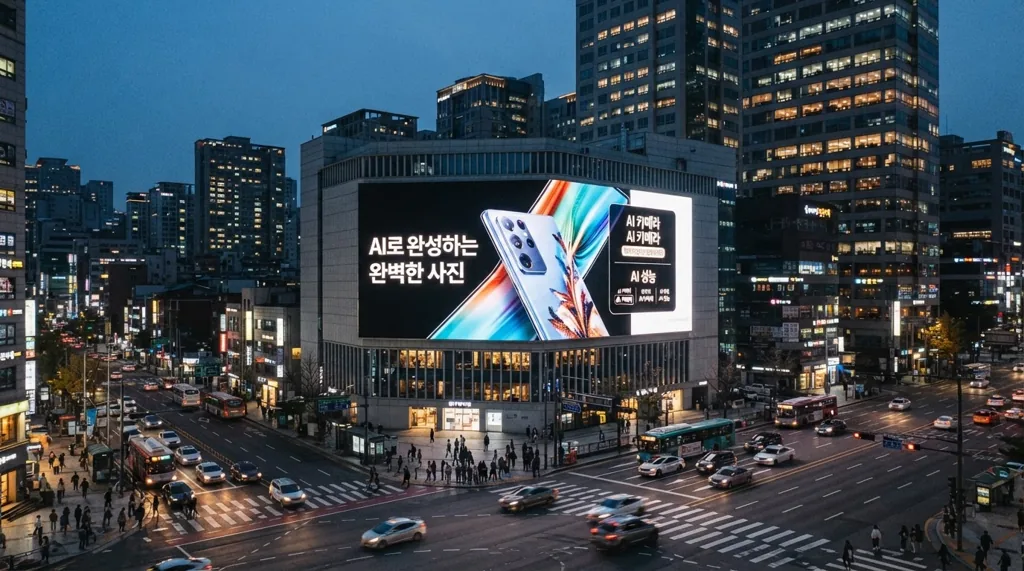
South Korea’s fair trade regulator drafted guidelines against misleading AI claims in ads, with comments open until Nov. 11, 2026.
AI claims in ads must match what the product does
The KFTC draft guidelines are open for comment until Nov. 11, 2026.
South Korea’s competition and consumer watchdog has drafted guidelines to stop companies from overstating artificial intelligence (AI) in their advertising. Businesses, consumers and experts can comment on the draft until Nov. 11, 2026.
The Korea Fair Trade Commission (KFTC), the agency that polices competition and false advertising, released the draft "Guidelines on Labeling and Advertising Related to AI" on Oct. 22, 20261. They apply to any business that advertises goods or services as using AI. After the comment period and talks with other ministries, the KFTC plans to finalize and distribute the guidelines2.
| At a glance | Details |
|---|---|
| What was published | Draft guidelines on AI-related labeling and advertising |
| Published on | 22 October 2026 |
| Who can comment / Who must comply | Businesses, consumers and experts may comment. The guidance covers any business advertising AI products or services |
| Feedback deadline / Effective date | 11 November 2026 |
| Final rules / Next milestone | Final guidelines after the comment review and talks with other ministries |
What is AI washing, and why does it matter?
"AI washing" means advertising a product as using AI when it does not1. The KFTC also targets ads that use real AI but hide key facts, such as where it works, under what conditions, and its performance limits1.
The agency says consumers tend to link AI with advanced, accurate and objective products. A Korea Consumer Agency survey from November 2025 found that 57.9% of respondents would pay more for AI products2. Those buyers said they would pay about 21% more on average2.
The KFTC also points to fake ads using AI-generated people, fake reviews and deepfakes, meaning AI-made videos of real-looking people. These spread quickly on social media, mainly for food and medicines, and have harmed older consumers in particular1.
What the draft guidelines contain
The guidelines are not legally binding2. They do not add stricter duties for AI ads than for other products. Instead, they show how existing advertising law applies to AI1.
That law is the Act on Fair Labeling and Advertising, Korea’s main law against misleading ads. Its four principles are truthfulness, completeness, fairness and the ability to prove claims1. The draft turns these into four practical checkpoints2:
| Checkpoint | What advertisers are expected to do |
|---|---|
| Use of AI | State truthfully where and how AI is actually used, including third-party technology2 |
| Performance | Describe proven performance with checkable numbers and conditions, and avoid "best" claims2 |
| Conditions of use | Show what the AI needs to work, such as an app or internet link, near the main claim2 |
| Responsibility | Disclose limits, error risks and required notices, such as "not a medical device"2 |
The draft also says what does not count as AI. Simple sensor controls or automatic settings that follow fixed rules are unlikely to qualify2.
The 16 example cases
The draft groups unfair AI ads into the four types the law bans. It gives 16 cases in total, each with before-and-after ad examples2. The cases are made-up examples rebuilt from real complaints and investigations1.
| Type of unfair ad | Example products in the draft |
|---|---|
| False or exaggerated (7 cases) | AI heated water mat, smart cat litter box, neck pillow, diet shake, custom shampoo, AI deodorizer, AI lawyer2 |
| Deceptive (5 cases) | Robot vacuum, posture chair, AI English tutor app, food endorsed by a virtual expert, deepfake investment advice2 |
| Unfair comparison (2 cases) | Air purifier, AI study materials for elementary pupils2 |
| Disparaging rivals (2 cases) | Home AI security camera, AI meeting-notes service2 |
Using the word "AI" is not banned when the product really uses it2. But the claim must match the real function. Limits and operating conditions must appear near the main message2.
How the self-check works in practice
The draft includes an eight-item checklist for businesses to use before running an ad1. It follows four steps. Did the firm really use AI? Did it say where and under what conditions? Did it describe the effect precisely? Can it prove the claim objectively2?
The four-step self-check before an ad runs
The checklist also asks whether a firm presents a third party’s AI as its own work2. Failing a checklist item is not, by itself, a violation or grounds for a penalty2.
The guidelines add advice for consumers and a list of common questions. There are 10 questions for businesses and 6 for consumers2.
Proof of claims and other AI ad rules
Under the advertising law, the business carries the burden of proving its factual claims2. The draft explains the agency’s process for proof requests. Firms must submit evidence within 15 days of a request2. Firms that do not submit can face an order to stop the ad and a fine2.
AI advertising rules in 2026
Holding an official AI product confirmation does not excuse a firm under the advertising law2. That confirmation scheme, run under a science ministry notice since July 21, 2026, checks whether AI is used, not how well it performs2.
The draft also points to rules already in force. A revised KFTC guideline on endorsements took effect on June 1, 20263. It requires ads using AI-made virtual people to say so, for example with a "virtual person" label3. Separately, revised laws ban AI virtual experts from endorsing food, cosmetics and medicines from Nov. 27, 20262.
Key terms in plain words
| Term | Meaning |
|---|---|
| AI washing | Claiming a product uses AI when it does not, or only barely does |
| KFTC | Korea Fair Trade Commission, the national competition and advertising regulator |
| Substantiation | Proof, such as test results, that backs up an ad’s factual claim |
| Deepfake | An AI-made video or image that looks like a real person |
| Non-binding guidelines | Official guidance that explains the law but is not itself a law |
| Virtual person | A person in an ad who was created by AI, not a real human |
Comments on the draft are due by Nov. 11, 2026, by post or email to the KFTC1.
Sources
- ↩ AI관련 표시광고 가이드라인 초안 의견청취 실시 – 보도자료 | 브리핑룸 | 대한민국 정책브리핑 https://m.korea.kr/news/pressReleaseView.do?newsId=156786092&pWise=mSub&pWiseSub=C2
- ↩ download.do https://www.korea.kr/common/download.do?fileId=198575259&tblKey=GMN
- ↩ "진짜 사람 아니야?" 확 바뀐 AI 가상인물 광고 표기 의무화 – 정책뉴스 | 뉴스 | 대한민국 정책브리핑 https://www.korea.kr/news/policyNewsView.do?newsId=148969359