
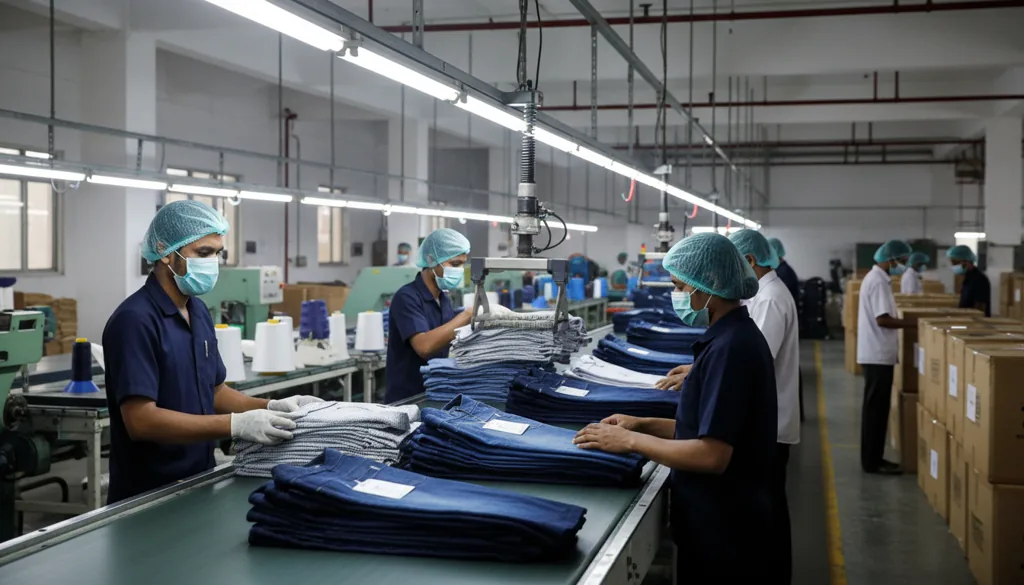
United States reduced tariffs on certain Bangladeshi goods to 20% following a reciprocal trade agreement signed on February 9, 2026.
The United States has cut tariffs on certain Bangladeshi goods to 19% under a new trade agreement that takes effect immediately, replacing a 37% rate imposed in April 2025.
The deal covers $11.8bn in annual trade, with Bangladesh exporting $9.5bn worth of ready-made garments, textiles and apparel to the US, while importing $2.3bn in US goods—primarily cotton, machinery, medical devices and energy products. The lower rate applies only to shipments that meet strict rules of origin and volume limits, leaving most Bangladeshi exports still subject to the 19% duty.
The agreement comes after the US Supreme Court struck down the original reciprocal tariff regime in February 2026, forcing the administration to renegotiate terms with trading partners. Under the new deal, Bangladesh secures limited duty-free access for a set volume of apparel and textiles, but must commit to buying billions in US agricultural and energy products in return.
The tariff cut and its limits
The US will reduce the reciprocal tariff on Bangladeshi goods to 19% from the 37% rate announced in April 20251. The lower rate applies only to "originating goods" under the Agreement on Reciprocal Trade (ART), signed on 9 February 20261. Most shipments will still face the 19% duty, but a to-be-determined volume of apparel and textiles can enter duty-free if Bangladesh meets US demands for cotton and man-made fibre purchases1.
Bangladeshi goods: duty rates, old and new
The quota system means the benefit is narrow. Bangladesh exported $8.2bn in apparel to the US in 2025, but the duty-free volume will cover only a fraction of that2. The rest will pay the 19% rate, which is still nearly double the pre-2025 most-favoured-nation rate of 10%3. For importers, the delivered cost of a $10,000 shipment of garments will fall by $1,800 if it qualifies for the zero rate, but rise by $900 if it does not.
The agreement also suspends the 10% temporary import duty imposed in February 2026 under Section 122 of the Trade Act of 1974, which expired on 24 July 20263. That duty had added another layer of cost to all imports, including those from Bangladesh, but was lifted for goods covered by the ART.
What Bangladesh must buy in return
To secure the tariff cut, Bangladesh has committed to purchasing $3.5bn in US agricultural products and $15bn in liquefied natural gas (LNG) over 15 years2. The deal also requires Bangladesh to accept US vehicle safety and emissions standards, recognise US Food and Drug Administration (FDA) approvals for medical devices and pharmaceuticals, and remove import restrictions on US remanufactured goods1.
What the deal requires of Bangladesh
The purchases are not optional. The agreement ties market access to specific buying targets, meaning Bangladesh must increase imports of US cotton, soy, dairy, beef and poultry to maintain the lower tariff rates1. For exporters, this creates a direct link between the cost of garments sold in the US and the volume of US goods bought by Bangladesh.
The deal also includes commitments on digital trade, labour standards and environmental protection. Bangladesh must prohibit imports made with forced labour, strengthen workers’ rights to collective bargaining, and adopt science-based processes for US food and agricultural imports1. Failure to meet these conditions could trigger a review of the tariff concessions.
The Supreme Court ruling that forced the change
The original reciprocal tariff regime, announced in April 2025, was struck down by the US Supreme Court in Learning Resources, Inc. v. Trump on 24 February 20263. The court ruled that the tariffs, imposed under the International Emergency Economic Powers Act (IEEPA), exceeded the president’s authority. US Customs and Border Protection (CBP) stopped collecting the duties the same day, leaving the administration with no legal basis to enforce the 37% rate.
How the 37% rate fell apart
The ruling created a legal vacuum. The administration responded by invoking Section 122 of the Trade Act of 1974, imposing a 10% temporary import duty on all goods entering the US4. That duty expired on 24 July 2026, but not before the US and Bangladesh finalised the ART, which restored a stable—if higher—tariff rate of 19%1.
The court’s decision also invalidated reciprocal tariffs on other countries, including China, Mexico and Canada, which had faced rates as high as 41%3. The administration has since renegotiated deals with several partners, including India, which saw its rate cut to 18% in exchange for commitments to buy US energy and agricultural products5.
Who gains and who pays
The tariff cut will lower costs for US importers of Bangladeshi apparel, but the benefit is uneven. The duty-free quota will cover only a small share of shipments, leaving most garments subject to the 19% rate1. For exporters, the delivered cost of a $100,000 container of T-shirts will fall by $19,000 if it qualifies for the zero rate, but rise by $9,000 if it does not.
A $100,000 container of T-shirts, two ways
| Question | Qualifies for zero rate | Does not qualify |
|---|---|---|
| Duty rate | 0% within quota | 19% baseline |
| Cost change vs 37% era | Falls $19,000 | Rises $9,000 |
| Share of shipments covered | Only a small share | Most garments |
The deal also shifts costs to Bangladesh. The country must spend billions on US goods to maintain the lower tariffs, diverting funds from domestic priorities2. The agreement also requires Bangladesh to align its labour and environmental laws with US standards, which could increase compliance costs for manufacturers.
For US exporters, the deal opens new markets. Bangladesh has agreed to remove barriers to US medical devices, machinery, motor vehicles and energy products1. The US also secures commitments on digital trade, including a moratorium on customs duties for electronic transmissions and the free transfer of data across borders1.
What comes next for bangladeshi goods
The agreement includes a review mechanism, but no fixed date for further cuts. The US has said it will identify additional products for zero-tariff treatment under Annex III of Executive Order 14346, but has not specified which goods or when1. For now, the 19% rate remains the baseline, with duty-free access limited to a narrow quota.
The deal also sets a precedent for future negotiations. The US has used the threat of tariffs to secure commitments on labour, environment and digital trade, signalling a shift toward bilateral deals that tie market access to non-tariff concessions2. For Bangladesh, the agreement is a test of whether it can turn temporary tariff relief into long-term growth—or whether it will remain dependent on a single sector for its export earnings.
The next step is implementation. Bangladesh must meet its purchasing targets and labour commitments to avoid a review of the tariff concessions. For importers, the key date is the first allocation of the duty-free quota, which has not yet been announced. Until then, the 19% rate remains the default, and the delivered cost of Bangladeshi goods in the US will depend on whether they qualify for the zero rate.
Sources
- ↩ Joint Statement on United States – Bangladesh Agreement on Reciprocal Trade https://www.whitehouse.gov/briefings-statements/2026/02/joint-statement-on-framework-for-united-states-bangladesh-agreement-on-reciprocal-trade/
- ↩ Bangladesh and the United States: Beyond the tariff bargain https://www.thedailystar.net/slow-reads/geopolitical-insights/news/bangladesh-and-the-united-states-beyond-the-tariff-bargain-4263166
- ↩ Trump Administration Tariff Tracker https://www.wiley.law/trump-administration-tariff-tracker
- ↩ Trump Imposes Temporary Import Duty to Address International Payment Issues https://www.whitehouse.gov/fact-sheets/2026/02/fact-sheet-president-donald-j-trump-imposes-a-temporary-import-duty-to-address-fundamental-international-payment-problems/
- ↩ U.S. and India Announce Historic Trade Deal https://www.whitehouse.gov/fact-sheets/2026/02/fact-sheet-the-united-states-and-india-announce-historic-trade-deal/