

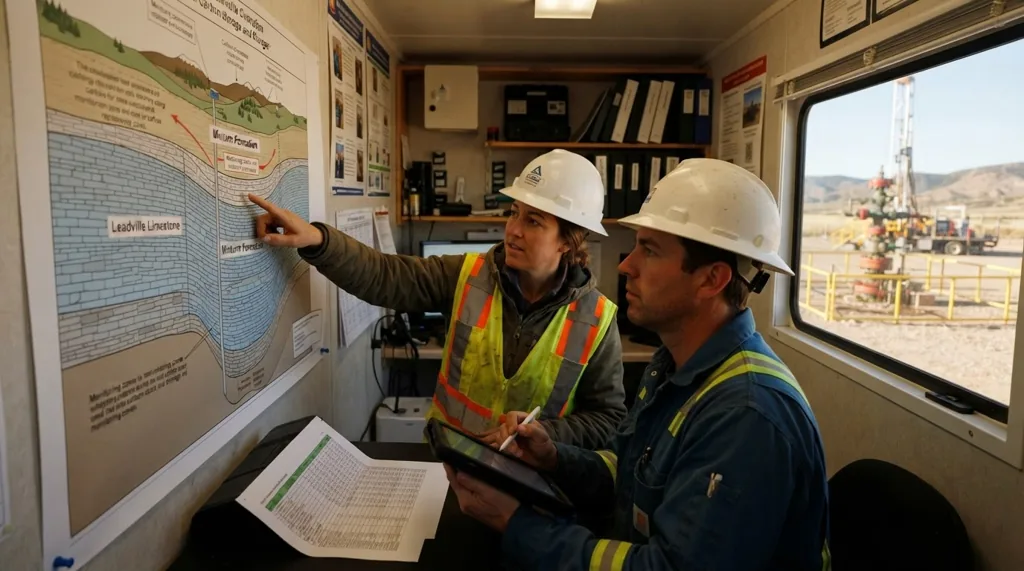
EPA approved Colorado’s own permit program for carbon dioxide storage wells. The state takes over permits on Nov. 12, 2026.
The U.S. Environmental Protection Agency (EPA) has approved Colorado’s request to run its own permit program for carbon dioxide storage wells. From Nov. 12, 2026, a state commission, not EPA, will issue and enforce these permits in Colorado.
EPA published the final rule in the Federal Register on Oct. 13, 20261. It hands Colorado "primacy", meaning the main enforcement role, over Class VI wells, which inject carbon dioxide deep underground for long-term storage1. Until Nov. 12, EPA remains the permitting authority in the state2.
| At a glance | Details |
|---|---|
| What was published | Final rule approving Colorado’s Class VI well program |
| Published on | 13 October 2026 |
| Who must comply | Owners and operators of carbon dioxide storage wells in Colorado |
| Effective date | 12 November 2026 |
| Final rules / Next milestone | State commission takes over permits on 12 November 2026 |
What changes on Nov. 12
The rule lets the Colorado Energy and Carbon Management Commission (ECMC), the state’s energy and carbon storage regulator, issue and enforce Class VI permits1. These permits cover geologic sequestration, which means storing carbon dioxide in deep rock layers1. The state commission calls the period before the handover a 30-day transition2.
EPA does not step away entirely. It will oversee Colorado’s program under the Safe Drinking Water Act (SDWA), the federal law that protects drinking water sources1. The rule also writes into federal rules some earlier, minor changes to Colorado’s program for Class II wells, which are used for oil and gas fluids1.
Who keeps federal permits
EPA will stay the permitting authority for all Class VI wells on Indian lands within Colorado1. Projects on those lands will still deal with EPA directly. The state commission confirms this split in its own notice of the approval2.
The approval does not clear any single storage project. The state commission says primacy "transfers regulatory authority" and "does not approve any individual carbon storage project"2.
What a Class VI permit requires
Operators that want to inject carbon dioxide must receive a permit for each well1. They must show the well and its activities meet all rules1. The final rule lists the main requirements that apply under the program1:
| Area | What operators must do |
|---|---|
| Site study | Show the local geology will hold the carbon dioxide in place1 |
| Modeling | Map the area affected by injection over the project’s life1 |
| Well building | Build wells that will not leak carbon dioxide1 |
| Testing and monitoring | Track well integrity, earthquakes, pressure and the gas plume, even after injection ends1 |
| Operating limits | Keep injection pressure within limits that protect drinking water1 |
| Money set aside | Cover costs through site closure, including care after injection1 |
| Emergency plans | Keep plans for emergencies and clean-up1 |
| Reporting | Send all test and monitoring results to the regulator1 |
Each draft permit goes out for public comment before a final decision is made1.
How Colorado reached this point
Colorado submitted its application to EPA on Oct. 7, 20251. In 2023, state laws known as Senate Bills 23-285 and 23-016 gave the commission authority over Class VI wells3. Those laws also set rules on money set aside, impacts on communities, and consent from surface owners3.
A 2024 law, House Bill 24-1346, confirmed that surface owners own the underground pore space used for storage3. The commission adopted its Class VI rules on Dec. 16, 20243. EPA proposed approval on March 19, 2026, and opened a 45-day public comment period2. It held one virtual public hearing on April 23, 20262.
| Key date | What happens |
|---|---|
| Dec. 16, 2024 | Colorado adopts its Class VI rules3 |
| Oct. 7, 2025 | Colorado applies to EPA1 |
| March 19, 2026 | EPA proposes approval and opens comments2 |
| April 23, 2026 | EPA holds a virtual public hearing2 |
| Oct. 13, 2026 | EPA publishes the final rule1 |
| Nov. 12, 2026 | Colorado takes over Class VI permits1 |
Why it matters for carbon storage projects
Class VI wells form part of carbon capture and storage, which traps emissions from industrial sources1. The state commission says state control allows permits suited to Colorado’s own geology and environment2.
Colorado also signed an agreement with Wyoming on May 4, 20262. It aims to improve coordination on storage projects that may cross state lines2. Project developers in Colorado will now deal with a state regulator for most permits.
Key terms in plain words
| Term | Meaning |
|---|---|
| Primacy | A state’s right to run and enforce a federal program itself |
| Class VI well | A well that injects carbon dioxide deep underground for storage |
| Geologic sequestration | Storing carbon dioxide in deep rock layers for the long term |
| ECMC | Colorado Energy and Carbon Management Commission, the state regulator |
| SDWA | Safe Drinking Water Act, the federal law protecting drinking water sources |
| Pore space | The tiny gaps in underground rock where carbon dioxide is stored |
Colorado takes over Class VI permitting when the rule becomes effective on Nov. 12, 20261.
Sources
- ↩ Federal Register :: Colorado Underground Injection Control (UIC) Program; Class VI Primacy https://www.federalregister.gov/documents/2026/10/13/2026-20846/colorado-underground-injection-control-uic-program-class-vi-primacy
- ↩ Class VI Program Overview | Colorado Energy & Carbon Management Commission https://ecmc.colorado.gov/programs/underground-injection-control/class-vi/program-overview
- ↩ Class VI Primacy | Colorado Energy & Carbon Management Commission https://ecmc.colorado.gov/programs/underground-injection-control/class-vi/class-vi-primacy