

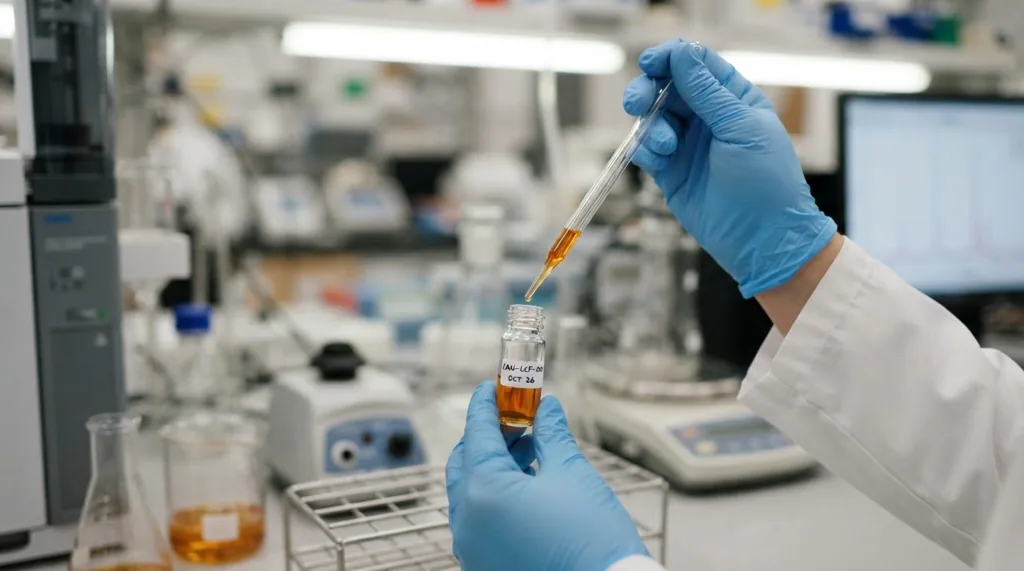
Canada proposed Clean Fuel Regulations changes giving bonus credits for Canadian low-carbon fuel, opening a 75-day consultation after Canada Gazette publication.
Canada has proposed changes to its Clean Fuel Regulations that would give extra credits for low-carbon fuel made in Canada. The draft goes to a 75-day public consultation once it appears in the Canada Gazette at the end of October.
Environment and Climate Change Canada (ECCC), the federal environment department, announced the proposed amendments on Oct. 27, 20261. The rules apply to producers and importers of gasoline and diesel, who must cut the carbon intensity of their fuels2. The department’s news release gives Oct. 30, 2026, as the Canada Gazette, Part I, publication date, while its program page gives Oct. 31, 20261, 2.
| At a glance | Details |
|---|---|
| What was published | Proposed amendments to the Clean Fuel Regulations (draft rules) |
| Published on | 27 October 2026 (announcement and advance copy) |
| Who can comment / Who must comply | Fuel producers and importers, low-carbon fuel makers, and the public |
| Feedback deadline / Effective date | 75 days after Canada Gazette, Part I, publication |
| Final rules / Next milestone | Canada Gazette, Part I, publication on 30 or 31 October 2026 |
What are the Clean Fuel Regulations?
The Clean Fuel Regulations require producers and importers of gasoline and diesel to lower the carbon intensity of those fuels2. Carbon intensity is the amount of greenhouse gas released per unit of energy in a fuel. Suppliers can meet the target by, for example, supplying low-carbon fuels such as biofuels2.
Companies that cut emissions earn compliance credits, which others can buy to meet their obligations. ECCC says the credit market has grown to more than $3 billion since the rules took effect1. The rules have also generated more than $185 million in credits for home and public electric vehicle charging1.
What the amendments would change
The government says the changes would close a competitiveness gap facing Canadian low-carbon fuel producers1. They aim to encourage investment in clean technology, such as carbon capture and storage at ethanol plants1. They would also support refineries that process plant-based feedstocks, like canola oil, alongside crude oil1.
The central change is a new category of "related compliance credits"3. These are bonus credits on top of the ordinary ones. They would be available for three kinds of fuel activity:
- making co-processed low-carbon fuel, meaning biofuel refined together with crude oil at a refinery
- the credit-creating activity covered by paragraph 19(1)(c) of the rules
- replacing fossil fuel with low-carbon fuel produced in Canada3
How the bonus credits would be counted
The draft sets out a formula for the bonus: P × N × F3. N is the number of ordinary credits earned. F is a factor set for each fuel type in a new Schedule 3.1 to the rules3.
P is the share of the fuel made from North American feedstock, meaning raw materials grown or sourced in Canada, the United States or Mexico3. P is set at 1 for fuel produced in Newfoundland and Labrador, and for fuel used in the Canadian-made displacement category3. The bonus would not apply to credits from any compliance period that ended before Jan. 1, 20263.
Other changes in the draft
The draft also rewrites limits on how suppliers use certain credits. Credits from contributions to an emission-reduction funding program could cover no more than 15% of a supplier’s total reduction requirement3. Credits linked to imported gaseous fuels would be capped at 5%3.
Credits from projects using a generic calculation method would be capped at 10% of the requirement3. Suppliers must meet their total reduction requirement by Dec. 15 following each compliance period3. The draft also updates technical fuel definitions and a verification standard reference3.
Who is affected, and what comes next?
The changes matter most to fuel refiners and importers, and to makers of ethanol, biodiesel and renewable diesel. ECCC also names farmers who grow feedstocks such as canola, corn and wheat2. Canada uses almost 200 million litres of gasoline and diesel a day1.
A separate program, the Biofuels Production Incentive, offers up to $372 million to domestic biodiesel and renewable diesel producers1. It is open for applications until December 20271. ECCC says it will keep working with industry, provinces, territories and Indigenous partners on the measures1.
Key terms in plain words
| Term | Meaning |
|---|---|
| Carbon intensity | Greenhouse gas released for each unit of energy in a fuel |
| Compliance credit | A tradable unit earned by cutting emissions, used to meet the rules |
| Related compliance credit | A proposed bonus credit for certain low-carbon fuel activities |
| Co-processing | Refining plant-based oils together with crude oil |
| Feedstock | The raw material used to make a fuel, such as canola |
| Canada Gazette, Part I | The government’s official journal for draft regulations |
The 75-day public consultation begins when the draft appears in the Canada Gazette, Part I, at the end of October 2026.
Sources
- ↩ Canada proposes changes to support the low-carbon fuel industry – Canada.ca https://www.canada.ca/en/environment-climate-change/news/2026/10/canada-proposes-changes-to-support-the-low-carbon-fuel-industry.html
- ↩ Clean Fuel Regulations – Canada.ca https://www.canada.ca/en/environment-climate-change/services/managing-pollution/energy-production/fuel-regulations/clean-fuel-regulations.html
- ↩ 81000-2-6067_PreCG1.pdf https://www.canada.ca/content/dam/eccc/documents/pdf/managing-pollution/clean-fuel-regulations/81000-2-6067_PreCG1.pdf