

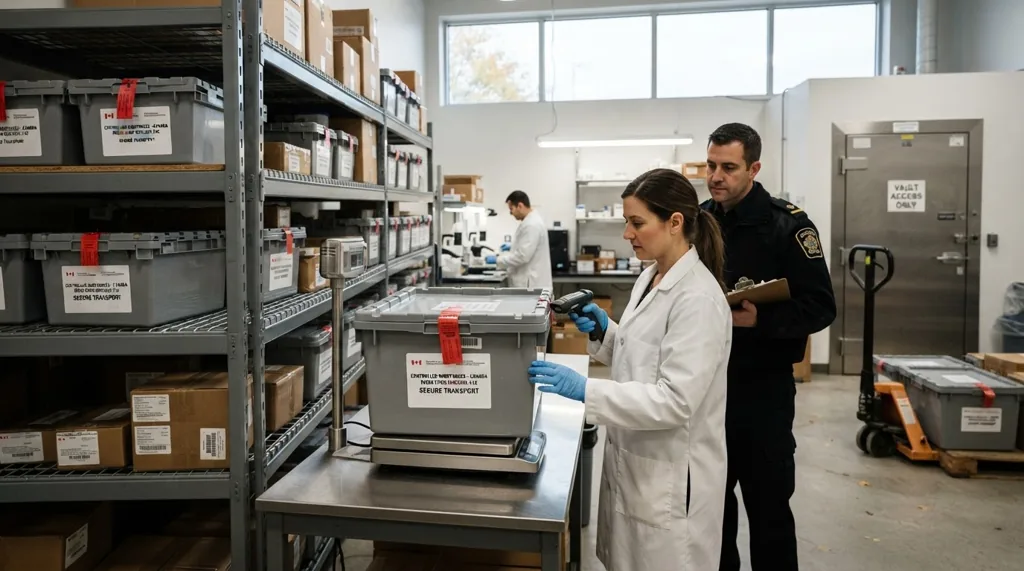
Canada’s new Controlled Substances Regulations replaced the previous controlled drug regulations on Oct. 1, 2026.
Canada’s new Controlled Substances Regulations, made under the Controlled Drugs and Substances Act, took effect on Oct. 1, 2026, setting one rulebook for licensed dealers, pharmacists, practitioners, hospitals and laboratories that handle narcotics and other controlled drugs1.
The rules replace the previous regulations for controlled substances, Health Canada, the federal health department, says on its controlled substances page2. Health Canada published them on Dec. 17, 20252.
In short, the companies and health professionals who make, sell, ship, prescribe or destroy controlled drugs now work under a single regulation. A temporary exemption that let pharmacists extend and transfer controlled-drug prescriptions has ended, with similar powers now set out in the regulation itself.
What did Canada’s new controlled substances rules replace?
The Governor General in Council made the regulation on Nov. 28, 2025, on the recommendation of the Minister of Health1. It is registered as SOR/2025-242 and appeared in the Canada Gazette, Part II, the government’s official record of regulations1.
From approval to effect
Until now, the rules sat in several instruments. Health Canada lists them as the Narcotic Control Regulations, Parts G and J of the Food and Drug Regulations, and the Benzodiazepines and Other Targeted Substances Regulations2. The regulation carries a section on repeals and a coming-into-force section that names Oct. 1, 20261.
The regulation groups controlled substances into four schedules1:
- Schedule 1, narcotics
- Schedule 2, controlled drugs
- Schedule 3, targeted substances
- Schedule 4, restricted drugs
Which businesses need a Health Canada dealer’s licence?
Licensed dealers are the firms that produce, sell, import or export controlled substances under a licence from the minister1. Health Canada says its pages serve pharmaceutical, chemical, food, testing and research organizations that need licences and permits for these activities2.
Notice periods for dealer changes, days
Under the regulation, each dealer must name a senior person in charge and a qualified person in charge1. The qualified person in charge must be present when the firm carries out its licensed activities1. The regulation also sets out how licences are issued, renewed, amended, suspended and revoked1.
Some changes need the minister’s approval before they happen. Others need only notice, with separate sections for notice within five days and notice within 10 days1. Dealers must also report losses, thefts and suspicious transactions, and file a monthly report1.
What changes for Canadian pharmacists and prescribers?
The regulation has its own chapters for pharmacists and pharmacy technicians, practitioners, and hospitals1. For pharmacists, it covers substitution of controlled substances, extension of prescriptions and transfer of prescriptions1.
Who is covered
It also names three extra groups as practitioners under the act: midwives, nurse practitioners and podiatrists1. That means they are treated as prescribers in the regulation, subject to additional conditions set out for prescribed practitioners1.
Hospitals must designate a person in charge, an individual responsible for all of the hospital’s activities with controlled substances1. Hospitals, pharmacies and practitioners each face rules on storage, transport, destruction and record keeping1.
Which pandemic-era exemption ended on Sept. 30, 2026?
A class exemption is a blanket waiver from parts of the law, granted to a whole group rather than one person. Health Canada says its exemption for patients, practitioners and pharmacists "will be revoked" when the new regulation takes effect on Oct. 1, 20263. The exemption itself set an expiry of Sept. 30, 20263.
Under that exemption, pharmacists could extend or renew existing prescriptions, transfer prescriptions to other pharmacies and have a controlled substance delivered on their behalf3. Practitioners could also issue verbal prescriptions for controlled substances3. Pharmacists had to keep records in the pharmacy for 2 years3.
Those powers now sit in the permanent rules. The regulation includes sections on extension of prescriptions, transfer of prescriptions, and delivery by pharmacists1.
How are test kits and laboratories covered?
A test kit is a kit containing a controlled substance mixed with an agent that spoils it, used to test for a controlled substance and not meant to be consumed1. Makers must obtain a test kit registration number from the minister, and the minister can cancel it1.
Government forensic and toxicology laboratories get their own chapter1. It covers production, sales to licensed dealers and the minister, and import and export permits1.
What security rules apply from Oct. 1, 2026?
The regulation refers to the Directive on Physical Security Requirements for Controlled Substances and Drugs Containing Cannabis, a security directive the government publishes online1. Dealers, pharmacies, practitioners and hospitals each have a section on protective measures1. The regulation also restricts advertising of controlled substances1.
Health Canada continues to process dealer’s licence applications, import and export permit applications and loss or theft reports through its Office of Controlled Substances2. Forms for a dealer’s licence, licence amendments and changes to personnel in charge must be printed and signed to count as complete2.
Sources
- ↩ Canada Gazette, Part 2, Volume 159, Number 26: Controlled Substances Regulations https://gazette.gc.ca/rp-pr/p2/2025/2025-12-17/html/sor-dors242-eng.html
- ↩ Controlled substances – Canada.ca https://www.canada.ca/en/health-canada/services/health-concerns/controlled-substances-precursor-chemicals/controlled-substances.html
- ↩ Subsection 56(1) class exemption for patients, practitioners and pharmacists prescribing and providing controlled substances in Canada – Canada.ca https://www.canada.ca/en/health-canada/services/health-concerns/controlled-substances-precursor-chemicals/policy-regulations/policy-documents/section-56-1-class-exemption-patients-pharmacists-practitioners-controlled-substances-covid-19-pandemic.html