

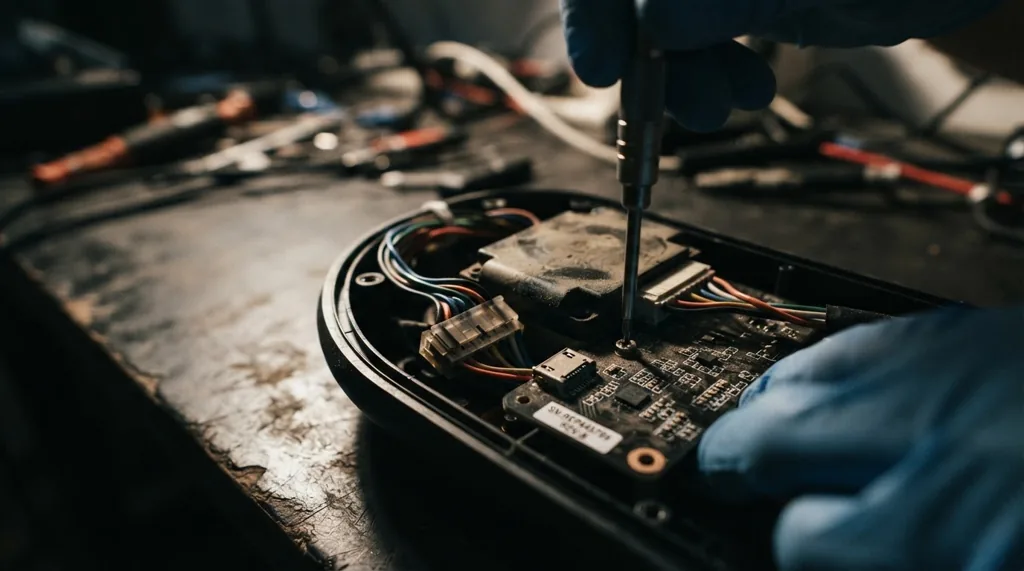
The European Commission opened a consultation on making products easier to repair, with feedback due by 9 February 2027.
The European Commission has asked the public how to make everyday products easier to fix, a first step toward binding EU repair rules. Feedback is open until 9 February 2027, and a legal act is planned for 2027.
On 3 November 2026, the Commission opened a public consultation and a call for evidence on future repairability requirements1. The rules would come under the Ecodesign for Sustainable Products Regulation (ESPR), the EU law that sets design standards for products sold in the bloc1. Responses will shape an impact assessment for a possible delegated act, a detailed rule the Commission adopts under an existing law1.
| At a glance | Details |
|---|---|
| What was published | Public consultation and call for evidence on repair rules |
| Published on | 3 November 2026 |
| Who can comment | Citizens, businesses, public authorities, repairers and all interested parties |
| Feedback deadline | 9 February 2027, midnight Brussels time |
| Final rules / Next milestone | Possible delegated act, planned for adoption in 2027 |
What is the repair initiative, and why does it matter?
The Commission wants a wide range of products on the EU market to be easier to repair1. Its stated goals are longer product lifetimes, less waste and a more circular economy, one that reuses goods and materials instead of discarding them1.
For consumers, the Commission points to longer-lasting products, lower repair costs and more choice when fixing everyday items1. The daily news release from the Commission’s press office repeats these benefits and links them to a more competitive economy2.
What the consultation asks about
The Commission wants views on the repair problems that consumers and repairers face today1. It also asks about possible measures to fix them. The listed options are:
- Access to spare parts
- Availability of repair and maintenance information
- Software and firmware requirements, covering the programs built into devices
- Easier disassembly and reassembly
- Repairability scores or information at the point of sale
These topics come from the Commission’s environment department announcement1. None of them is yet a legal duty. They are options to be tested in the impact assessment.
| Area under review | What the Commission is asking about |
|---|---|
| Spare parts | Whether parts are available to fix products1 |
| Repair information | Whether repair and maintenance guides are available1 |
| Software | Requirements for software and firmware1 |
| Product design | Easier taking apart and putting back together1 |
| Shop information | Repair scores or details shown at the point of sale1 |
Which products could be covered?
The initiative targets product families where repair can do most to extend product life1. Early results of a preparatory study point to three groups, still subject to confirmation in the impact assessment1:
- Consumer electronics, such as certain audio and video equipment, wearables and peripherals
- Light means of transport, such as certain e-bikes, self-balancing devices and some e-scooters
- Small household appliances, such as kitchen appliances, personal care devices and other small electric appliances
Some products are expected to stay outside the scope1. These are products already covered by product-specific rules, voluntary agreements or other specific frameworks. The aim is to avoid overlap with existing laws.
Because the measure would apply across many product groups, the Commission calls it a "horizontal" requirement1. That sets it apart from ecodesign rules written for a single product type.
Who can take part, and how
The consultation is open to everyone1. The Commission invites citizens, businesses, public authorities, repair professionals, consumer groups and environmental groups1. The press office release also names non-governmental organisations and researchers2.
The questionnaire is first available in English, with translations into all EU official languages to follow1. Answers can be sent in any official EU language1.
Where this fits in the EU’s ecodesign plans
The ESPR entered into force on 18 July 20241. It sets a framework for design requirements on specific product groups, so they last longer and are easier to reuse and recycle1. It also extends ecodesign rules beyond energy-related products1.
The Commission is now carrying out the ESPR work plan for 2025 to 20302. Under that plan, it is preparing delegated acts for priority product groups2. These include iron and steel, textiles, aluminium, furniture and tyres2. The plan also covers cross-product measures on repairability and recycled content2.
Timeline and next steps
The consultation itself creates no new obligations for manufacturers or sellers. Binding rules would only follow if the Commission adopts the delegated act. Product scope and the exact requirements could still change after the impact assessment.
Key terms in plain words
| Term | Meaning |
|---|---|
| Ecodesign | Rules on how products are designed so they use fewer resources and last longer |
| ESPR | Ecodesign for Sustainable Products Regulation, the EU law behind these rules |
| Delegated act | A detailed rule the Commission adopts under powers given by an existing law |
| Impact assessment | The Commission’s study of the costs and benefits of policy options |
| Call for evidence | A request for data and views before the Commission drafts a rule |
| Firmware | Software built into a device that controls how its hardware works |
Feedback on the repair rules closes on 9 February 2027 at midnight Brussels time1.
Sources
- ↩ Commission launches consultation on easier product repairs – Environment https://environment.ec.europa.eu/news/commission-launches-consultation-easier-product-repairs-2026-11-03_en
- ↩ Dagelijks nieuws 03 / 11 / 2026 https://ec.europa.eu/commission/presscorner/detail/nl/mex_26_2326