
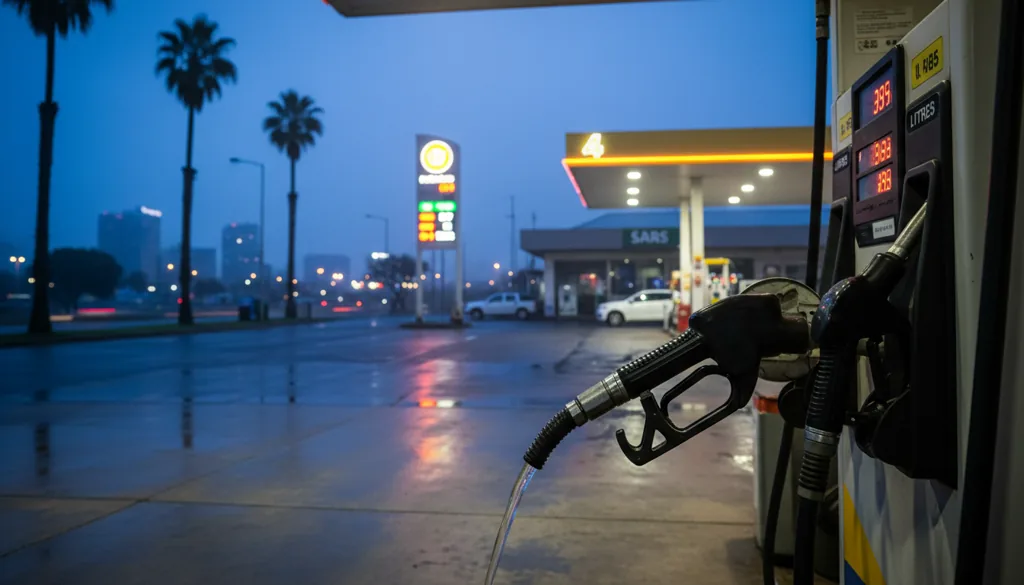
South Africa increases the general fuel levy on petrol and diesel with effect from 1 July 2026.
South Africa will raise its general fuel levy on petrol and diesel from 1 July 2026, adding the increase to the customs and excise schedules that govern fuel sold or imported for use in the country.
The levy on petrol will rise from 260 cents per litre to 410 cents, while the diesel rate will increase from 197 cents to 393 cents. The change affects petrol, diesel and related petroleum products used in South Africa, including fuel brought in for domestic consumption.1
The measure is intended to increase government revenue from fuel, and the direct charge is paid by fuel manufacturers and importers before it reaches the wider market. The cost will therefore enter the supply chain through petrol stations, transport operators, factories and other users of fuel.
The July fuel levy
The amendment changes Part 5A of Schedule No. 1 of South Africa’s customs and excise rules. It gives effect to the Finance Minister’s announcement of 28 April 2026 and sets 410 cents per litre as the new general levy on petrol.1
General fuel levy, before and after 1 July 2026
| Question | Petrol | Diesel |
|---|---|---|
| Rate until 30 June | 260 c/l | 197 c/l |
| Rate from 1 July | 410 c/l | 393 c/l |
| Increase | +150 c/l | +196 c/l |
| Who pays it | Manufacturers and importers | Manufacturers and importers |
For diesel, the same amendment raises the general levy to 393 cents per litre. The rise is larger in percentage terms than the petrol increase because the old diesel rate was lower, at 197 cents per litre.1
The legal counsel document gives the operative date as 1 July 2026. From that date, fuel released for domestic use will be assessed under the higher rates, affecting the cost of imported fuel as well as products made by local manufacturers.1
The levy is separate from other charges that can apply to fuel. South Africa’s petroleum products are also subject to excise duty and the Road Accident Fund levy when consumed in the country, while products consumed in other Southern African Customs Union countries are subject to excise duty only, according to the fuel guidance.2
Diesel refunds and records
The increase also changes Part 3 of Schedule No. 6, which contains the rules for diesel refunds. The amendment adjusts the refund provisions as a consequence of the higher general fuel levy, rather than leaving the refund framework on its previous basis.1
Who bears the increase
The Diesel Refund Scheme can return all or part of the general fuel levy and the Road Accident Fund levy to producers in qualifying sectors. The eligible groups include farming, mining, forestry, commercial fishing, certain shipping activities, rail freight and electricity generation.3
That relief is tied to the actual use of diesel in approved activities. A refund claimant must retain documents covering diesel purchases, together with logbook entries or other records showing the amounts used for eligible and non-eligible purposes, for 5 years from the relevant date.3
Claims for the fuel levy and Road Accident Fund levy must be submitted within 2 years of the diesel purchase. An amount refunded incorrectly must be repaid to the South African Revenue Service, or SARS, with any applicable penalties and interest.3
The higher levy therefore has two different effects on diesel users. Businesses outside the refund scheme face the full increase, while eligible operators may recover some or all of the relevant charges if their fuel records support a claim.
Fuel accounts and imports
The rules place the levy at the point where petroleum products enter the domestic tax system. Fuel manufacturers must account for the charges, and the same obligation applies when fuel is imported for home consumption, according to the published fuel guidance.2
This makes the change relevant to customs brokers and import teams even where a company is not itself a fuel producer. An importer bringing diesel or petrol into South Africa for local use will have to calculate the updated charge as part of the customs and excise process.
The wider petroleum account can be submitted monthly or quarterly, depending on the product. The quarterly periods run from January to March, April to June, July to September, and October to December.2
The first quarter affected by the new rates begins on 1 July and ends on 30 September. That timing means shipments released before the effective date and shipments released afterwards can fall under different levy rates, even where the underlying fuel was purchased under the same commercial contract.
The effect will extend beyond customs declarations. Fuel is a basic input for road freight, port operations, mining equipment, agricultural machinery and backup power, so the additional charge will be carried through transport and production costs. The levy is collected from the fuel trade, but its economic reach is much wider.
Earlier tariff changes
The July rates also mark a sharp change from the rates recorded in an earlier 2026 tariff amendment. That measure had raised the petrol levy from 110 cents per litre to 260 cents and introduced a diesel levy of 197 cents per litre from a position of zero.1
General fuel levy rates, cents per litre
The current amendment moves both products higher again, with petrol rising by 150 cents per litre and diesel by 196 cents per litre compared with the rates in that earlier document. These are statutory changes to the general fuel levy, not adjustments to the price of crude oil or to a supplier’s commercial margin.
The available 2025 notice shows that South Africa had also adjusted the levy and altered the diesel refund provisions in June of that year. At that point, the petrol rate moved from 385 cents to 401 cents per litre and the diesel rate from 370 cents to 385 cents.2
The sequence matters for compliance because the levy cannot be treated as a stable charge across the life of a supply agreement. Customs valuation, excise accounting and internal cost models will need to distinguish the relevant release or accounting period rather than rely on a single annual figure.
The 2026 amendment is focused on the general fuel levy. Other measures listed in the Budget 2026 material, including carbon tax and the Road Accident Fund levy, are separate charges with their own rates and legal bases. Combining them into one figure would risk understating or overstating the amount due on a particular fuel transaction.
A changing diesel system
The levy increase arrives while SARS is changing the administration of diesel refunds. The new Diesel Refund Registration System is moving registration away from the previous VAT-linked model and onto a dedicated system on eFiling. Existing users must register on the new solution because registration is not automatic.3
Three dates on the same fuel records
| Date | Who it catches | What changes |
|---|---|---|
| 1 Jul 2026 | All fuel released for domestic use | Levy rises to 410 / 393 c/l |
| 18 Sep 2026 | Existing diesel-refund users | New eFiling registration system released |
| 21 Sep 2026 | Diesel refund users and sellers | Registration policy takes effect; eFiling or SARS branch |
The planned release of that programme was set for 18 September 2026. The system is intended to provide a Diesel User Dashboard and an end-to-end registration process for diesel-refund users, sellers, suppliers, contractors and intermediaries.3
The registration rules divide applicants into diesel refund users and diesel sellers. A user must select one or more qualifying activities, such as agriculture, fishing, mining, offshore shipping, harbour shipping, rail freight or electricity generation.4
A user registered for the scheme must also record its customs and excise relationships through the electronic relationship-management system. Those relationships can cover partnerships, leased or hired assets, sellers of eligible purchases and contractors performing qualifying work.4
The timing creates a practical overlap between a higher levy and a new refund system. The amount available for recovery depends on the amended levy rules, while access to that recovery depends on registration, qualifying use and records that connect the fuel to the approved activity.
A separate SARS policy lists 21 September 2026 as its effective date and sets out registration requirements for diesel refund users and sellers. Applications can be made electronically through eFiling, while applicants that are not registered eFilers can use a SARS branch with the required forms and supporting documents.4
The July increase will therefore be felt first in the charge on each litre, while the later registration changes will shape how eligible businesses account for and recover part of that charge. For importers and customs brokers, the immediate date is 1 July; for diesel-refund administration, September brings a second change affecting the same fuel records.
Sources
- ↩ Legal Counsel – Secondary Legislation – Tariff Amendments 2026 https://www.sars.gov.za/latest-news/legal-counsel-secondary-legislation-tariff-amendments-2026-20/
- ↩ Fuel Levy Increase for Petrol in South Africa https://www.sars.gov.za/customs-and-excise/excise/petroleum-products/
- ↩ Diesel Refund Scheme 2026 https://www.sars.gov.za/customs-and-excise/excise/diesel-refund-system/
- ↩ Registration, Licensing and Accreditation Policy https://www.sars.gov.za/wp-content/uploads/Ops/Policies/SC-CF-19-Registration-Licensing-and-Accreditation-External-Policy.pdf