
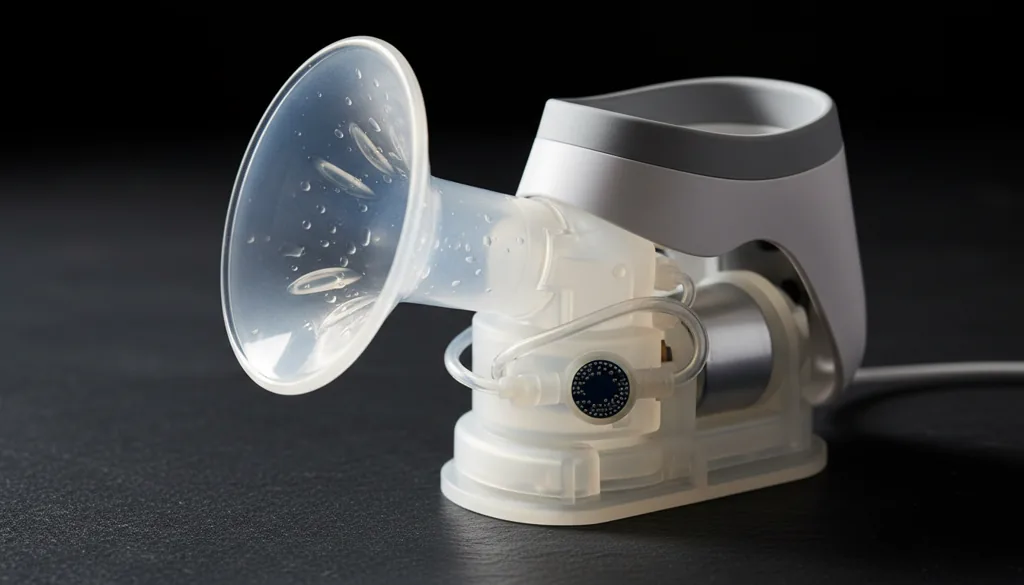
United States initiated a Section 337 patent infringement investigation into certain wearable breast pumps, associated milk storage containers, and components following a complaint filed on August 20, 2026.
The US International Trade Commission has opened a Section 337 investigation into wearable breast pumps, milk storage containers and related parts, after a patent complaint filed on Aug. 20, 2026.1
The case could affect imports, sales for importation and sales inside the United States after importation. The commission’s notice was published on Sept. 24, 2026, under investigation number 337-TA-1522.1
The immediate burden falls on the named respondents, which must answer the allegations, while importers and distributors face a possible interruption if the commission later blocks infringing goods. The case is about protecting patent rights and controlling access to the US market, not about a new product-safety rule.
The breast-pump investigation
The investigation covers wearable breast pumps, the containers used to store expressed milk and components sold with or for those products. The scope also includes separately sold milk collection containers and replacement parts, according to the commission’s description of the accused product category.1
How the case opened
Willow Innovations of Mountain View, California, and Willow Blossom HoldCo of the United Kingdom filed the complaint. They allege that imported or US-sold products infringe five US patents covering pump technology and product designs. The patents include numbers 11,660,380, 12,370,292, D1,053,344, 11,813,388 and D1,031,993.1
The commission ordered the investigation on Sept. 21, 2026, under Section 337 of the Tariff Act of 1930. It will examine claims involving the five patents and whether a qualifying US industry exists or is being established around the protected products.1 That second question matters because Section 337 relief requires more than an allegation that imported goods copy a patent.
The investigation does not itself impose a border ban. It starts a legal process that can lead to orders restricting imports and sales if the commission finds a violation. For companies moving these products through US distribution networks, the commercial risk begins before any final remedy because the case puts specific product lines and components under scrutiny.
Respondents and supply chains
The notice names companies in China, Hong Kong, Malaysia and the United States as respondents. They include Shenzhen Root Innovation Technology, Hong Kong Lute Technology, Shenzhen TPH Technology, Guangdong Horigen Mother & Baby Products, Anker Innovations, Fantasia Trading, Power Mobile Life and several other manufacturers or distributors.2
Who must act
That structure reaches beyond a single factory. A pump assembled in China, a replacement container sold through a US company and a product distributed by a domestic reseller could all sit within the investigation’s commercial chain. Customs entry records, supplier descriptions and product-level patent analysis may therefore become important to determining which goods are covered.
The respondents must file responses to the complaint and investigation notice within 20 days after service unless the commission finds good cause for an extension.1 A failure to respond can be treated as a waiver of the right to contest the allegations and can allow the commission to decide the facts on the basis of the complaint.
That deadline creates the clearest immediate compliance obligation in the record. The named companies must coordinate legal, engineering and import data quickly, while other businesses handling the products need to establish whether their goods are connected to a respondent or fall within the plain-language scope.
Possible import restrictions
The complainants have asked for a limited exclusion order and cease-and-desist orders. A limited exclusion order could stop covered infringing articles from entering the United States when they come from the respondents named in the case. A cease-and-desist order could restrict conduct inside the US market, including sales or other commercial activity involving covered products.1
Two remedies requested, side by side
| Question | Limited exclusion order | Cease-and-desist order |
|---|---|---|
| What it reaches | Covered articles entering the US | Commercial activity inside the US market |
| Whom it binds | Respondents named in the case | Sales and other domestic conduct |
| Status | Requested, not yet in force | Requested, not yet in force |
The requested limited exclusion order is not yet in force. The commission must first develop the record, decide whether Section 337 was violated and determine whether a remedy is appropriate. Until that process advances, the notice changes legal exposure rather than customs treatment for every wearable pump.
The complaint also asks for a bond on alleged infringing articles during the 60-day presidential review period. That period would arise after a final exclusion decision, not at the opening of the investigation.2 The possibility of a bond adds a potential cost to continued entry if a remedy is issued and remains subject to review.
For importers, the practical effect is product-specific rather than a blanket restriction on all breast pumps. The scope reaches pumps, storage containers and components described in the notice, but the final coverage will depend on the patent claims, the commission’s findings and any remedy language.
Public interest record
Alongside the investigation, the commission is seeking comments on the public interest. The request covers the effect of possible orders on public health and welfare, competition, US production of similar or competing goods and consumers.2
The public-interest process asks for information about how the products are used in the United States and whether health, safety or welfare concerns would arise if the requested orders were issued. It also asks whether similar products made by the complainants, their licensees or third parties could replace the affected goods.
The commission is further seeking information on whether replacement suppliers could provide the potentially excluded volume within a commercially reasonable time. The comments must address the effect of any remedy on US consumers, giving supply continuity a formal place in the record.2
Written public-interest submissions are due by the close of business eight calendar days after publication of the notice in the Federal Register.2 That short window makes the public-interest notice relevant to distributors, healthcare-related buyers and other parties whose evidence concerns availability rather than patent ownership.
The process separates two questions that are often combined in commercial planning. Patent infringement determines whether a violation exists, while the public-interest record helps inform the choice and operation of any remedy. The availability of substitute pumps or containers could therefore become significant if exclusion is later considered.
Documents, deadlines and remedy
The investigation is recorded in the Federal Register as document 2026-19586, covering two pages at 91 FR 60645-60646. The official notice identifies the US International Trade Commission as the agency and Section 337 as the legal authority.1
Key waiting periods, days
The commission’s Office of Unfair Import Investigations will not participate as a party. The presiding administrative law judge may nevertheless seek detailed evidence about the alleged domestic industry, including spending by third parties and spending outside the United States connected with domestic-industry products.1
That inquiry could affect the strength and shape of the case. The complaint alleges that a US industry exists or is being established, but the commission still has to test the allegation against the statutory requirements. Domestic research, production, licensing or related investment may therefore become part of the evidence.
The commission has also invited comments on whether articles made by the complainants, licensees or third parties could replace the products subject to a possible order. The question is practical as well as legal: an exclusion remedy has a different effect when replacement goods are readily available than when supply would be difficult to restore.
The notice gives no immediate final finding of infringement. It does, however, establish a formal case in which imported pumps and related goods can be examined against five patents, with named respondents facing a response deadline and the market facing a possible exclusion remedy.
For customs and trade teams, the case makes product descriptions especially important. “Wearable breast pumps” may be clear at a retail level, but associated containers, replacement parts and separately sold collection products can create a wider entry-screening problem. A shipment that contains no complete pump could still fall within the investigation’s stated category.
The commission’s action also puts the timing of future imports under commercial pressure. Goods already moving through the supply chain may be treated differently from goods covered by a later exclusion order, while a final remedy could affect importation and domestic sales after importation. The legal record will determine that distinction rather than the opening notice alone.
The next fixed date is the public-interest filing deadline, calculated from the Federal Register publication date, while respondent responses are tied to service of the complaint and notice. Until those stages are complete, the principal effect is uncertainty around wearable pumps and their parts, rather than an active prohibition at the US border.
Sources
- ↩ Notice of Institution of Investigation: Certain Wearable Breast Pumps, Associated Milk Storage Containers, and Components Thereof https://www.federalregister.gov/documents/2026/09/24/2026-19586/certain-wearable-breast-pumps-associated-milk-storage-containers-and-components-thereof-notice-of
- ↩ Notice of Receipt of Complaint; Solicitation of Comments Relating to the Public Interest https://www.federalregister.gov/documents/2026/08/25/2026-17272/notice-of-receipt-of-complaint-solicitation-of-comments-relating-to-the-public-interest