
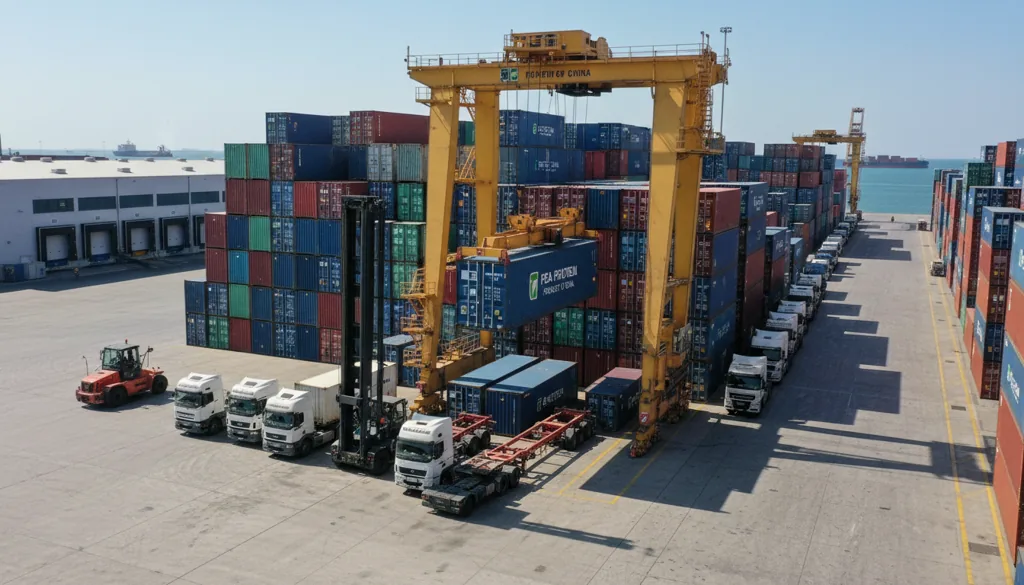
The European Union imposed definitive anti-dumping duties ranging from 40.5% to 67.1% on imports of pea protein from China, effective 26 September 2026.
The European Union has imposed definitive anti-dumping duties of 40.5% to 67.1% on pea protein imported from China, with the measure taking effect on Sept. 26, 2026.
The duties apply to a product used in food for people, pet food and animal feed. They will remain in place for five years, making the ruling a significant change for importers that have been bringing Chinese pea protein into the EU.1
The measure is intended to respond to imports sold at dumped prices and injury found in the EU’s own industry. The importer pays the duty at the border, raising the delivered cost of Chinese material for manufacturers and feed producers that use it.1
Chinese pea protein reaches 67.1%
The new charges are the final result of an EU investigation into pea protein from China. The investigation found that the imports were entering the EU at dumped prices, meaning prices considered unfairly low under the bloc’s trade-defence rules. It also found that those imports were causing injury to the EU pea protein industry, according to the European Commission’s trade department.1
Definitive anti-dumping duty range, % of customs value
The duty range matters because the measure will not apply one single rate to every affected import. Charges start at 40.5% and rise to 67.1%, so the financial effect will depend on the rate attached to the relevant Chinese supply.1
For an importer, the arithmetic is direct. A shipment carrying a product subject to the lower rate incurs an additional charge equal to 40.5% of the customs value, while a shipment at the upper rate faces a much larger border cost. That cost enters the supply chain before the ingredient is processed into food, drink or feed.
The EU market covered by the action is worth about €175m. That figure places the case in a commercially meaningful part of the food-ingredient and feed market, even though pea protein is only one component used by manufacturers.1
Food, pet and aquafeed supply chains
Pea protein is an alternative to animal protein. It can be consumed directly or used as an ingredient in food and drink made for people, giving the product a role in both retail goods and industrial food production.1
The same ingredient also moves through animal-related supply chains. It is used in pet food, specialised animal feed and aquafeed, so the duty can affect companies buying inputs for products intended for pets, farm animals and aquatic animals.
That broad end use means the ruling is not confined to one finished product category. Chinese pea protein can enter through several manufacturing routes before reaching consumers or animal-feed customers, and the border charge applies at the import stage rather than only when a finished product is sold.
The measure therefore links customs work with purchasing and production decisions. Importers must identify the affected material, apply the relevant duty and account for the higher cost when the ingredient is sold on or incorporated into another product. The effect will be most immediate for businesses whose supply contracts were agreed before the definitive rate became known.
April duties become permanent
The definitive action follows provisional duties that had been in force since April 29, 2026. That earlier step meant Chinese pea protein imports were already subject to temporary trade-defence charges before the final decision was published.1
Provisional phase vs definitive regime
| Question | Provisional duties | Definitive duties |
|---|---|---|
| In force from | 29 April 2026 | 26 Sept 2026 |
| Legal status | Temporary charges | Final ruling |
| Duration | Short-term phase | Five years |
| Effect on entries | Temporary clearance event | Continuing duty issue |
The transition from provisional to definitive measures changes the status and duration of the intervention. The final duties will apply for five years, giving the restriction a longer horizon than the temporary phase.1
For customs brokers, the change creates a continuing duty issue rather than a short-term clearance event. Entries made from Sept. 26 must account for the definitive rates, while companies must also connect the customs treatment to the commercial descriptions and supply arrangements used for the ingredient.
The timing leaves a narrow gap between publication and application. The EU publication was dated Sept. 25, and the duties take effect the following day, Sept. 26, 2026.1 That makes the effective date the key point for shipments moving through the border around the changeover.
EU industry injury drives the case
The central finding behind the action is that Chinese imports were dumped and that the dumping was causing injury to the EU industry. The duties are therefore a trade remedy aimed at addressing the conditions identified in the investigation, rather than a general tax on all pea protein or all imports from China.1
Two sides of the new border-cost calculation
This distinction matters to companies that buy the ingredient. The measure is tied to the Chinese imports covered by the investigation, while the commercial consequences spread to EU businesses that use those imports in food, drink and feed production.
The duty is designed to change the price relationship between the imported material and the EU industry’s product. A charge as high as 67.1% can substantially increase the cost of the affected Chinese supply, although the final commercial effect depends on the import value and the rate applied to the shipment.
The investigation’s finding also gives the measure its legal basis within EU trade-defence policy. The authority published the decision under its anti-dumping work, identifying unfair pricing and injury as the grounds for the definitive action.1
Five years for pea protein buyers
The five-year period makes the decision relevant to more than the next customs entry. Contracts, sourcing plans and production budgets involving Chinese pea protein now sit against a duty regime scheduled to remain in place for a defined period rather than expire after the provisional phase.
What binds buyers of Chinese pea protein
That does not remove every commercial question. The source material identifies the duty range, the product’s uses, the market value and the duration, but the cost passed through to food, pet-food or feed products will depend on how much imported protein each product contains and how businesses set prices.
The measure also puts the EU industry and Chinese supply on different sides of a new border-cost calculation. EU producers may face less direct price pressure from the covered imports, while companies relying on those imports face a higher delivered cost. That is the practical trade-off built into the remedy.
For the affected goods, the decisive date is Sept. 26. From then, the definitive regime applies to Chinese pea protein under rates running from 40.5% to 67.1%, and the charge remains part of the import calculation for the next five years.1 The change will be felt first by the companies clearing the ingredient, then through the food and feed products that depend on it.
Sources
- ↩ EU imposes anti-dumping duties on Chinese pea protein imports https://policy.trade.ec.europa.eu/news/commission-acts-against-imports-pea-protein-china-2026-09-25_en