


Active learning strategies help students learn more meaningfully than simply listening to explanations or copying information from the board. Students should have opportunities to ask questions, solve problems, discuss ideas, practise their skills, and explain what they have understood. Through these activities, teachers can understand how students think and identify the areas where they need additional support.
Students are given an active part in the learning process. Rather than receiving information during the whole lesson, they work with new ideas by means of individual tasks, classroom discussions, practical activities, cooperative projects, and problem-solving exercises. The teachers help with these activities, explain any difficult concepts, and give feedback.
You don’t need expensive technology, complicated lesson plans, or a total change in teaching method in order to carry out active learning. All that is required is a brief question, a written answer lasting two minutes, or a conversation between students who are sitting next to one another. The key thing is to link each activity to a specific learning objective.
There is evidence for the careful application of active learning. For instance, a meta-analysis carried out in 2014 by Freeman and his colleagues and published in the Proceedings of the National Academy of Sciences looked at active learning in undergraduate courses in the fields of science, technology, engineering, and mathematics. The researchers discovered that students achieved better results in exams when active learning was used rather than when traditional lecturing was employed. Yet this evidence should not be taken as meaning that every activity will work just as well in every classroom.
The effectiveness of teaching is determined by the subject being taught, the students’ existing knowledge, the quality of the instruction, and the way in which the teachers organize participation.
The article describes what active learning is, the reasons why it can support the learning process, and the way in which educators can make use of 25 practical strategies. It also looks at lesson planning, accessibility, assessment, and the common challenges faced in the classroom so that teachers can choose methods which are appropriate for their students and their teaching situations.
What Is Active Learning?
Active learning is a method of teaching which involves students taking a direct part in understanding information, exercising their skills, responding to questions, and putting into practice what they have learned. Instead of just receiving information from the teacher, they handle it, explain it, question it, or use it to carry out a meaningful task.
For instance, if a lesson on evaporation is being given, the teacher could first explain the fundamental process and then ask the students to predict what would occur when equal quantities of water were placed under different conditions. The students would make notes of their predictions, discuss the AI tools for students reasons for them, and compare their ideas with the actual observations. The teacher would then assist the students in linking the evidence to the scientific concept.
The students have to think over the problem themselves, with the teacher giving them a framework and some guidance.
How Active Learning Differs from Passive Learning
In passive learning students tend to take on the role of receivers. They could, for example, attend a lecture, read a chapter, watch an instructional video or copy down the notes. Such activities can present key information and aid understanding. They are not necessarily ineffective.
The point is that active learning gets students to carry out something that is intellectually significant with the information.
If you look at a lesson on the causes of a major event, in a rather passive type of lesson the students would simply listen to an explanation and copy out a list of the causes. In an active lesson, however, they would look at a variety of sources, recognise the different explanations, discuss which evidence is the most convincing and then write a brief conclusion based on their findings.
Both of the lessons have value in terms of teaching and the second one gives students more chances to practise interpreting evidence and explaining their reasoning.
Active learning doesn’t just involve physical movement. It is not necessary for students to stand up, move from one desk to another, or use digital devices in order to engage in active learning. Simply solving a mathematical problem in silence, writing a reflection, comparing two arguments, or recalling information from memory can all be examples of active thinking.
In what situations can active learning be applied?
Active learning can be adapted to almost any subject or educational environment.
In primary education, children engage in picture sorting, carry out simple investigations, tell stories by asking questions, and take part in activities with a partner under guidance.
In secondary education students take part in structured debates, draw up concept maps, carry out practical experiments, study case studies, and work on problems together.
Higher education includes research projects, peer instruction, simulations, laboratory work, and professional case analysis.
Vocational education involves demonstrations, followed by practical work, exercises in troubleshooting, and the use of realistic workplace situations.
Online education includes discussion boards, short quizzes, collaborative documents, discussions in breakout rooms, and individual reflection.
Training for professionals includes role-playing, exercises involving decision-making, practical scenarios, and the development of skills based on feedback.
The method that should be used will depend on what the students are required to learn; a practical task might be best for developing a procedure, whereas a well-organized discussion could be more suitable for comparing interpretations or for assessing evidence.
It should therefore be seen as a flexible method of teaching rather than as a rigid classroom format.
What makes active learning strategies important?
Active learning can assist teachers in providing opportunities for participation, practice, feedback, and reflection; the value of such learning depends on the learning objective and on the quality of the activity.
1. Student Participation and Engagement
Students are given more chances to take part when the lessons involve set tasks rather than depending completely on volunteers to answer questions; for example, by writing a response, discussing an idea with a classmate, or reacting to a class poll gives a larger number of students a means of taking part.
To take part doesn’t necessarily mean having to speak in front of the whole class; some students find it easier to show that they understand by means of writing, diagrams, anonymous replies, or discussions in small groups.
Teachers must tell the difference between visible activity and real engagement. A classroom that is busy does not have to be one that is productive. For an activity to be effective it is necessary for students to think about the lesson’s main question or to practise a relevant skill.
2. Critical thinking and problem solving
Most learning objectives ask students to do more than simply remember facts; they might be required to compare evidence, identify assumptions, explain causes, test possible solutions, or defend a decision.
Students can practise these processes through case studies, debates, inquiry-based tasks and collaborative problem-solving.
For example, a mathematics teacher could get the students to compare two different methods of solving the same problem, asking them to explain why each method works, to identify any possible errors, and to decide which approach is the most efficient under certain conditions.
The teacher can afterwards clarify any misunderstandings and point out the reasoning that underlies the solution.
3. Collaboration and Communication
To carry out collaborative learning activities, students have to communicate their ideas, listen carefully, ask questions, and work together towards a common goal.
Teachers will be more successful in developing these skills if they set out clear responsibilities and expectations. Putting students into groups by themselves does not ensure that there will be meaningful collaboration.
A properly designed task could have one student gather the evidence, another verify the calculations, and a third student prepare the group’s explanation. In the subsequent activities, the students can rotate between these roles.
4. The retention of knowledge and understanding
Students will be able to improve their understanding by recalling the information from their memory, putting the concepts into their own words, and using the ideas when dealing with different problems.
It is especially beneficial to use retrieval practice when students try to remember information that they have previously learned before looking at the correct answer; this is different from simply rereading the material without testing what they remember.
Teachers may use short quizzes of a low stakes nature, written exercises based on recall, and questions at the start of a lesson in order to help students find out what they already know and what still needs to be reviewed.
The outcome is influenced by things like the difficulty of the questions, the time at which the practice takes place, and the feedback that the students get. When a student gives an incorrect answer it should be seen as a chance to correct a misconception not as a reason to stop taking part.
5. Learning independently and evaluating oneself
Active learning enables students to become aware of their strengths, spot any gaps in their understanding, and then select suitable next steps.
At the end of a lesson a brief reflection could prompt students to name one concept that they understand, one question that they still have, and one action that they will carry out in order to prepare for the next lesson.
These replies provide students with a systematic method of keeping track of their progress, and they also allow teachers to detect common misconceptions and plan revisions accordingly.
6. Improving instruction through feedback
Teachers are given evidence of the way students are thinking before a formal test is held.
For instance, if a number of students choose the same wrong answer in a class poll, the teacher can stop and explain the misconception in question. In the case where only a small number of students have difficulties, the teacher can give them specific help while the rest carry on with their practice.
The teaching resources offered by Cornell University’s Center for Teaching Innovation consider practice, discussion, problem-solving, and timely feedback to be useful elements of active learning and also stress the need to link activities to learning outcomes as well as to explain to students the purpose of these activities.
The main idea is simple in that teachers should use classroom activities both to keep the students occupied and to find out what the students understand and then decide what sort of support they will need afterwards.
25 Active Learning Strategies for the Classroom
There are various strategies which provide different methods of getting students to take part in substantial learning. A few of them take just a few minutes, whereas others need several lessons. The strategies can be adapted to vary subjects, age groups, class sizes, and levels of previous knowledge.
1. Think-Pair-Share
What it is: Think-Pair-Share is an organised exercise which involves students thinking about a question on their own, talking over their ideas with a partner, and then presenting some of their answers to the class.
Here’s how it works: The teacher puts forward a single specific question, after which the students think about it or write down their answers on their own, then check them with a partner, and finally take part in a general discussion.
How to implement it:
- Pick a question related to the lesson goal.
- Give the students one or two minutes to think on their own.
- Ask the pairs to discuss their answers and explain their reasoning.
- Invite a number of pairs to share their thoughts.
- Summarize key points and clear up misunderstandings.
Practical example: In an English lesson the students look at why a character makes a particular decision. They come up with their own interpretation, compare the evidence with a partner and then explain which bits of the text actually support their conclusion.
Benefits: Gives students the thinking time they need before they speak, encourages explanation and provides opportunities for wider participation. Allows the teacher to hear a variety of interpretations of the same question.
Best for: Primary through to higher education, literature, science, maths, social studies and large lecture classes. Can be used to simplify the question for younger students or to use more analytical type of questions with the more able.
Potential problems: some students may just let their partner do all the talking. Ask both partners to prepare their own individual response and then alternate who goes first. Keep the prompt very focused so that the discussion stays on topic with respect to the learning objective.
2. Structured Group Discussion
What it is: A structured group discussion which asks students to look at a question or topic as a group, with clear expectations around participation and the use of evidence.
Not an informal chat at all. A formal discussion has an objective and a process by which you arrive at a conclusion or identify the various points of view.
How it works: the students look at the prompt, generate ideas, ask further questions and produce a shared summary or record of their thinking.
How to implement it:
- Ask a question that invites discussion but is not too broad.
- Set a time limit and explain what the group are to produce.
- Establish some basic discussion rules (no interrupting, back up your claims with evidence etc).
- Ask the students to record the group’s key points.
- Ask groups to share what they found or any questions they still have.
Practical example: In geography we look at how a growing city would have to balance the need for housing, the need for public transport, the need for green space and the need to protect the environment. Each group looks at the competing demands and comes up with a practical plan.
Benefits: discussion will of course improve oral communication, listening, reasoning and the ability to consider alternative viewpoints. It will also allow the teacher to pick up on misconceptions that may not be apparent in the individual written work.
Best for: Humanities, literature, social sciences, language learning and anything that involves interpretation or competing priorities. A group of 3 or 5 is often the easiest size to get going with. The ideal group size will of course vary depending on the task.
Potential problems: the confident students will dominate and the quieter students will contribute very little. Give everyone a short individual prep time, assign rotating discussion roles and ask every member of the group to put in one recorded idea.
3. Problem-Based Learning
What it is: Problem based learning starts with a meaningful problem that the students have to investigate. Rather than being given every step in advance, the students work out what they need to know, collect the relevant information, test out possible explanations and arrive at a solution which they can justify.
The emphasis is on reasoning and inquiry rather than simply arriving at a pre-determined answer.
How it works: The teacher poses the problem, helps the students to define it and then guides them through their investigation. The students identify the knowledge gaps, research the relevant concepts, evaluate the various approaches and then propose a solution.
How to implement it:
- Select a problem related to the intended learning outcomes.
- Provide sufficient context to make the problem clear, without giving away all the answers.
- Ask the students what they know and what they need to find out.
- Guide them to the right information and the right concepts.
- Require students to explain and justify their proposed solution.
- Review the reasoning and correct any misunderstandings.
Practical example: In a science class the students were looking at why a local pond might be suffering from poor water quality. They looked at the various factors that could be at play (runoff, waste disposal, temperature, oxygen levels etc) and then went on to work out what evidence would be required to rule one explanation out in favour of another.
Benefits: PBL can provide practice in research, critical thinking, working in teams and applying knowledge to new and unfamiliar situations.
Best use cases are higher education, secondary science, engineering, healthcare education, business and vocational training. For younger learners we’d use simpler problems with a lot more teacher input.
Potential problems: if the problem is too broad it can be overwhelming for the students, particularly if they don’t have any prior knowledge. Break it down into stages, provide some useful resources and teach the key concepts as and when the students need them. The teacher has to be the one to steer the inquiry rather than just leave the students to work it out for themselves.
4. Project-Based Learning
What it is: Project based learning organises learning around an extended project which asks the students to investigate a question, produce a product or deal with a real world problem.
The end product could be a report, a model, a presentation, an exhibition, a campaign proposal or a working prototype. The project would need to draw on the subject knowledge and skills as set out in the learning outcomes.
How it works: the students look at the topic over a period of time, produce a product, get feedback, refine their work and then present it.
How to implement it:
- Define the knowledge and skills that the students are expected to demonstrate.
- Develop a worthwhile project question or challenge.
- Set milestones for the research, the planning, the drafting and the completion.
- Explain the assessment criteria to the students prior to them starting.
- Arrange feedback sessions during the project.
- Ask the students to explain both their final product and their learning process.
Practical example: In an environmental studies class, students create a proposal to cut down on school waste. They look at how waste is handled now. They research ways to make things better. They figure out what resources they will need. They give their recommendations to school administrators.
Benefits: allows projects to be linked to real world decisions, encourages planning and gives students the opportunity to put into practice research, writing, working in teams and presentation skills.
Best for: cross curricular learning, science, technology, design, language arts, business and vocational subjects. The projects are ideal where the learning outcomes are such that they require the integration of a number of skills.
Potential problems: Projects can take a long time and they can end up with students focusing on the ‘look’ of the project rather than the learning. Use milestones, ensure individual accountability and have a rubric that assesses both the learning and the final product. Have alternative ways of getting involved if the equipment or materials aren’t available.
5. Case-Based Learning
What it is: Case based learning uses a real or carefully constructed scenario to enable the student to apply the concepts, analyse the evidence and make a decision.
Problem based learning (which typically starts with an open problem and leads to a wider investigation) is quite different from a case based activity which will usually provide a defined situation for the students to interpret using the relevant subject knowledge.
How it works: the students look at the scenario, identify the key issue, analyse the information available to them, consider the various possible responses and then explain their conclusions.
How to implement it:
- Choose a case that matches the learning objectives.
- Include enough relevant information to support analysis.
- Identify the questions the students should be asking.
- Ask the students to distinguish between fact and assumption.
- Have them compare the options and explain the trade-offs.
- Review their reasoning against the concepts that we’ve taught.
Practical example: in a business class the students are given a fictitious small company whose sales have declined and are asked to look at the customer feedback, the pricing, the product quality and the competitive situation before coming up with a recommendation.
Benefits: case studies enable the learner to get their hands dirty in terms of applying the concepts, interpreting the evidence and considering the consequences of the decisions. They can also be used to illustrate why the concept is important in a real world context beyond the example in the book.
Best use cases: Business, law, healthcare, education, history, social sciences and professional training.
Potential problems: Students will probably form an opinion before they’ve even looked at the evidence. Provide them with a very brief analysis framework and ask them to identify the facts that support each of the recommendations. In the case of particularly sensitive subjects, use a made up or appropriately anonymised case.
6. Peer Teaching
What peer teaching consists of is that students explain a concept, show how to carry out a procedure, or lead their classmates through a learning activity, and this makes the student who is explaining responsible for organising the knowledge and communicating it clearly.
Here’s how it works: The students produce a brief explanation, teach it to a partner or a small group, and then answer questions. The teacher then checks the explanation and makes any necessary corrections.
How to implement it:
- Select a concept that the students have previously studied.
- Give a brief preparation assignment or explanation guide.
- Group the students or form small teaching groups.
- Tell the student teacher to explain the concept and to give an example.
- Encourage the learner to ask questions or to solve a related problem.
- As a class, go over the explanation.
As a practical example, a student in the field of mathematics explains the method for solving a linear equation, mentioning that the same operation has to be applied to both sides, and then the partner solves a similar equation on their own.
The advantages are that peer teaching helps students to arrange their thoughts, use the specialist vocabulary, and spot any gaps in their own understanding, and it also provides classmates with another chance to come across an explanation.
The best situations for its use are in the areas of mathematics, languages, science, computing, and revision classes. It is effective when students have already learned the basic concepts but still require some practice.
Possible difficulties: A student might give a correct explanation even though it is wrong. It is necessary to provide learners with a reference sheet or a worked example, keep an eye on the discussions, and make sure that the proper method has been confirmed before the activity finishes. Peer teaching should complement, not take the place of, suitable teacher instruction.
7. Brainstorming
What brainstorming is: it is a technique which enables a variety of ideas to be generated in answer to a question, a challenge, or a creative task before these ideas are evaluated.
It performs at its best when students are allowed to put forward various possibilities without being required to justify each one right away.
Here’s how it works: The students give their ideas either on their own or in groups, and the teacher writes down the responses, sorts the suggestions that are related to each other, and then leads the class through the subsequent evaluation stage.
How to implement it:
- Ask a clear question or state a challenge.
- Let students have a brief amount of time in which to come up with their ideas on their own.
- Ask them to discuss their ideas in pairs or in small groups.
- Write down the ideas so that all people can see them.
- Organise the ideas into groups and look for any possible gaps.
- Assess the suggestions on the basis of evidence or established criteria.
As an example, in a language course students think of various ways of reducing plastic waste in their community. They then put the suggestions into categories such as individual, school, business, and government actions before evaluating which of the proposals are feasible.
The advantages of brainstorming are that it can promote creativity, trigger existing knowledge, and provide students with a starting point for their investigation or problem-solving; meanwhile, individual preparation can be of help to those students who need more time to formulate their ideas.
The most appropriate applications are creative writing, design, business, environmental education, project planning, and the initial stage of inquiry activities.
Possible difficulties include the situation where a large number of ideas are generated without any examination of their quality, or where a small number of students take charge. Begin with a quiet brainstorming session, gather input from all the participants, and then proceed with a systematic evaluation of the ideas.
8. Classroom Debate
This is a classroom debate, which involves students looking at a question from different points of view and supporting their arguments with evidence and reasoning.
The aim goes beyond just winning an argument; students should be taught to formulate a claim, assess the evidence, address objections, and identify the limits of their own position.
The procedure is as follows: the teacher sets a controversial question, specifies the research requirements, arranges the speakers, and establishes the rules for presenting and challenging the arguments.
How to implement it:
- Select a question that enables in-depth analysis.
- Give time to look at solid proof.
- Depending on the learning objectives, assign positions or let the students choose them.
- Set time limits and establish rules for respectful speaking.
- Ask students to back up their claims with evidence.
- End by considering the most compelling points made by each side.
As an example, in a civics class students debate whether or not cities should give priority to public transport rather than to further road capacity. They take into account cost, accessibility, congestion, environmental effects, and the needs of different residents.
The advantages include the development of argumentation, evidence evaluation, listening, and oral communication skills, as well as helping students to practice responding to opposing views without seeing disagreement as a personal conflict.
The best situations for its use are in secondary and higher education, in the subjects of history, civics, literature, environmental studies, and ethics.
Possible difficulties include the fact that sensitive subjects might cause discomfort and that students could mistakingly regard the positions assigned to them as their own beliefs. It is important to set clear and respectful boundaries, use criteria that are based on evidence, and offer different ways of taking part when public speaking presents an unnecessary obstacle. Do not use debate formats that prioritize speed or aggression over careful reasoning.
9. Inquiry-Based Learning
What inquiry-based learning is: It starts with questions and gets students to investigate them by means of observation, research, experimentation, and providing explanations based on evidence.
Whether the teacher takes a close hand in guiding the inquiry or allows the students greater independence will depend on the pupils’ age, their level of experience, and the complexity of the topic.
The way it works is that students either develop a question or look at one, collect some information, assess the evidence, and then use their results to formulate an explanation.
How to implement it:
- Ask a question that relates to an important idea.
- Find out from the students what they already know and what they are uncertain about.
- Assist them in planning an investigation or research process.
- Make use of appropriate materials and provide reliable information sources.
- Get the students to record their observations and findings.
- Get them to tell the difference between evidence and speculation.
- Explain the parts that the investigation supports and those that are still unresolved.
As an example in the field of biology, students look into the various environmental conditions that affect seed germination; they determine the variables, make predictions, compare their results, and then explain if the observations support their original ideas.
The advantages of inquiry include fostering curiosity, promoting scientific reasoning, developing research skills, and enabling a careful interpretation of evidence; it also helps students to see how explanations are arrived at as a result of investigation and not from unsupported assumptions.
The best situations for its use are in the fields of science, geography, history, social studies, and in research-based learning at various educational levels.
Possible difficulties include students having trouble in coming up with a feasible question or in obtaining useful evidence. Offer prompts for questions, investigation templates, and suitable background information. When carrying out practical experiments, observe the relevant safety rules and refrain from making any claims that go beyond those supported by the evidence.
10. Jigsaw Learning
What jigsaw learning is: it involves breaking down a broad subject matter into sections so that the students take charge of learning one of these parts and then teach it to their peers.
The strategy results in interdependence since each student provides the kind of information necessary for arriving at a more comprehensive understanding of the subject.
Here’s how it works: The students begin by working in small groups made up of experts to study various sections, and then they join up into mixed groups in which each student teaches the section that they have prepared.
How to implement it:
- Break the subject down into sections that are manageable and related.
- Give each student or small group their own section.
- Give students the right resources and helpful questions.
- Let expert groups discuss and draw up explanations.
- Make up mixed groups which include members from each section.
- Have each student teach the section that is assigned to them.
- Check your understanding of the entire topic by using a single task or quiz.
As an example, when studying a topic in history expert groups look at various factors that have led to a historical change, such as the economic conditions, political decisions, technological developments, and social movements, and the mixed groups then combine these explanations to produce a more comprehensive account.
The advantages of jigsaw learning include encouraging students to teach one another, to prepare, to listen, and to combine different bits of information; it also makes it easier to organise a difficult topic.
The best situations for this are history, biology, literature, geography, and other subjects that can be divided into related subtopics.
Possible difficulties include the situation where one student fails to understand their part and as a result the other students get incorrect information. To counter this, it is necessary to supply reliable materials, check that the group of experts understands the matter, and go over the entire topic at the end. Also, do not break the subject down into sections that are unrelated and fail to aid students’ understanding of the overall concept.
11. Concept Mapping
What concept mapping is: it is a visual technique for illustrating the relationships between different ideas, consisting of students recording the main concepts in labelled boxes or circles and then linking them together with lines or arrows which show how the ideas are related.
Unlike a simple list, a concept map is different in that it makes the relationships between concepts visible.
Here’s how it works: The students spot the key concepts, organise them, and link the ideas that are related. They explain the connections and make changes to the map as their understanding grows.
How to implement it:
- Choose a topic that involves a number of related concepts.
- Give a main question or important idea.
- Get the students to name the key terms.
- Get them to arrange the terms and draw the lines connecting them.
- Make the labels short and ensure that they explain the relationships.
- Get the students to compare the maps and correct the unclear connections.
As an example in the field of biology, students produce a concept map that shows the connections between photosynthesis, sunlight, carbon dioxide, water, glucose, oxygen, and plant growth; they are required to label the relationships rather than just putting the terms on a page.
The advantages of concept mapping include its ability to highlight gaps in understanding, assist with the organisation of complex information, and help students to explain the relationships between different ideas; furthermore, teachers can see where students have arrived at different interpretations by comparing the maps.
The most appropriate situations for its use are in the fields of science, history, geography, the analysis of literature, health education, and the revision of difficult topics.
Possible difficulties include students concentrating on colour and arrangement rather than on conceptual accuracy. In this case, use a simple model, check the accuracy of the connections, and permit the use of paper maps when digital tools are not available.
12. Retrieval Practice
What retrieval practice consists of is for students to recall information that they have already learned from memory rather than immediately looking at their notes or rereading the text.
The aim is to improve access to knowledge and to enable students to determine what they can and cannot accurately recall.
Here’s how it works: The students respond to questions, take a short quiz, write a summary from memory, or explain a process without referring to their materials; after that they check their answers and make the necessary corrections.
How to implement it:
- The key information that students need to remember should be identified.
- Write a few questions that ask someone to remember or explain something.
- Allow the students to answer without referring to their notes.
- They should use reliable sources to check the answers.
- Describe the common mistakes and misconceptions.
- Go back to important ideas in later lessons.
As a practical example, at the start of a geography lesson the students recall from memory the main stages of the water cycle, after which they compare their answers with a labelled diagram and put right any stages that are missing or in the wrong place.
The advantages of retrieval practice include helping to improve long-term retention and showing where gaps in understanding exist before a major assessment; it also provides teachers with information regarding which concepts require further teaching.
The best situations for using it are vocabulary acquisition, mathematics, science, history, learning a language, and preparing for exams.
Possible difficulties include students becoming anxious since each recall exercise has an effect on their grade. To deal with this, keep routine practice low stakes, explain that making mistakes helps to inform revision, and give students feedback. When setting questions, make sure they align with the learning objective rather than depending solely on isolated factual recall.
13. Classroom Polling
What classroom polling involves is that students answer a question on their own, usually at the same time; the responses can be gathered using hand signals, paper cards, mini-whiteboards, or digital polling tools.
Here’s how it works: The teacher puts forward a question, gathers the pupils’ responses before going on to discuss the results, and then allows the students to explain the reasons for their choices, compare their lines of reasoning, and respond to a further question.
How to implement it:
- Write a question that tests a key idea.
- Allow students the necessary amount of time to think over the different options.
- Request that all people give their responses before showing the class results.
- Find common patterns or mistakes.
- Ask the students to give an explanation of their reasoning.
- Give a clear explanation and, if appropriate, carry out a poll of the class once more.
A practical example is that in mathematics students decide which graph corresponds to a given equation and the teacher finds that a number of them choose a graph with the incorrect slope, then uses the response pattern to explain the relationship between the equation and its graph.
The advantages are that it allows a great many students to give their responses and offers rapid information on students’ understanding of the lesson. It is particularly useful when teachers need to check students’ comprehension in a large class.
The best situations for this are large lectures, subjects such as science and mathematics, learning languages, and online classes.
Possible difficulties include students guessing, copying what their classmates have done, or selecting an answer without actually understanding it. After the poll, request that students give explanations and include further questions which elicit their reasoning. It is not necessary to use digital tools since a show of hands or response cards could achieve the same fundamental purpose.
14. Role-Playing
What role-playing is: it involves students taking on the point of view of a person, a professional, a historical figure, or a stakeholder in a given situation.
Students adopt the role in order to examine decisions, practice their communication skills, or look at the way various responsibilities affect a situation.
Here’s how it works: The teacher gives the students a situation together with details about the roles. The students then get ready, carry out a conversation or a decision-making process, and reflect on the decisions they have made.
How to implement it:
- The concept or skill that the students should practise should be identified.
- Make a believable situation that fits the right age group.
- Make sure that the students have clear descriptions of their roles and the limits that apply to them.
- Allow preparation time.
- Carry out the role-play with a specific aim.
- After the activity, go over the decisions made, the evidence involved, and the other methods that could have been used.
As an example, in a language class the students play the part of a customer and that of a shop assistant and practice asking questions, making clear the details about the products, and settling a simple misunderstanding using the language in question.
The advantages of role-playing include helping with communication, the ability to take another person’s point of view, making decisions, and putting knowledge into practice. It also provides students with a controlled chance to practice situations they might come across outside of school.
The best situations for this are in the areas of languages, history, civics, healthcare, business, and communication skills.
Possible difficulties: It is possible that some students could feel uncomfortable when performing in front of their peers. In such cases, you could allow the use of scripted dialogue, assign observer roles, offer written preparation, or have the students work in small groups. Do not insist that students represent traumatic or personally sensitive experiences.
15. Simulations
It is a simulation which depicts a system, a process, or a situation so that students can examine their decisions and observe the possible consequences within a controlled learning environment.
Simulations can be carried out using physical models, paper scenarios, classroom games, computer programmes, or special training equipment.
Here’s how it works: The students are given a goal, a number of conditions, and a series of decisions to take. They then watch the results, explain what has taken place, and think about how different choices could affect the outcome.
How to implement it:
- The system or process that the students need to understand should be identified.
- Outline the rules and limitations of the simulation.
- Allocate roles or the responsibility for making decisions.
- Let students make choices and write down the results.
- It is necessary to pause at appropriate times to go over significant developments.
- Compare the results of the simulation with the actual concept.
As a practical example, in the field of economics students handle a fictitious household budget which has a limited income and experiences changes in expenses. They decide how to distribute their money, deal with unexpected costs, and explain the various trade-offs involved.
Advantages include the fact that simulations make it easier to examine complex relationships and enable students to practice making decisions without facing real-world consequences; they can also promote collaboration and systems thinking.
The best situations for its use are in the fields of economics, science, business, environmental education, vocational training, and professional education.
Possible difficulties include the fact that a simulation might offer a simplified version of reality or lead students to misinterpret the results. It is important therefore to clarify what the model does and what it does not include, and to end with a discussion that links the activity to the correct subject knowledge. One should not assume that performing well in a game means that students have mastered the relevant concept.
16. Hands-On Learning
What this means is that hands-on learning involves students having direct experience with materials, tools, objects, experiments, or practical tasks and that they learn by carrying out an action and then looking at the result.
It should consist of deliberate thinking and not just physical movement.
Here’s how it works: The teacher sets out the task, explains any safety requirements, shows the key techniques if necessary, and then gives the students a chance to carry out the practice and interpret what they see.
How to implement it:
- Specify the skill or idea that the students need to learn.
- Make available materials and instructions that are easy to understand.
- Appropriate steps should be shown.
- The task can be carried out by the students either on their own or in groups.
- Get them to record their observations or provide an explanation for their decisions.
- Check the results and make any necessary corrections.
As an example, in a primary mathematics class children use fraction strips or paper shapes to compare fractions; they arrange the pieces, identify equivalent values, and explain how the models show the mathematical relationships.
The advantages include the ability of practical activities to link abstract ideas with concrete examples, to help develop procedural skills, and to show any misunderstandings that might still be hidden during a lecture.
The best situations for it are in the fields of science, mathematics, art, design, engineering, technical education, and early childhood learning.
There could be difficulties since the materials might be costly, hard to distribute, or not suitable for certain students; in such cases, use low-cost alternatives, shared workstations, digital models where appropriate, and provide accessible instructions. It is necessary to adhere to safety procedures and to make sure that each student has a worthwhile role.
17. Peer Review
What peer review entails is that students are asked to assess a fellow student’s work on the basis of certain criteria and then give some constructive feedback.
It’s not just a matter of asking your classmates if they like the assignment; the students have to look at the extent to which the work achieves the learning objectives.
Here’s how it works: The students swap their drafts or solutions, look at them using a rubric or checklist, and then give the author some comments which will help him or her to improve the work.
How to implement it:
- State the criteria on the basis of which the work is to be evaluated.
- Examples of useful and unhelpful feedback from a model.
- Get the students to go over a draft or finished task.
- Comments should be made in order to highlight the strengths and specify the areas that need improvement.
- Allow authors the time needed to ask questions and to make revisions.
- Get the students to think about which kind of feedback they used and the reason why.
As an example, in an English class pupils swap argumentative essays and check that each one has a clear claim, relevant evidence, logically ordered paragraphs, and a conclusion which follows from the argument.
The advantages include students being able to identify quality, gaining experience in assessing evidence, and learning how to revise their own work, while authors also get another point of view before they submit their final version.
The most appropriate situations are those involving writing, design, presentations, explanations of mathematical concepts, research projects, and practical tasks which can be evaluated using clear criteria.
Possible difficulties include the feedback being vague, inaccurate, or too personal. In such cases, it is important to use structured prompts, teach students to give respectful feedback, and keep teacher supervision. Peer review should not mean that students are completely given the responsibility for final grading unless the assessment design specifically allows for that arrangement.
18. Reflective Learning
What this means is that reflective learning involves students looking at what they have learned, the way they carried out a task, the difficulties they met, and what actions they should take next.
It encourages students to consider the way in which they learn rather than concentrating only on the final answer.
Here’s how it works: after a lesson, a project, an assessment, or a practical activity, the students are given specific prompts and then respond to them by identifying what they consider to be important in their learning, assessing the way they approached the task, and planning what their next step should be.
How to implement it:
- Choose a reflection question that is linked to the lesson objective.
- Give students time to respond in silence.
- Ask them to give specific evidence of learning.
- Invite them to name a challenge or a misconception.
- Ask for a specific action to take next.
- Use common themes to inform future teaching.
Practical example: Following a science investigation the students would say which of their predictions had been supported by the results, what had surprised them and how they would improve the investigation if they carried it out again.
Benefits: Reflection can be used to support self evaluation, planning and awareness of learning strategies. It can also be a useful tool for teachers to get a sense of how the students see their own progress.
Best for: project work, lab work, writing, vocational education, teacher training and the conclusion of a lesson.
Potential problems: Students will probably just write things like “I’ve learned a lot” without actually going into any detail as to what they’ve learned. Use specific prompts and examples. The reflection should be about the learning and what they will do next rather than them being asked to reveal private feelings or personal experiences.
19. Reciprocal Teaching
What it is: Reciprocal teaching is a structured approach to reading comprehension in which students and teacher take it in turns to use the four strategies of predicting, questioning, clarifying and summarising.
The approach enables the learner to actively monitor their own understanding of the text and to know what to do when the meaning becomes unclear.
How it works: students read a passage, make a prediction as to what might come next, generate some questions, clarify any points that are unclear and then summarise the main points. The teacher models the process initially and then progressively hands over more responsibility to the students.
How to implement it:
- Choose a text that is appropriate to the students’ reading level and lesson aim.
- Demonstrate the four strategies with a short passage.
- Guide the students through a shared reading.
- Assign students rotating responsibilities for predicting, questioning, clarifying and summarising.
- What strategies did they use to get to grips with the text?
- Gradually reduce the prompts as the students become more confident.
Practical example: In a science lesson the students read a passage explaining how energy flows through an ecosystem. They went on to predict the next bit of information, asked questions about the terms they didn’t know, questioned the relationships that were a bit unclear and then summarised the overall process.
Benefits: Reciprocal teaching can support comprehension, questioning, vocabulary and self monitoring. It gives the student a process they can repeat when faced with a difficult text.
Best use cases: Reading instruction, language arts, science texts, social studies texts and any subject where the student is required to read and interpret text.
Potential problems: students may find it difficult if the text is full of unfamiliar terms. Pre-teach the key vocabulary, select appropriate text and model each strategy very clearly before asking the students to use it on their own.
20. Collaborative Problem-Solving
What it is: Collaborative problem solving involves students working together on a specific task that requires them to reason, co-operate and arrive at a common solution.
Not a broad project really, it’s usually focused on a specific problem which can be investigated and dealt with in the course of a lesson or a short series of lessons.
How it works: students define the problem, consider the various options, split the work where appropriate, test their ideas and then explain their final solution.
How to implement it:
- Present a problem that requires more than a simple factual answer.
- Ask the groups to restate the problem in their own words.
- Have them suggest possible methods prior to selecting one.
- Require students to explain and to check their own reasoning.
- Ask the groups to present their solutions and the evidence that supports them.
- Compare the various approaches and discuss their merits.
Practical example: In a maths class the groups are given a planning problem to solve (cost of materials for a school event). They have to work out quantities, work out totals, check a budget and explain why their plan satisfies the stated constraints.
Benefits: It enables the development of reasoning, communication, error checking and the ability to compare different approaches. It also provides an opportunity for students to learn from the methods of their peers.
Best use cases: Mathematics, engineering, science, computing, logistics and vocational education.
Potential problems: the group might split the work so thoroughly that some students end up not understanding the final solution at all. Solution: get every student to explain one aspect of the reasoning or to do a very brief individual follow-up task.
21. Student-Generated Questions
What it is: Student generated questioning is where students are asked to produce questions about a text, a concept, a demonstration or a problem.
Rather than just go with the questions that the teacher has prepared, the students identify what it is they want to find out and what it is they need to understand better.
How it works: students go through the material, generate questions, categorise them by purpose and then use a selection of those questions to either run a discussion or to inform further learning.
How to implement it:
- Introduce a topic, text, image, experiment or short explanation.
- Ask the students to write their own questions.
- Help them tell the difference between questions that ask for facts and questions that need explanation or judgment.
- Let pairs or groups choose questions that they’d like to investigate.
- Discuss or research the questions you’ve selected.
- Return to the questions at the end to see which have been answered.
Practical example: After looking at a historical photograph the students produce questions about the people in it, the setting, the reason for the photograph and the evidence it provides. They then go on to determine which of those questions can be answered from the photograph and which would require further sources.
Benefits: Question generation can support curiosity, close reading, critical thinking and awareness of knowledge gaps. It can also be of use to teachers in identifying what students find confusing or interesting.
Best for: reading, science, history, research assignments and lessons on new concepts.
Potential problems: some students will produce questions that are too wide ranging or have nothing to do with the learning objective. Provide question stems such as ‘Why does…’, ‘What evidence shows…’, ‘How would the result change if…’. Show the difference between a good investigation question and one which cannot be answered with the information available.
22. Learning Stations
What it is: Learning stations involve organising the classroom into a number of different activity areas. Students then work on the tasks at each station either individually, in pairs or in small groups.
Stations enable teachers to provide a range of activities for students without necessarily having every student doing the exact same thing at the same time.
How it works: each station is focused on a particular skill, a particular question, a particular resource or a particular aspect of a wider topic. Students rotate according to a timetable or move through the activities at a set pace.
How to implement it:
- Identify a learning objective that can be broken down into manageable tasks.
- Prepare a small number of stations each with clear instructions.
- Make sure each station has the materials it needs.
- Explain the rotation times and what to expect.
- Monitor the students and provide the necessary support.
- Finish with a short activity that links learning across the stations.
Practical example: in a language classroom one station is devoted to vocabulary matching, another to reading comprehension, another to sentence construction and the final one to a short speaking task. The students rotate and work on a number of different skills.
Benefits: They can provide variety, allow for differentiated practice and give the teacher the opportunity to observe students working on a range of tasks. They can also be very effective in terms of making good use of the limited materials available in the classroom.
Best use cases: Primary, language learning, practical subjects, revision lessons and in classrooms with a wide range of needs.
Potential problems: the transitions will take time and some stations may be harder than others. Prepare your materials in advance, have clear visible instructions and test your rotation schedule prior to the lesson. Make sure that the students have enough time to actually do some work rather than just rushing from one thing to the next.
23. Quizzes With Feedback
What it is: Quizzes with feedback incorporate a series of short assessment questions with feedback (explanations of the correct answer and why it is correct). The aim is not simply to assess performance but to provide feedback that will assist in further learning.
How it works: students answer a series of questions, get feedback, look at their errors and then apply that corrected understanding to another question or piece of work.
How to implement it:
- Write questions that reflect the intended learning outcomes.
- Use a good mix of recall, application, and explanation questions.
- Allow students to answer on their own.
- Provide correct answers and explanations.
- Ask the students to go back and look at their incorrect responses.
- Use the results to determine whether to review, reteach or move on.
Practical example: After a lesson on grammar students do a short quiz identifying sentence fragments from complete sentences. The feedback tells them why each example is in the category it’s in and they then go on to correct similar sentences.
Benefits: Quizzes can be used to help students with retrieval practice, identify misconceptions and get instant feedback on their performance. The results can then be used by the teacher to inform the next lesson.
Best use cases are pretty much any topic really, especially where you need the students to be doing some regular practice or where the teacher just needs a quick check of understanding.
Potential problems: A quiz that just records right and wrong is unlikely to be of much use in terms of helping the student to learn from their errors. You need to include some kind of explanation and some follow-up practice. Don’t make every quiz a high stakes affair and be careful that the format isn’t one that’s going to be measuring reading speed or test taking familiarity more than it is the actual subject knowledge.
24. Demonstration followed by practice
What it is: A teacher demonstration followed by guided and then independent student practice. Very useful when you’re trying to teach a procedure, a technical skill or a sequence of actions.
A demo gives you the model, practice is where you actually do the skill and get the feedback.
How it works: The teacher explains and demonstrates the procedure, draws attention to the key bits and then guides the students through as they do the task. They gradually move on to doing more of it themselves.
How to implement it:
- Describe the skill and the outcome that can be anticipated.
- Show the process at a pace that is manageable.
- Point out common mistakes and safety issues.
- Take the students through their first try.
- Look at the way they work and provide specific feedback.
- Give students some independent practice and make sure that they are able to carry out the skill correctly.
As an example, the teacher gives a lesson on how to put files into folders and on using a consistent naming system. The students then carry out the steps with some sample files before organising another set on their own.
The advantages are that demonstrating and practicing can make the procedural expectations clearer, decrease the number of avoidable errors, and allow students the opportunity to develop fluency via feedback and repetition.
The best situations for it are in the fields of mathematics, laboratory methods, computing, art, technical subjects, cooking, and vocational training.
Possible difficulties include students copying over a demonstration without actually understanding the reason why the steps work. To address this, ask them to explain the key decisions, spot the errors in the sample work, and work through a slightly different task. The demonstration should remain focused and accompanied by written or visual instructions so that the students can refer to them later.
25. Student Presentations
What this is: Student presentations involve learners arranging information and communicating their understanding to an audience; the presentations can be in the form of a brief oral explanation, a poster, a recorded presentation, a demonstration, or a visual summary.
The value in learning is derived from carrying out research, arranging the information, providing explanations, and giving responses to questions rather than just delivering a speech to a group.
Here’s how it works: The students choose a specific question or aim, gather the relevant information, arrange their explanation, and then present their results. Their classmates are allowed to ask questions or give feedback.
How to implement it:
- State what students should show.
- Give a topic that is reasonable and clearly state the criteria for assessment.
- Make it clear what is expected regarding the evidence, the organisation, and the clarity.
- Let yourself prepare and get feedback before the final presentation.
- Instead ask students to explain the main points rather than having them read all of the text on the slides.
- Include some questions, get feedback from your peers, or write a brief personal reflection.
As an example in the field of geography, students are asked to compare two methods of managing flood risk; they have to explain the evidence, talk about the costs and limitations, and then give a reason for choosing one method over the other for a specific location.
The advantages include the fact that presentations can help with research, synthesis, communication, and the clear explanation of concepts. The questions posed by other students can show whether they understand the subject matter beyond what has been prepared.
The best situations for its use are in secondary education, higher education, language learning, research projects, and vocational training.
Possible problems include public speaking anxiety, unequal participation by group members, and the use of slides that are attractive but contain little meaningful analysis, as these factors can undermine the exercise. Where suitable, allow alternative methods of presentation, evaluate the individual contributions of each person, and place a greater emphasis on accuracy and reasoning rather than just the visual design.
How to Choose the Right Active Learning Strategy
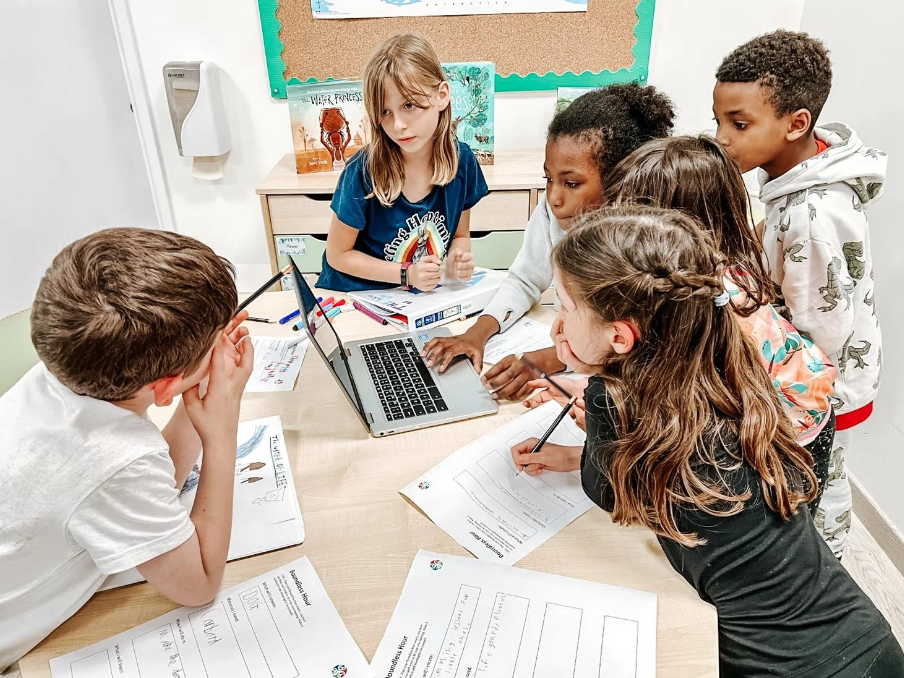
The active learning method most appropriate is the one which enables students to reach a specific learning objective given the circumstances. Teachers must not select an activity just because it is popular or entertaining.
Begin with the learning objective.
By the end of the lesson, students should know what it is that they are to know or be able to do.
Retrieval practice might be a good option if students need to remember key terms; concept mapping could be of help if they need to explain relationships; and if they have to apply their knowledge to a real-life decision, then a case study or a problem-based task would be more suitable.
State the objective in such a way that it can be observed. Since “understand ecosystems” is too vague, “explain how a change in one population may affect the other parts AI writing assistant of a food web” gives the teacher a more clear basis on which to design an activity and to assess the outcome.
2. Think about the students’ age and what they already know
Young learners usually find it helpful to use concrete materials, carry out short tasks, receive clear instructions, and have the teacher demonstrate. Older students, on the other hand, might be ready to carry out more complicated investigations, take part in debates, and work on independent projects, even though age by itself does not decide whether they are ready.
The knowledge that one already has is just as important; students will not be able to carry out an effective investigation of a difficult problem if they do not have the basic concepts necessary for interpreting it.
Give some background information first before asking students to work on their own. As students acquire the relevant knowledge and skills, less guidance should be given.
3. Apply the strategy to the class size.
In small classes the teacher can carry out a thorough discussion or give individual feedback during practical work; in large lectures, however, methods such as polling, short written responses, pair discussions and structured group activities can include a larger number of students without it being necessary for every student to speak out publicly.
When dealing with large classes, it is best to provide clear instructions and use simple methods for gathering evidence of learning; instead of asking if anyone has questions, a short response card or an online poll might give a better indication of students’ understanding.
4. Make a plan based on the time you have available.
Certain methods can be carried out within a short lesson period. For example, Think-Pair-Share, retrieval practice, and classroom polling can usually be finished in a few minutes; on the other hand, a project, an extended inquiry, or a simulation may take several sessions.
Allow time to be spent on explaining the task, on students carrying out the work, on reviewing the responses, and on providing feedback. If there is not enough time left to discuss the results of an activity, then it should be simplified.
5. Examine the Subject and the Requirements it entails
Various subjects call for different kinds of practice.
Worked examples, retrieval practice, collaborative problem-solving, and error analysis can all be beneficial to mathematics.
Science makes use of predictions, practical investigations, simulations, and explanations based on evidence.
Languages can gain advantages through role-playing, receiving feedback from peers, making short presentations, and taking part in structured conversations.
History can make use of source analysis, debates, case studies, and concept maps.
Art and design may use demonstrations, prototypes, critique, and project work.
Business education can make use of scenarios, case-based learning, and simulations.
They are merely starting points rather than rigid rules since a good strategy can frequently be adjusted for use in different subjects as long as its aim remains clear.
6. Check the resources and technology
An active lesson does not need a digital platform. You can use paper, pens, cards, textbooks, regular classroom objects, and a board for many activities.
Technology is useful whenever it deals with a practical problem, for example when it is used to gather responses from a large class, to share collaborative documents, or to model a complex process.
Before you choose a digital activity, make sure that students have access to the required devices, software, and internet connection; if access is unequal then give a comparable alternative.
7. Design with a view to accessibility and meeting different learning needs
Students have different preferences when it comes to communication, varying levels of language ability, different amounts of prior experience, differing amounts of time available to process information, differences in mobility, and different access to learning materials. Using one participation format might result in the creation of unnecessary barriers.
The CAST Universal Design for Learning content creation framework suggests that teachers should think about different methods of engaging with the material, of presenting information, and of giving students ways to show what they know. Teachers can put this principle into practice by providing both written and spoken instructions, accessible resources, plenty of preparation time, and suitable options for participation.
For instance, a student who has trouble with speaking spontaneously could meet the same learning objective by providing a written explanation, delivering a prepared presentation, or taking part in a small-group discussion.
The fact is that you shouldn’t take away the important academic expectations; instead, you should provide students with appropriate ways of taking part and showing what they have learned.
8. Determine how learning will be assessed
Decide beforehand what evidence would indicate that the students have reached the objective.
A group discussion could lead to a common explanation, a concept map could show the relationships between different ideas, a practical task could ask students to carry out a procedure, and a reflection could indicate whether students are able to identify a misconception and plan what to do next.
Choose assessment methods that correspond to the skill in question. When the aim is to assess individual understanding, do not base your assessment solely on the quality of the group’s final product.
A Quick Strategy Selection Guide
| Learning objective | Suitable strategies |
|---|---|
| Recall important information | Retrieval practice; quizzes with feedback |
| Explain a concept clearly | Peer teaching; student presentations |
| Compare viewpoints | Structured group discussion; classroom debate |
| Investigate a question | Inquiry-based learning; problem-based learning |
| Apply knowledge to a realistic situation | Case-based learning; simulations |
| Connect related concepts | Concept mapping; jigsaw learning |
| Practise a procedure | Demonstration followed by practice; hands-on learning |
| Improve written work | Peer review; reflective learning |
| Generate possible solutions | Brainstorming; collaborative problem-solving |
| Check understanding quickly | Classroom polling; short quizzes |
The table can be used as a basis. Teachers ought to adjust the activity in light of the complexity of the topic, the students’ level of readiness, and the kind of evidence they need to gather.
How to Implement Active Learning in the Classroom
An activity that is a success starts with a definite aim and concludes with evidence of learning. The process listed below will enable teachers to introduce active learning without making the preparation of lessons unnecessarily complicated.
Step 1: Set a Clear Learning Objective
Record the things that students should study or show. Make sure the objective is specific enough to serve as a guide for the activity.
For instance, instead of asking students to ‘learn about persuasive writing’, set an objective like ‘identify a claim, tell the difference between supporting evidence and opinion, and explain how the evidence supports the claim’.
Having a well-defined objective enables the teacher to choose the right task and assess the students’ responses.
Step 2: Choose an Appropriate Activity
Choose a method that enables students to get some practice in the skill in question. For a brief interpretive question Think-Pair-Share might be appropriate, while a case study would be better for applying a number of concepts to a single situation.
One should not include activities just in order to give the lesson an interactive appearance; all the tasks must contribute to the learning objective.
Step 3: Prepare Materials and Instructions
Take the questions, worksheets, resources, assessment criteria, and any equipment that the students will need before the class starts.
Prepare the instructions in a logical sequence and state what output is expected, the time that is available, and whether the students will be working on their tasks individually or in groups.
When carrying out a complicated task, show the first step or give a brief example. This will reduce confusion and help students make use of their time.
Step 4: Explain Why the Activity Matters
At the beginning students might ask themselves why they are being asked a question rather than hearing an explanation. Give a short link between the task and the ability they need to develop.
For instance, you should explain that students are asked to compare the solutions since the assessment calls for them to justify their mathematical reasoning rather than just give an answer.
Students can understand that taking part is an aspect of the learning process if the expectations are clear.
Step 5: Organise Participation
Select a participation format that is suitable for the activity.
With individual work, each student gets the opportunity to think. In pair work, discussion can take place without the need for a large group. Small groups enable learners to break down a complicated task and compare their ideas. A whole-class discussion allows the teacher to look at the common themes.
It is only worthwhile to assign roles if they have a real purpose; for example, appointing a facilitator, a recorder, an evidence checker, and a presenter can help a project group to organise its work. Roles should be rotated between activities so that the same students aren’t always in charge or responsible for taking notes.
Step 6: Monitor Understanding During the Activity
Walk about the classroom, listen in on the discussions, go over the written responses, or watch the groups’ progress.
Instead, look for evidence of reasoning rather than supposing that students understand just because they seem busy. For example, ask questions such as:
- On what grounds do you consider this answer to be correct?
- What evidence is there to support your conclusion?
- Could you describe the process differently?
- What further information do you require?
- How could you check your result?
Make use of the students’ responses in order to determine whether or not to give another example, clarify the instruction, or extend the task.
Step 7: Give Useful Feedback
Feedback should enable students to know what they have done well, what requires improvement, and how they should proceed.
Rather than just saying “good work”, mention a specific strength such as “Your explanation clearly links the evidence to the claim.” When you are correcting an error, then explain the problem and give students a chance to attempt it again.
For instance, when students mix up correlation and causation, you should ask them to consider what else might account for the relationship they have observed. This helps focus attention on the kind of reasoning that requires improvement.
Step 8: Check Individual Understanding
Even if some of the members do not have a full understanding of the subject, the group can still arrive at a good answer. When the aim is concerned with each student’s learning, carry out an individual check.
Students could do one related problem, write a short explanation, answer an exit question, or show that they know how to carry out a procedure on their own.
The results allow teachers to decide if the class is ready to proceed or if it needs additional instruction.
Step 9: Evaluate the Activity
Following the lesson, check if the activity has achieved its objective.
Think about the number of students who took part, check whether the instructions were clear, note any misconceptions that arose, and see if the students provided useful evidence of their learning. Also observe any accessibility barriers or resource problems.
For the following lesson make changes to one or two elements rather than redesigning everything at the same time. Regular reflection enables teachers to build up a practical set of activities that are suitable for their students.
Common Challenges of Active Learning and How to Address Them
While active learning can make lessons more participatory, it does require careful planning; teachers ought to foresee the practical difficulties and then adjust the activity rather than suppose that all classes will react in the same manner.
Limited Class Time
The time taken for discussions, working in groups and carrying out projects is often longer than anticipated. Students might spend too long understanding the instructions or arranging themselves, which leaves them with little time to review the material they have learned.
The way to deal with it is to establish a definite time limit, get all the materials ready in advance, and divide big tasks into stages. Begin with a short activity before bringing in a longer project and allocate some time for feedback as well as for a final summary.
Teachers might also decrease the amount of content that is covered in a single lesson. It may be more appropriate to cover fewer topics with meaningful practice than to go through a large number of topics without checking whether students understand.
Uneven Participation
Some students tend to speak more than other students. When working in groups, those who are confident in their abilities may take the decisions while the more reserved students carry out the work of taking notes or waiting for instructions.
The way to deal with this is to give students some time on their own to think before holding a group discussion, assign rotating roles, ask for input from each member of the group, and at the same time collect the individual responses.
Just because someone speaks often does not mean that they have a greater understanding. You can take part through written explanations, diagrams, anonymous polls, and practical demonstrations.
Large Class Sizes
Teachers who have a large number of students might find it hard to keep an eye on all the groups or give each student individual feedback in one lesson.
The way to deal with this is to use scalable techniques such as classroom polling, short written answers, discussions between peers, and simple checklists; students should be asked to submit one common response as well as being required to answer a short individual question.
When it is impossible to obtain every answer, choose a sample of responses that is reasonable to examine in detail. On the basis of the patterns you notice, plan further instruction.
Student Hesitation or Resistance
Some learners are used to having lessons led by their teachers and may at first feel uncomfortable when being asked to discuss, explain or solve problems on their own. In addition, they might worry about making mistakes in front of their classmates.
The way to deal with this is to explain the purpose of active learning and to introduce it bit by bit, starting with low-stakes activities, giving clear instructions, and providing opportunities to prepare your responses before you speak.
In a constructive manner, address the errors. Over time, students may become more willing to take part if they see that making mistakes results in further explanation and practice rather than in embarrassment.
Classroom Management
Group work can end up being noisy, lacking focus, or hard to organize. The students might switch from one task to another without knowing what is expected of them.
The way to deal with this is to set out the expectations before the activity starts. You should show the children the task, the time limit, the noise levels expected and the result to be achieved. It is also necessary to use regular routines when distributing the materials, when changing stations and when asking for help.
When planning the room layout and setting the group sizes, take the activity into account. Although not all active learning strategies involve movement or discussion, individual written work can serve as a suitable alternative in cases where the class needs a quieter activity.
Limited Resources
A number of schools lack sufficient devices, laboratory materials, specialist equipment, or room in the classrooms that can be adapted for resource-intensive activities.
The way to deal with this is to use cheaper alternatives as long as they achieve the learning objective; for example, paper-based simulations, shared materials, printed case studies, work on the board, and diagrams prepared by the students can support active participation without the need for special technology.
When the equipment is limited, students should be rotated through the different stations or a demonstration should be given and then followed by individual analysis. It is necessary to make sure that students who do not have access to digital equipment can carry out an equivalent learning activity.
Different Levels of Prior Knowledge
Students can start an activity with varying amounts of knowledge of the subject; some will be able to complete it quickly whereas others will have difficulty with the first step.
The way to deal with this is to give some basic background information, include worked examples, offer vocabulary support and provide optional challenging questions; divide complicated tasks into stages and check that students understand before allowing them to work on their own.
It is sensible to use flexible grouping when this is appropriate. Students should not be permanently labelled according to their ability since the kind of support they need may vary from topic to topic.
Difficulty Assessing Individual Learning
An impeccably presented group account might mask uneven understanding, and a vigorous discussion could likewise make it hard to judge whether the students can explain the concept on their own.
The way to deal with this is to combine working collaboratively with carrying out individual evidence analysis; students should be asked to complete a short exit ticket, solve a related problem, or explain one of the key decisions in their own words.
Assess the work using rubrics that take into account both the quality of the final product and each student’s level of understanding and contribution.
Accessibility and Participation Barriers
Certain activities might set barriers for students who need extra time to process information, accessible materials, support with communication, or other alternatives to having to speak in public.
The way to deal with this is to give the instructions in a variety of formats, allow sufficient time for preparation, and think about other methods of responding. Make it clear what each member of the group is responsible for and make sure that each student has access to the resources needed to carry out the task.
The planning approach set out by the Universal Design for Learning framework from CAST is useful in that it suggests you think about how students will engage with the activity, access the information, and show what they have learned.
What we want is to maintain the learning objectives that are meaningful while getting rid of any unnecessary obstacles to participation.

Activities That Feel Entertaining but Lack Purpose
A class activity, competition, or group assignment can generate enthusiasm without leading to the desired knowledge or skill.
The way to deal with this is to start off with the learning objective and then plan the activity based on it. You should get the students to explain their reasoning, apply a concept, or show that they have a skill. Finally, conclude with a brief review that links the activity to the lesson.
An activity doesn’t have to be elaborate in order to be effective; a well-focused question coupled with useful feedback can do better to achieve the learning objective than a complicated game.
Frequently Asked Questions About Active Learning Strategies
What counts as active learning strategies?
Active learning involves a range of teaching techniques which get the students directly involved in the learning process by means of activities like discussing, solving problems, asking questions, carrying out practical work, engaging in retrieval practice, and reflecting. These methods enable students to work with information rather than merely receiving it.
What are the five most effective strategies for active learning?
No one set of five methods is best for every subject or for every group of students; useful possibilities include Think-Pair-Share, retrieval practice, problem-based learning, classroom polling, and peer teaching since these approaches meet different learning needs.
The Think-Pair-Share approach promotes discussion, retrieval practice enables students to recall what they know, problem-based learning helps them develop applied reasoning, polling allows teachers to check students’ understanding, and peer teaching gives students the opportunity to practise explaining concepts. Teachers must choose the methods based on the learning objective and then assess whether they work in their own situation.
3. What are some ways in which teachers can apply active learning in large classrooms?
Teachers may make use of brief individual answers, classroom polling, Think-Pair-Share, organized group activities, and quizzes which give feedback. With these methods a large number of students are able to take part without having to speak in front of the entire class.
The collection of responses can be made simpler and the procedures made clearer, which in turn makes the activities easier to manage. Teachers can use individual follow-up questions to find out if each student understands the material.
4. In what way do active learning strategies promote critical thinking?
Things like case-based learning, inquiry-based learning, debates, and collaborative problem-solving require students to look at evidence, compare different explanations, assess various options, and justify their conclusions.
Teachers are able to improve students’ critical thinking by getting them to explain why an answer makes sense, identify any assumptions, consider other possible explanations, and tell the difference between evidence and opinion.
What is the difference between active and passive learning?
Passive learning usually consists of receiving information by means of activities such as listening to an explanation or reading a text, while active learning involves students putting the information into practice by applying it, discussing it, questioning it, recalling it or explaining it.
Both forms can be used in an educational context; a teacher can explain a concept by giving direct instruction and then employ active practice to help the students check their understanding.
Can active learning be applied to online classes?
Certainly, online teachers have the means to make use of discussion boards, shared documents, short quizzes, virtual breakout rooms, student presentations, polls, and written reflections.
The activity has to be suitable for the platform and take into account the students’ access to technology; teachers must give clear instructions, provide accessible materials, and offer an alternative in the case where a student is unable to use a particular digital tool.
7. What methods can teachers use to assess active learning?
Learning can be evaluated by means of individual responses, short quizzes, written explanations, practical demonstrations, group projects, presentations, feedback from peers, and reflections.
The method of assessment should be suited to the aim; a collaborative activity can demonstrate how well students work as a team, while an individual follow-up task can show whether each student has understood the concept.
What are the difficulties associated with active learning?
Typical difficulties are limited time, uneven levels of participation, large class sizes, students’ hesitation, problems with classroom management, and a lack of resources. It is also difficult for teachers to judge each student’s understanding while they are taking part in group work.
Clear instructions, tasks that are easy to manage, structured participation, readily available materials, and individual checks all contribute to overcoming these difficulties.
9. In what way can active learning accommodate different learning needs?
Teachers may give instructions in writing and in speech, provide a preparation period, use visual examples, make the materials easy to access, and allow students suitable methods for showing that they understand.
For instance, a student could cover a topic in a written answer or in a pre-prepared presentation rather than having to give an unplanned speech. The method selected should achieve the learning objective while at the same time lowering any unnecessary obstacles.
How should beginners get started with active learning strategies?
Start with a brief activity that relates to a specific learning objective; instead of assigning a lengthy project, you could use Think-Pair-Share, a retrieval question, or a short quiz followed by feedback.
State the purpose, provide clear instructions, keep an eye on the students’ responses, and then evaluate what has worked; only introduce additional methods as you get more familiar with the needs of your class.
Should active learning cause teachers to give up lecturing?
Yes, direct instruction is useful when it comes to introducing new concepts, demonstrating a process, and correcting misunderstandings; active learning also provides students with the chance to practise, explain, and apply what they have learned.
A well-balanced lesson can include a brief explanation, some guided practice, a discussion by the students, and a personal assessment.
12. For how long should an active learning activity last?
The time required will vary according to the task in question; a retrieval question or a simple poll might take just a few minutes, but a case study, an inquiry, or a project could require a great deal more time.
Give students sufficient time to think, carry out the task, get feedback, and relate the results to the learning objective. For teachers who are new to active learning, short activities are often a reasonable starting point.
13. Is it appropriate to use active learning strategies with younger students?
Yes, if the activities correspond to the students’ developmental levels and include suitable guidance, younger learners can benefit from sorting objects, matching cards, having guided conversations with a partner, carrying out simple investigations, and receiving practical demonstrations.
Make the instructions brief, serve as an example for the task, and offer chances for students to carry out practice. When the students have gained more confidence, the teachers should then slowly give them more independence and introduce more complicated questions.
How can teachers tell if an activity has been successful?
Instead, teachers should look at evidence of what students have learned rather than depending solely on the students’ enjoyment or level of participation. They should check if the students are able to explain the concept, solve a related problem, carry out a procedure, or overcome a misconception.
Check the students’ responses against the lesson objective and then use the results to determine whether to go over the material, give them more practice, or proceed.
Conclusion
Students can take part in the learning process by means of discussion, asking questions, carrying out practical tasks, solving problems, working together, and reflecting on what they have learned. Such approaches allow teachers to detect any misunderstandings, get students to explain their thinking, and link classroom knowledge with real-world applications.
The 25 learning strategies set out in this guide have a variety of aims. Think-Pair-Share may be used to encourage involvement during a brief section of a lesson, retrieval AI writing assistant practice can help students to check their memories, and project-based learning gives students the opportunity to integrate their knowledge and skills over a longer period. Other methods of practising reasoning and applying concepts include case studies, simulations, peer review and inquiry-based activities.
There is no one method that will work in all classrooms. In order to proceed, teachers ought to start with the learning objective, take into account what the students already know and the way they need to learn, and then select an activity that matches the time they have and the resources at their disposal.
A good place to start is to carry out one activity, then see how the students react and find out what they have learned. You should use their responses to make the following lesson better. Eventually, a careful selection of active learning methods together with clear instruction will provide more opportunities for students to carry out practice, get feedback, and take responsibility for their own progress.
What we want is not for each lesson to be complicated or to be constantly interactive; instead, we want to make sure that students get worthwhile chances to think, practise, explain, and show what they understand.